
What is Yield Optimization (ML)?
Yield optimization (ML) is an algorithmic approach that utilizes machine learning models to analyze multi-variable datasets and determine the optimal configuration of inputs required to maximize a specific objective function, such as revenue, product output, or resource efficiency. This methodology replaces static heuristics with dynamic mathematical calculations to continuously adapt to changing operational environments.
How Yield Optimization (ML) works
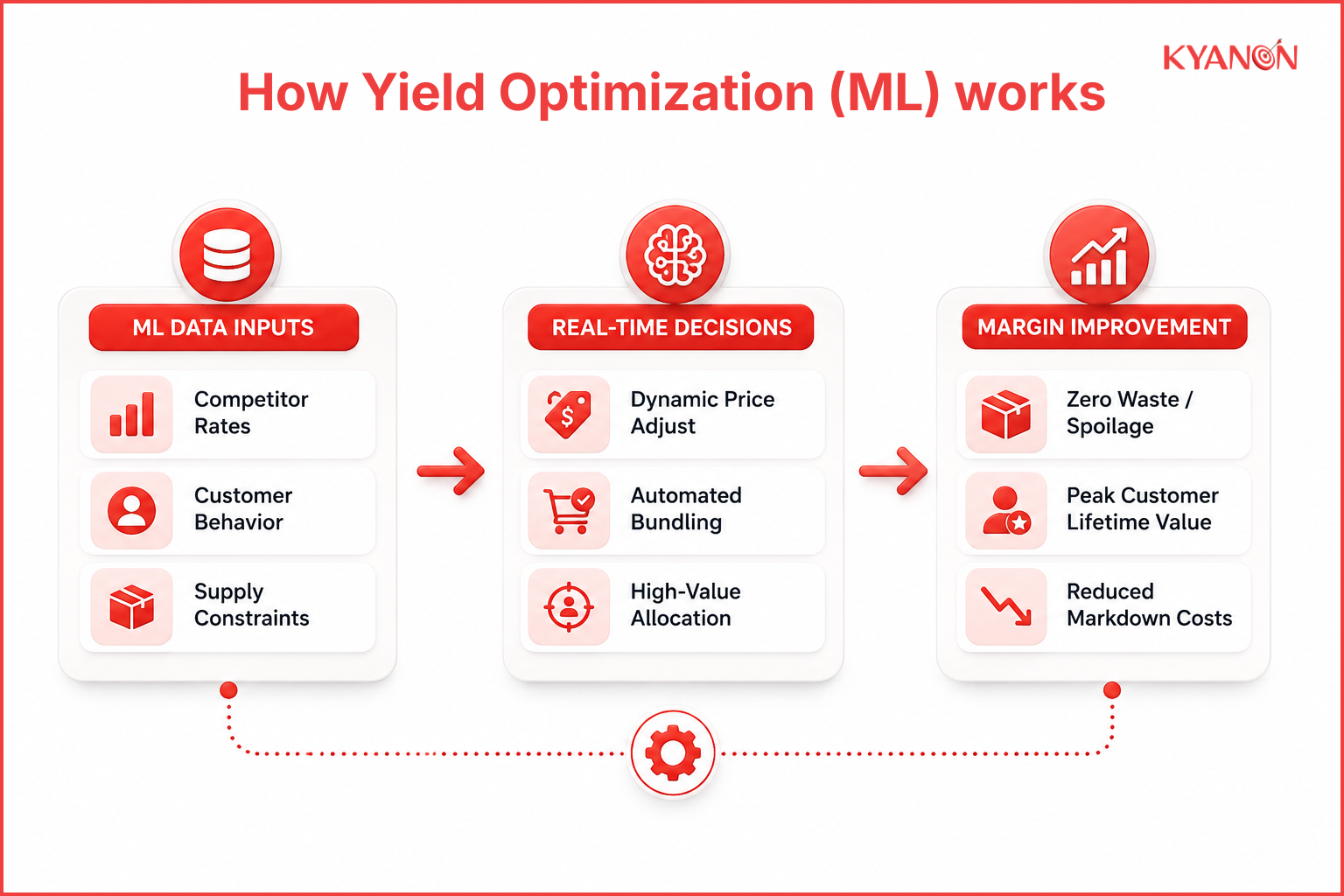
Yield optimization (ML) automatically executes real-time adjustments across pricing matrices and allocation channels by computing complex mathematical trade-offs between supply constraints and customer behavior patterns. Instead of relying on static, human-defined rule engines, the system transforms historical and live operational data into automated decision outputs to maintain peak efficiency.
[ML Data Inputs] ➔ [Real-Time Decisions] ➔ [Margin Improvement]
- Competitor Rates • Dynamic Price Adjust • Zero Waste / Spoilage
- Customer Behavior • Automated Bundling • Peak Customer Lifetime Value
- Supply Constraints • High-Value Allocation • Reduced Markdown Costs
Demand forecasting
This component predicts exact buying volumes by training machine learning models on deep historical data, cyclical seasonality, and external macro trends. Isolating clean signal variables from environmental noise, it establishes the baseline volume expectations required for automated downstream decision systems.
Dynamic pricing
This component calculates and adjusts product price points in real time based on active inventory depletion speed and competitive market moves. It evaluates the price elasticity of demand continuously, allowing the system to maximize margins during high-demand phases and accelerate inventory velocity when traffic slows.
Inventory allocation
This component directs physical products or digital capacities to the highest-value markets, channels, or customer segments before those assets expire or depreciate. By automating these cross-channel routing decisions, the model prevents severe margin erosion caused by unexpected localized stockouts or regional overstock.

Yield Optimization (ML) vs Yield Prediction (ML)
While yield prediction provides a descriptive forecast of future output based on historical trends, yield optimization prescribes and automates specific execution parameters to actively maximize performance outcomes.
Dimension | Yield Optimization (ML) | Yield Prediction (ML) |
| Core objective | Prescribes optimal actions to maximize performance | Forecasts future output based on current trends |
| Primary output | Actionable execution parameters (e.g., automated prices) | Estimated performance numbers (e.g., expected revenue) |
| Upfront complexity | High | Medium |
| Deployment speed | Slow | Fast |
| Vendor lock-in | High | Low |
| Best for | Automated real-time operational control | Financial budgeting and scenario planning |
| Cost model | OpEx | CapEx |
When to consider Yield Optimization (ML)
Enterprise organizations require machine learning yield optimization when manual operational adjustments fail to match the velocity of real-time market data variations.
Consider Yield Optimization (ML) if:
- Your enterprise manages highly dynamic inventory or pricing structures where manual, spreadsheet-based adjustments cannot keep pace with sudden shifts in supply and demand.
- Your multi-channel fulfillment network experiences high operational variance, causing margin-loss across different regions, warehouse hubs, or logistics lanes.
- Your digital marketing spend or advertising campaigns have scaled past human management capacity, leading to inefficient budget utilization and sub-optimal conversion volumes.
It may not be the right priority if:
- Your business processes rely entirely on static, predictable transactional patterns with low variance, or your organization lacks the centralized data infrastructure required to provide clean operational telemetry.
Enterprise implementation checklist
Before deploying optimization models, executive leaders must ensure their technology stack satisfies specific structural milestones:
- Consolidate data: Merge historical sales, active inventory levels, CRM segments, and live competitor pricing data into a unified data pipeline.
- Define features: Identify and clean key high-signal variables such as regional weather data, local events, and historical sales velocity.
- Train models: Deploy targeted regression models for calculating price elasticity and reinforcement learning architectures for automated bidding.
- Set guardrails: Establish strict hard-coded price floors and ceilings within the execution engine to protect brand equity and maintain legal compliance.
- A/B test: Run parallel pricing algorithms on isolated product categories to accurately measure and isolate net margin lift.
Why Yield Optimization (ML) matters for enterprise industries
Algorithmic yield management shifts corporate operations from reactive planning to prescriptive execution, preventing margin erosion across multi-channel networks. By extracting latent value from existing physical and infrastructure assets, enterprises generate immediate capital efficiency without expanding physical operational scale.
Supporting evidence
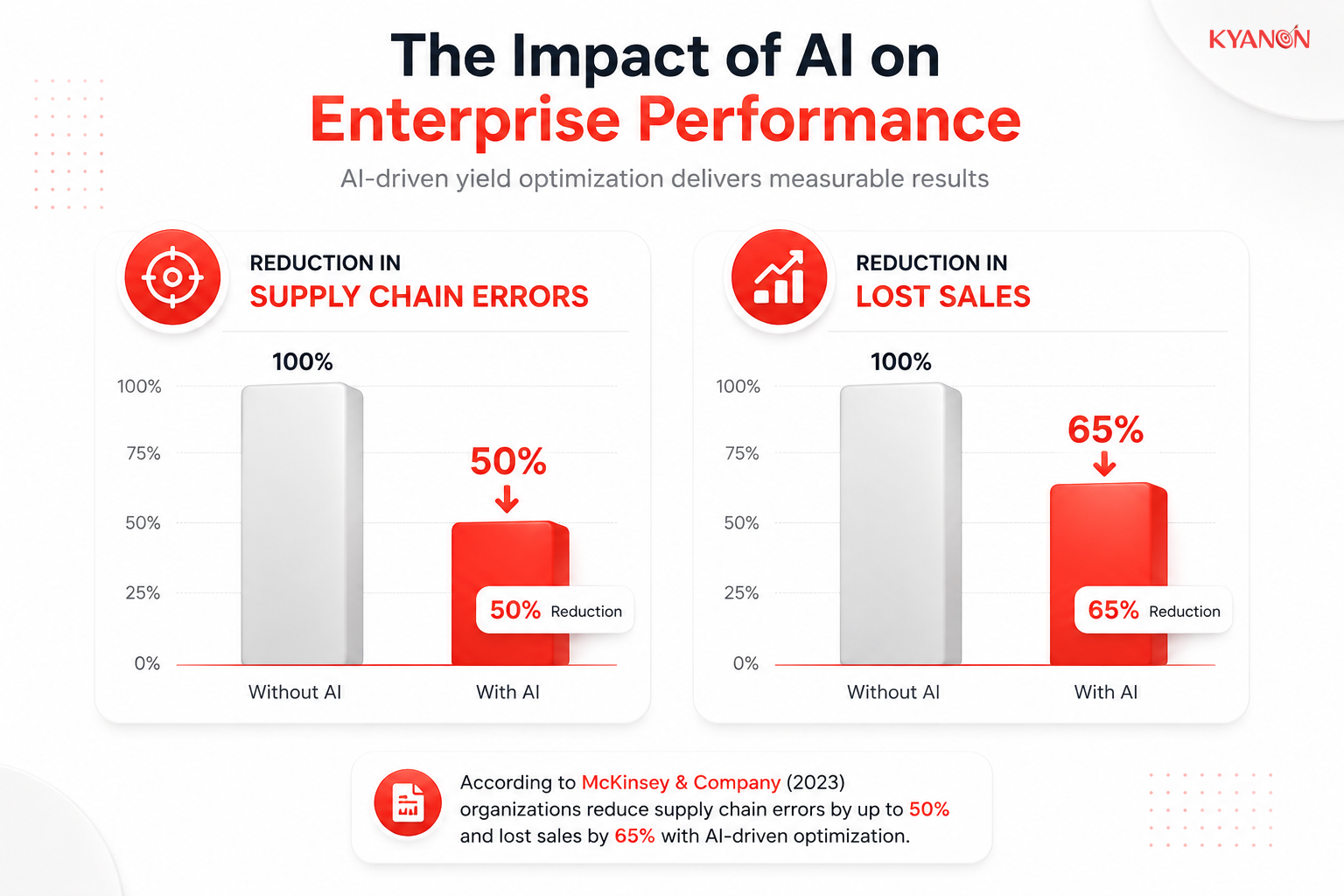
According to McKinsey & Company (2023), organizations implementing AI-driven yield optimization and predictive workflows reduce supply chain errors by up to 50% and lost sales by 65%.
Enterprise operations apply these mathematical frameworks across distinct high-value verticals:
- Airlines & Hospitality: Systems dynamically price available seats and hotel rooms based on live booking velocity and localized search volumes.
- Retail & E-commerce: Platforms automate incremental markdowns on slow-moving stock while optimizing margins on high-demand, low-inventory items.
- Manufacturing & Logistics: Engines allocate scarce cargo space or factory production capacity to the highest-bidding clients during peak capacity seasons.
- SaaS & Cloud Computing: Frameworks optimize server infrastructure capacity in real time to minimize operational overhead during predictable low-traffic windows.
Common misconceptions
Implementing yield optimization without mathematically defined operational boundaries risks inflating short-term gross revenue while inadvertently increasing total transactional costs.
“Yield optimization automatically guarantees higher profitability.”
Reality: Maximizing transactional volume or top-line revenue output can drastically spike operational costs if strict boundary constraints are missing from the algorithm. True optimization models must balance gross yield directly against cost parameters to protect net profit margins.
“Machine learning models for yield management are ‘set and forget’ systems.”
Reality: Market dynamics, consumer behaviors, and external supply chain factors change constantly, leading to severe data drift. Models require structured retraining schedules, data observability pipelines, and regular monitoring to prevent performance degradation over time.
How Kyanon Digital applies Yield Optimization (ML)
Kyanon Digital builds and integrates custom machine learning pipelines into existing enterprise architectures to automate pricing and inventory workflows across Southeast Asian markets. Utilizing tailored regression models, time-series forecasting, and anomaly detection frameworks, we help retail, logistics, and digital marketing enterprises deploy resilient optimization systems. Our engineering focus ensures these models link directly to client data infrastructure, converting complex, high-dimensional data into measurable improvements in net operating margins and processing efficiency.
→ Explore our Machine Learning services

 Create project brief with AI