
Vietnam is the leading nearshore software partner for Hong Kong enterprises in 2026, offering GMT+7 time-zone alignment, 560,000+ engineers, and competitive costs 60–70% below Western markets. Top service categories include AI automation, cloud migration, fintech, and custom software development.
Software for Hong Kong enterprises is entering a new decision cycle in 2026, where cost control, AI adoption, delivery speed, and data governance matter at the same time. In Hong Kong, digital demand is already high, with 96% internet penetration in early 2025, while local businesses are under pressure to modernize operations faster (Data Reportal, 2025). At the same time, a 2025 DBS Hong Kong survey found over 70% of SMEs had already adopted, or were exploring, AI and digital tools, but the biggest barriers remained cost, data security, and lack of reliable external support.
That pressure changes how enterprises evaluate software partners. The decision is no longer only about cheaper development. It is about where to find dependable engineering capacity, strong communication, practical AI capability, and enough delivery maturity to support regulated, cross-border growth.
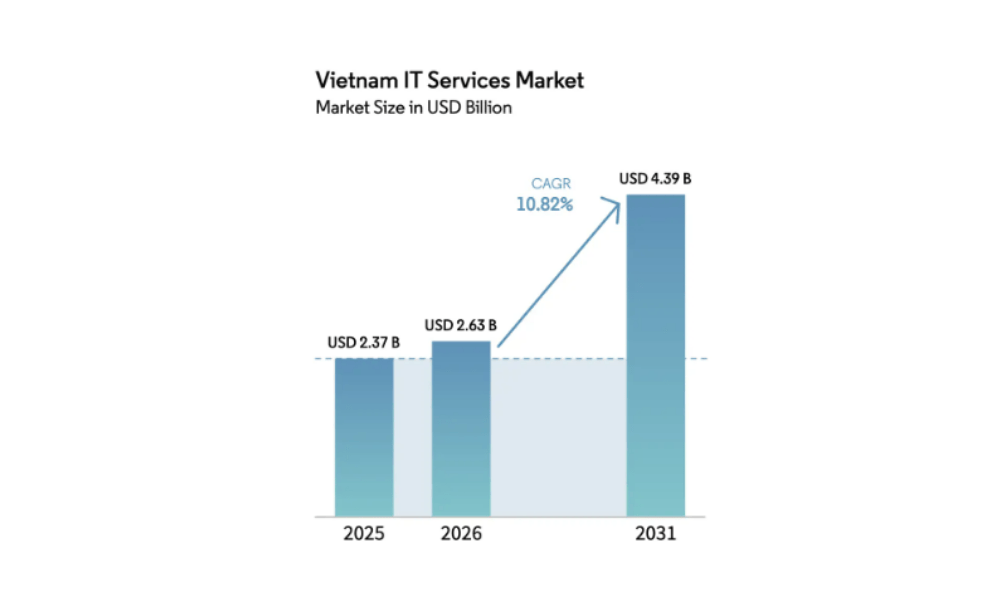
Vietnam has become one of the strongest options in that discussion. Mordor Intelligence estimates Vietnam’s IT services market will reach USD 2.63 billion in 2026, growing at 10.82% CAGR through 2031.
At the same time, Vietnam’s 2025 ICT landscape shows a software workforce of 560,000+ engineers and 55,000–60,000 new software graduates each year, which explains why more regional enterprises now view Vietnam as a strategic software delivery base rather than a backup outsourcing location (FPT Software).
This blog breaks down what enterprises need to know about Vietnam software for Hong Kong in 2026: market conditions, service trends, vendor landscape, practical risks, and how to choose correctly.
Key takeaways
- Vietnam is no longer competing only on labor cost. It is increasingly competing on delivery depth, AI capability, cloud skills, and regional operating fit.
- Hong Kong businesses are pushing harder into digital and AI, but many still face cost pressure, security concerns, and limited external implementation support.
- Vietnam’s software market is attractive to Hong Kong due to time-zone alignment, a large engineering base, and improving enterprise project maturity.
- Top service categories in 2026: AI/ML automation, cloud migration, fintech/blockchain, and custom mobile development.
- Vendor selection should focus less on brand visibility and more on architecture fit, security controls, delivery governance, team stability, and domain experience.
- Key risks to manage: English communication gaps on complex projects, data security compliance (ISO 27001), and IP protection frameworks.
- For long-term projects, dedicated team models consistently outperform time-and-materials contracts on both cost and delivery predictability.
Further reading:
- Vietnam Software Hubs: HCMC, Hanoi or Da Nang?
- Top AI Consulting Firms for Hong Kong Enterprises
- Top Best Choice Offshore Software Partners For Hong Kong
Why has Vietnam become a strategic software partner for Hong Kong firms in 2026?
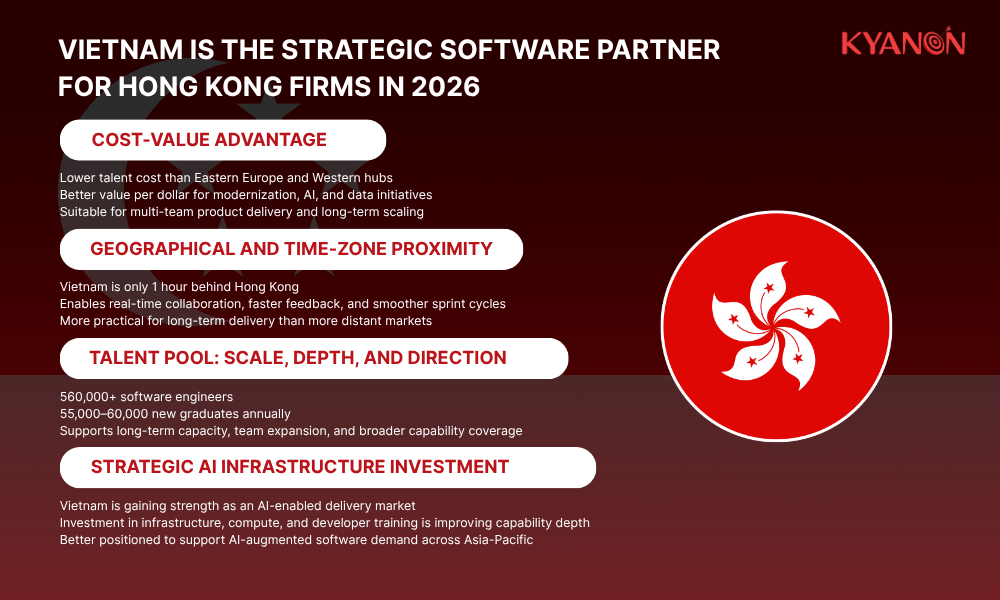
Vietnam’s position in 2026 is best understood as a cost-efficient but increasingly capability-led software market. That is the core shift.
Cost-value equilibrium
The cost differential is significant, but more important is the value-per-dollar dynamic.
Many Hong Kong businesses are trying to improve margins while still funding platform modernization, AI experimentation, and data initiatives.
|
Developer profile |
Vietnam (Annual) | India (Annual) | Eastern Europe (Annual) |
Western hubs (US/UK) |
|
Mid-level Software Engineer |
USD 18,000-30,000 | USD 8,000-22,000 | USD 40,000-65,000 |
USD 95,000-190,000 |
|
Senior AI / ML Developer |
USD 25,000-35,000 | USD 20,000-35,000 | USD 50,000-70,000 |
USD 100,000-245,000+ |
|
Senior Full-Stack / Cloud Architect |
USD 29,000-40,000 | USD 24,000-36,000 | USD 45,000-75,000 |
USD 130,000-190,000+ |
Source: Kyanon Digital analysis from Levels.fyi, Salary Expert, Glassdoor.
Note: The figures above should be treated as indicative market ranges for reference only, helping businesses compare talent costs across regions. Actual compensation levels may vary based on seniority, technical specialization, hiring model, location, and total workforce cost.
That makes Vietnam relevant because it often offers:
- Lower blended engineering cost,
- wider access to mid-level and senior development capacity,
- enough scale for multi-team product delivery.
Geographical and time-zone proximity
Vietnam operates at GMT+7, one hour behind Hong Kong (GMT+8). This single-hour overlap means:
- Full working-day overlap is achievable with minimal scheduling adjustment
- Real-time code review cycles, sprint ceremonies, and incident response are realistic, not compromised
- The ‘follow-the-sun’ model becomes genuinely practical, unlike partnerships with Eastern Europe or the Americas
For comparison, India (IST, GMT+5:30) offers a 2.5-hour overlap with Hong Kong’s business hours. Eastern Europe (GMT+1 to GMT+3) offers near-zero working-day alignment. This is not a minor operational detail; it compounds over the length of a multi-year engagement.
Talent pool: Scale, depth, and direction
Vietnam’s 2025 ICT landscape points to 560,000+ software engineers and 55,000–60,000 new software graduates annually.
That scale matters for enterprises that need:
- Long-term delivery continuity,
- team expansion without restarting vendor evaluation,
- access to multiple capabilities such as backend, cloud, QA, mobile, and data.
Strategic AI infrastructure investment
Vietnam’s positioning as an AI development hub gained material weight in 2025. Partnerships such as NVIDIA’s collaboration with FPT Corporation, involving AI infrastructure, compute capacity, and developer training, represent institutional-level investment in the ecosystem, not just individual vendor capability. These partnerships signal a structural shift in the type of work Vietnamese teams can credibly deliver.
IDC predicts (2025) that over 75% of enterprise software deployments in Asia-Pacific will incorporate AI-augmented features by 2027. Vietnam’s infrastructure investment positions its vendors to support that transition rather than trail it.
Kyanon Digital is one of the Vietnam-based partners purpose-built for this model, combining enterprise delivery capability with regional presence across Singapore, Hong Kong, and Southeast Asia.
Explore more: Software Development Services in Hong Kong
Top software services in 2026
In 2026, the strongest Vietnam software demand from Hong Kong enterprises is concentrated in a few practical categories. Businesses evaluating Vietnam software partnerships are no longer limited to basic application development or QA.
AI-powered automation and data analytics
This is one of the clearest growth areas because many businesses want:
- workflow automation,
- better reporting,
- customer support optimization,
- AI-assisted operations.
In Hong Kong, HKPC’s 2025 workplace survey found 88% of employees in surveyed companies had already used AI tools, and 92% planned to gradually integrate AI into workflows, with 24% planning full implementation within one year.
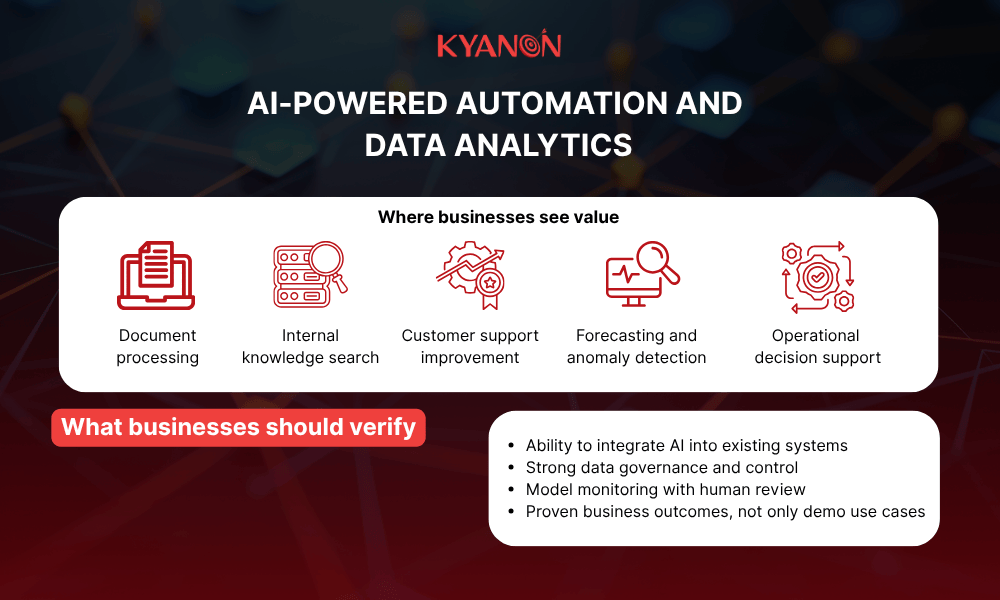
For enterprises, the key issue is not whether to use AI, but where AI adds measurable value:
- document processing,
- internal knowledge search,
- customer interaction support,
- forecasting and anomaly detection,
- operational decision support.
What to verify with vendors
- ability to integrate AI into existing systems,
- data governance controls,
- model monitoring and human review design,
- practical ROI cases rather than demo-only AI.
Cloud computing and migration
Cloud remains central because modern software delivery is increasingly tied to:
- scalable infrastructure,
- resilient deployment,
- faster release cycles,
- lower maintenance overhead.
IMARC estimates Vietnam’s cloud service market reached USD 3.6 billion in 2025 and projects continued growth through 2034.
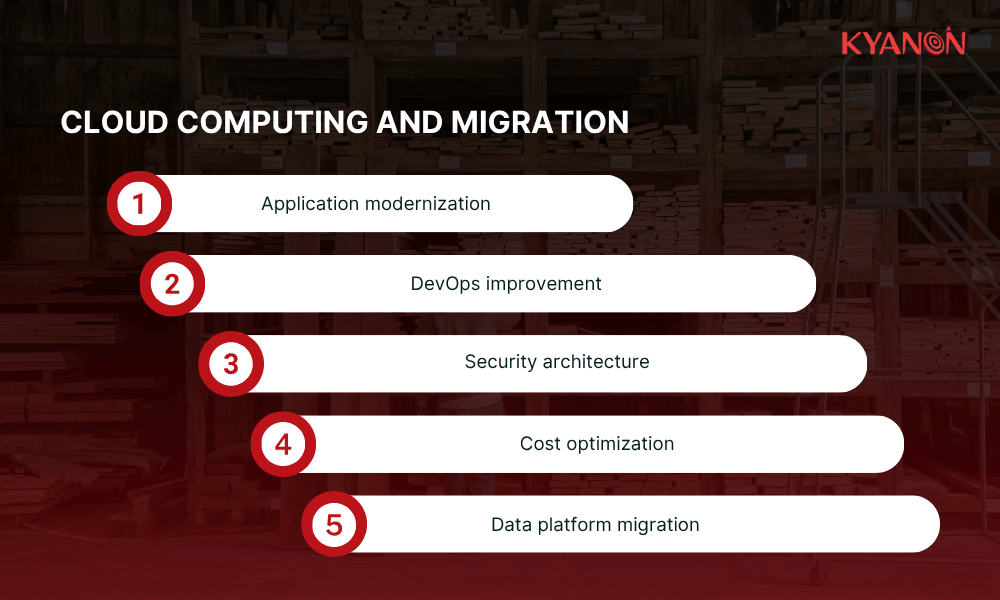
For enterprises in Hong Kong, this matters because cloud work is rarely only infrastructure work. It usually includes:
- application modernization,
- DevOps redesign,
- security architecture,
- cost optimization,
- data platform migration.
Fintech and blockchain
This segment remains relevant because Hong Kong businesses continue to evaluate:
- digital payments,
- cross-border transaction efficiency,
- risk and compliance automation,
- treasury and settlement innovation.
DBS Hong Kong’s 2025 survey found 59% of SMEs believed stablecoins could become relevant to operations, with expected benefits around cross-border transactions, payment speed, transaction cost, and FX risk reduction.
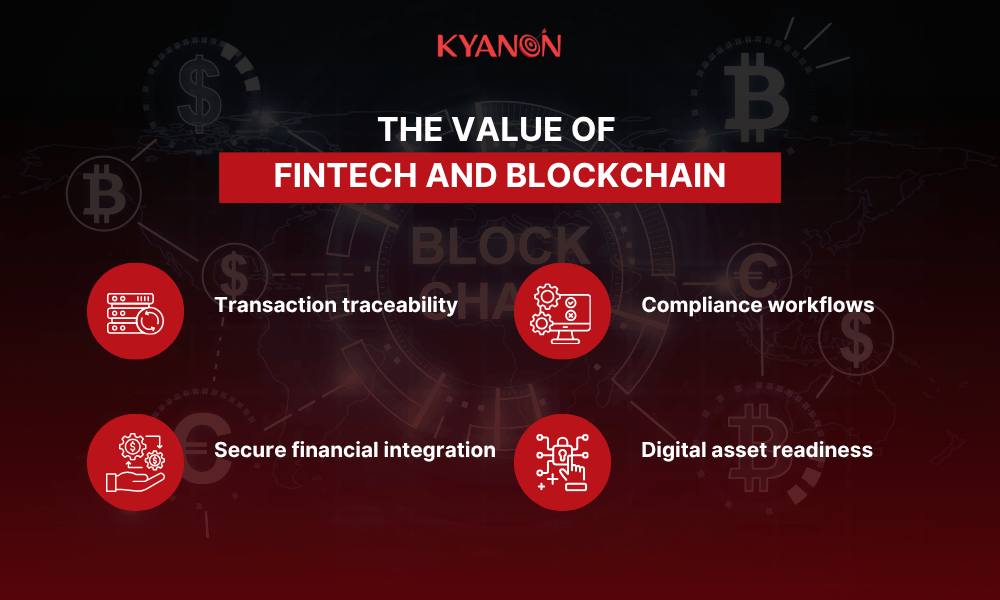
That does not mean every enterprise needs blockchain. It means demand is shifting toward software stacks that support:
- transaction traceability,
- compliance workflows,
- secure financial integration,
- digital asset readiness where relevant.
Custom software and mobile application development
Custom systems remain a core demand area because many enterprises still operate with:
- fragmented legacy systems,
- manual workflows,
- disconnected customer and operations data,
- inflexible ERP or CRM layers.
Vietnam vendors remain strong in:
- web and mobile applications,
- internal business systems,
- enterprise portals,
- integration layers and APIs,
- modernization of older platforms.
Top 15 recommended software companies in Vietnam (2026)
Businesses should treat this as a starting framework for due diligence, not a definitive ranking. The right vendor depends on your project type, team size, compliance requirements, and engagement duration.
|
Company |
Best fit for businesses needing |
Short view |
|
Kyanon Digital |
Custom platforms, cloud-native delivery, data-led products |
Balanced option for product build, modernization, and scalable delivery |
|
FPT Software |
Large-scale transformation, AI, global rollout |
Best suited for enterprises needing scale, breadth, and established delivery maturity |
|
TMA Solutions |
Long-term engineering support, large offshore teams |
Strong option for businesses that need delivery depth and team scalability |
|
KMS Technology |
High-standard software engineering and QA |
Good fit for quality-focused product development and enterprise software delivery |
|
CMC Global |
Cloud migration, AI, enterprise modernization |
Suitable for businesses modernizing infrastructure and operations at scale |
|
Saigon Technology |
Agile delivery, offshore teams, custom apps |
Well-suited for fast-moving projects that need flexible team setup |
|
Rikkeisoft |
Digital transformation, AI, regional delivery |
Useful for businesses looking for modern engineering with regional market reach |
|
NashTech |
Technology consulting, enterprise delivery, long-term build programs |
Strong fit for businesses needing structured consulting and execution support |
|
VTI Group |
AI, IoT, manufacturing-linked transformation, regional APAC support |
Relevant for businesses operating across Vietnam, Japan, Singapore, and nearby markets |
|
Adamo Software |
Mid-sized custom software, mobile, selected AI use cases |
Better fit for focused digital products than very large transformation programs |
|
MOR Software |
Salesforce, blockchain, offshore development |
Suitable for businesses needing platform-specific capability and cost-efficient execution |
|
Golden Owl Solutions |
Agile product development, web and mobile builds |
Often a fit for businesses wanting flexible teams and faster product launches |
|
Axon Active |
Dedicated long-term teams, Agile delivery |
Strong option for businesses preferring stable, embedded offshore teams |
|
NTQ Solution |
AI, IoT, enterprise systems, cross-border support |
Good fit for businesses seeking broad capability with regional delivery presence |
|
SotaTek |
Web platforms, blockchain, AI-led product builds |
Relevant for businesses exploring digital products with emerging-tech components |
How enterprises should read this vendor market
- Large vendors can reduce scaling risk but may be less flexible for smaller or exploratory programs.
- Mid-sized firms often provide stronger hands-on collaboration and executive access, but their bench depth may be narrower.
- Specialists can be effective for targeted work, though they may not suit broader platform programs.
Key considerations for HK enterprises
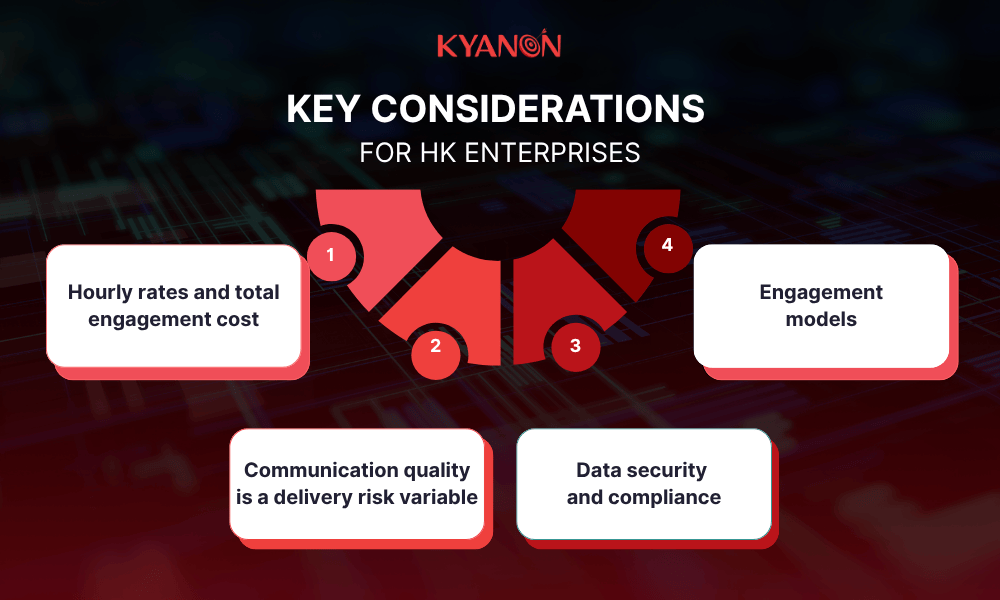
Hourly rates and total engagement cost
Published hourly rates for Vietnamese developers range from USD 18 to USD 50+ per hour, depending on seniority, specialization, and vendor tier. However, the rate card is not the total cost equation.
- Add 15–25% overhead for project management, tooling, and coordination if running a time-and-materials model.
- Dedicated team models typically reduce total per-head costs by 10–20% on annualised contracts versus project-based billing.
- Factor in onboarding time: complex domain knowledge transfers typically require 4–8 weeks of reduced productivity before baseline velocity is established.
- Rate transparency: request fully-loaded cost breakdowns (salaries, benefits, infrastructure, PM allocation) rather than just developer day rates.
Communication quality is a delivery risk variable
Vietnam ranked #64 globally on the EF English Proficiency Index, a ‘Moderate Proficiency’ classification. In the IT sector specifically, English competency is considerably higher than the national average, particularly among engineers with international project exposure.
The practical nuances businesses should plan for:
- Technical documentation and asynchronous written communication are typically strong
- Real-time verbal communication in complex stakeholder discussions can be a bottleneck, particularly for requirements clarification and scope negotiation
- Recommendation: for engagements above 5 FTE, assign a dedicated bilingual Project Coordinator or Delivery Manager on the vendor side as a contractual requirement, not an optional add-on
Data security and compliance
In the DBS Hong Kong survey, 41% of businesses cited data security and privacy as a major barrier to AI and digital adoption. This is the dimension most frequently underweighted in initial vendor evaluation. Relevant standards to verify before contract signature:
|
Standard / requirement |
What to verify |
Red flag if absent |
|
ISO 27001 |
Active certification, scope of certification (must cover outsourced delivery) |
Especially for regulated industries: finance, healthcare, legal |
|
Data processing agreement |
GDPR/PDPO compliance clauses, sub-processor disclosures |
Any project with HK/EU user data |
|
IP ownership |
Explicit work-for-hire clauses; no open-source licence contamination |
All custom software projects |
|
Access controls |
Role-based access, audit logs, VPN policies, device management |
Cloud or SaaS product development |
Engagement models – matching structure to project type
The engagement model decision directly affects both cost efficiency and delivery risk. The following framework applies in practice:
|
Model |
Best For | Advantages |
Risks |
|
Fixed price |
Well-defined, short-term projects | Predictable budget; low admin overhead |
Scope creep penalties; rigid to change |
|
Time & materials |
Exploratory or evolving requirements | Flexible; responsive to pivot |
Cost unpredictability requires active governance |
|
Dedicated team |
Long-term capability building (12+ months) | Cost efficiency; team continuity; knowledge retention |
Requires management investment; slower to scale down |
|
Hybrid |
Phased programmes with distinct workstreams | Balances flexibility and cost control |
More complex to govern; requires clear workstream boundaries |
Practical view
- Dedicated teams usually work best for ongoing enterprise roadmaps.
- Fixed scope works better for narrowly defined modules.
- Enterprises should avoid choosing engagement model based on procurement habits alone.
Key differences between Vietnam and other delivery markets
This comparison helps enterprises avoid defaulting to old outsourcing assumptions.
|
Market |
Main advantage | Main trade-off |
Best fit |
|
Vietnam |
Cost-value balance, strong regional fit, growing AI/cloud capability | Quality varies across vendors |
Regional build and scale programs |
|
India |
Massive scale, broad process maturity | More competition for top talent, coordination may vary by provider |
Very large managed delivery setups |
|
Eastern Europe |
Strong engineering depth, proximity to Europe | Higher cost base |
Deep product engineering for Europe-linked operations |
|
Mainland China |
Large domestic ecosystem, strong platform execution | Different regulatory and operating complexities for some foreign firms |
China-centered market execution |
|
Hong Kong local teams |
Strong business context and stakeholder access | Higher cost and tighter talent supply |
Product ownership, architecture, governance |
2026 outlook: How the Vietnam software market is evolving
Vietnam’s role in software for Hong Kong is shifting from execution support to a strategic delivery partnership.
What is likely to define the next phase
- More enterprise demand for AI inside core workflows, not as a side experiment.
- More need for cloud-native modernization and platform resilience.
- More scrutiny on security, governance, and implementation quality as businesses move beyond pilot projects.
- Greater emphasis on regional operating fit, where Vietnam benefits from geography, time zone, and talent scale.
What enterprises should expect
- The market will keep growing, but vendor quality will remain uneven.
- AI claims will increase faster than proven delivery capability.
- Enterprises that run a structured vendor selection process will benefit.
- Enterprises that buy only on the rate card will likely face avoidable delivery risk.
Best practices for Hong Kong enterprises partnering with Vietnam software vendors
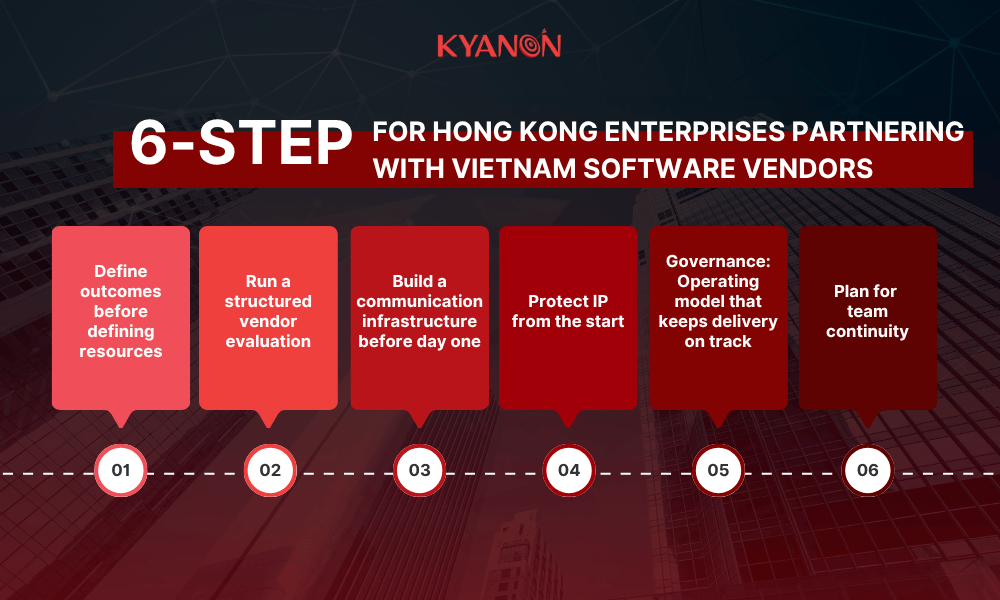
Define outcomes before defining resources
The most common mistake in offshore engagement setup is starting with headcount rather than deliverables. Before approaching vendors, enterprises should have documented:
- The specific product or capability outcome expected at 3, 6, and 12 months
- The technical constraints or architecture standards that the vendor team must work within
- The definition of done for each phase, not just feature lists, but quality gates, performance thresholds, and acceptance criteria
- Who owns sign-off decisions on the enterprise side (unclear ownership is a primary cause of delivery delay)
Vendors cannot deliver ambiguous outcomes. A specific outcome definition reduces scope-creep risk, improves estimation accuracy, and enables meaningful progress measurement.
Run a structured vendor evaluation, not just RFP responses
A written RFP response tells you what a vendor wants you to believe about their capability. A structured evaluation process tells you what they can actually deliver. The recommended sequence:
|
Step |
Activity |
What to look for |
|
1 |
Longlist screening |
Relevant industry experience, team size, compliance certs (ISO 27001), client references in your sector |
|
2 |
Technical assessment |
Code review or architecture whiteboard; assess actual engineer quality, not just vendor sales team |
|
3 |
Reference calls |
Speak to 2–3 clients in similar sectors; ask about delivery predictability, communication quality, how problems were resolved |
|
4 |
Paid pilot project |
Run a 4–6 week scoped task that reflects your actual work type; evaluate output quality, velocity, and collaboration behaviour |
|
5 |
Contract and governance design |
Clarify IP ownership, data handling, escalation paths, performance SLAs, and exit terms before signing |
Build a communication infrastructure before day one
Communication failure is the leading cause of offshore delivery problems, ahead of technical capability gaps. The infrastructure that prevents this needs to be agreed upon contractually, not assumed.
- Establish async-first documentation standards: all requirements, decisions, and change requests in writing, with version control
- Define a weekly cadence: at minimum, a weekly sync with the engineering lead and PM; a monthly steering review with business stakeholders
- Agree on a single source of truth for project tracking
- For engagements above 5 FTE, a dedicated bilingual Delivery Manager is required on the vendor side, not shared across accounts
- Plan for a quarterly in-person or video-intensive alignment session; relationship quality degrades without deliberate investment
Protect IP from the start
Intellectual property governance in offshore software development is frequently an afterthought. By the time a dispute arises, the legal cost of resolution far exceeds the cost of proper setup.
- Ensure the master service agreement explicitly assigns all work product, code, and derivative IP to your enterprise upon payment
- Require that vendor employees working on your project sign individual IP assignment and confidentiality agreements
- Audit open-source license usage from the start; GPL-licensed components in commercial codebases create significant downstream risk
- Maintain access control: your enterprise should control the primary repository (GitHub/GitLab), not the vendor
- Include a knowledge transfer obligation in the contract, documented handover of architecture, credentials, and codebase at the end of the engagement
Governance: The operating model that keeps delivery on track
Delivery governance is where most offshore engagements either succeed or unravel. The following framework reflects what high-performing partnerships have in place:
|
Governance layer |
Frequency | Participants |
Purpose |
|
Sprint review |
Bi-weekly | Dev leads + product owner |
Delivery validation; unblock issues |
|
Delivery sync |
Weekly | PM (both sides) + Tech lead |
Risk flagging; priority alignment; scope decisions |
|
Steering review |
Monthly | Business sponsor + Vendor account lead |
Programme health; budget tracking; relationship quality |
|
Quarterly business review |
Quarterly | Executive sponsors (both sides) | Strategic direction; roadmap alignment; commercial review |
Plan for team continuity
- Team member turnover is a real risk in Vietnam’s competitive IT talent market. Businesses should contractually address this:
- Require a minimum notice period (typically 60–90 days) before replacing key team members
- Mandate structured knowledge transfer processes when team members change, not informal handovers
- Include a team stability metric in vendor SLAs: for example, no more than 20% team turnover per 12-month period without client approval
- Incentivise long-term retention: vendors that offer performance bonuses or retention packages for dedicated team members deliver more consistent output
Why choose Kyanon Digital as your Vietnam software partner
Kyanon Digital operates as a Vietnam-based digital transformation and software delivery partner for businesses across Hong Kong, Singapore, and Southeast Asia that need more than basic outsourcing.
- Software development, system integration, data, AI, and ongoing support make it relevant for businesses that need more than standalone development capacity.
- End-to-end capability, which aligns well with enterprises looking for one partner across planning, building, optimization, and scaling.
- Strong fit for digital transformation: The company highlights capabilities in custom software, enterprise software development, cloud, AI, GenAI, machine learning, data strategy, analytics, and integration, which are key priorities for businesses modernizing operations in 2026.
- Scalable engineering base: Kyanon Digital states it has 14 years in agile engineering, 500+ consultants and engineers, 5 global offices, and experience serving 100+
- Fortune 500 clients, which signals delivery scale and broader enterprise exposure.
- Hong Kong market relevance: Kyanon Digital’s featured work strengthens its fit for businesses evaluating Vietnam software partners for the Hong Kong market.
How Kyanon Digital maintains and enhances a global coffee chain’s digital ecosystem in Hong Kong

The Hong Kong branch of a leading global coffee chain partnered with Kyanon Digital to take over the maintenance, stabilization, and continuous enhancement of its large-scale digital ecosystem.
Challenges:
- Limited handover documentation makes system understanding harder.
- Ongoing system instability and unresolved issues are affecting service reliability.
- No clear governance model or standard operating processes are in place.
Kyanon Digital solution:
- Deployed a 9-member cross-functional team across development, testing, DevOps, and project management.
- Stabilized the platform through system review, bug fixing, and structured incident management.
- Built governance foundations with agile processes, incident protocols, and centralized documentation.
- Delivered continuous enhancements, including loyalty upgrades and third-party integrations.
Results & impacts:
- Improved system stability and reduced service disruption.
- Increased operational efficiency through clearer workflows and governance.
- Enabled new features aligned with business growth in the Hong Kong market.
Read more: Maintenance and Enhancement of a Global Coffee Chain’s Digital Ecosystem in Hong Kong
Conclusion
Vietnam’s software development market in 2026 is not a commodity option. It is a strategically mature ecosystem with genuine depth across AI, cloud, fintech, and enterprise software, and a structural cost advantage that compounds over multi-year engagement horizons.
The best decision is usually not the cheapest vendor or the biggest vendor. It is the vendor whose delivery model, security posture, technical depth, and communication style match the business problem clearly.
Ready to evaluate Vietnam software options for your business?
Kyanon Digital works with Hong Kong enterprises to design, build, and scale data-driven digital solutions, with delivery teams based in Vietnam and aligned to international enterprise standards.
If you’re evaluating Vietnam software partners for 2026, start with a scoping consultation Kyanon Digital will help you define the right engagement model before you commit to anything. Contact us today!