
Software outsourcing has evolved far beyond cost reduction; it is now a strategic engine powering Singapore’s digital transformation as enterprises accelerate cloud adoption, pursue AI capabilities, and modernize customer experience (CX) platforms.
Singapore’s ICT market is expanding rapidly, driven by strong digital infrastructure, Smart Nation initiatives, and a pro-innovation business environment, which together fuel high enterprise technology adoption
Global leaders are investing heavily; Google alone has committed over USD 5 billion to cloud and data center infrastructure in Singapore, reinforcing the nation’s position as a regional digital hub. Yet, this growth amplifies a fundamental challenge.
Singapore ranks #1 globally in talent competitiveness, but the demand for digital and engineering talent far exceeds supply, especially in AI/ML, cybersecurity, DevOps, and cloud-native development. The Singapore ICT Market Report identifies workforce shortages as a core constraint slowing digital progress, particularly in specialized roles critical to transformation projects.
This combination, high digital ambition, world-class infrastructure, and limited and expensive engineering talent, has made software outsourcing service a strategic priority for Singapore’s top leaders.
This guide from Kyanon Digital will break down the real ROI behind software outsourcing and execution strategies, equipping leaders to help enterprises scale efficiently and confidently beyond.
Further reading:
- Top 10 Software Development Outsourcing Companies in Singapore
- Enterprise IT Solutions Provider in Singapore
- Top 11 Offshore Development Companies in Singapore
- Top 10 IT Staff Augmentation Companies in Singapore
Key advantages of software outsourcing
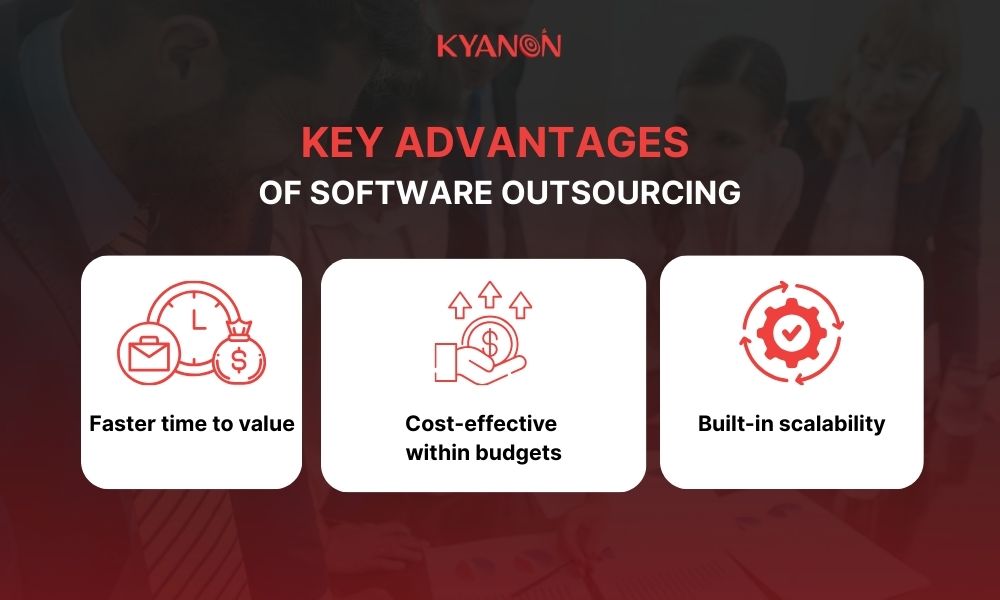
Cost-effective access to senior engineering talent
Singapore is one of the most competitive and high-cost technology labor markets globally. Recruiting senior engineers requires not only higher salary budgets but also long hiring cycles, onboarding time, retention costs, and employer overhead.
Software outsourcing provides enterprises with access to global senior engineering talent pools at predictable, contract-based rates, without the fixed cost burden of local hiring.
This includes expertise across:
- Full-stack engineering
- Cloud & platform engineering
- DevOps/SRE
- AI/ML engineering
- Cybersecurity
- Data engineering
This model allows organizations to shift from fixed payroll to flexible capacity, aligning costs with project demands and reducing financial risk during modernization or new product development.
Quick comparison table of the hourly rate range comparison table between the regions’ software outsourcing services.
|
Region |
Hourly rate range |
|
Vietnam (outsourcing) |
USD 15–50/hr |
|
SE Asia (outsourcing) |
USD 25–45/hr |
|
Singapore (local contractors) |
USD 30–70/hr |
| Singapore (senior specialists: DevOps, SRE, Cloud) |
USD 70–110+/hr |
Source: Salary Expert; Glassdoor (Note: Rates are indicative and for reference only; actual costs may vary based on vendor, seniority, and project scope).
Faster time-to-value
In a market where cloud adoption, AI use, and digital initiatives are accelerating, development speed becomes a competitive differentiator. However, local hiring bottlenecks and digital talent shortages slow down delivery.
Outsourced engineering squads offer deployment-ready teams already trained in:
- Agile delivery
- DevOps & CI/CD
- Cloud-native development
- Automated QA
- Product engineering accelerators
This allows enterprises to:
- Start projects faster (no hiring runway)
- Run parallel workstreams
- Avoid bandwidth constraints inside internal teams
- Reduce delays caused by specialist shortages
Industry reports consistently cite delivery speed and time-to-market acceleration as top reasons enterprises outsource software development.
Built-in scalability
Singapore enterprises, especially in retail, logistics, finance, and travel, frequently face fluctuating development demands tied to:
- Seasonal load
- New product launch cycles
- Digital transformation waves
- Regulatory deadlines
- Rapid customer growth
Outsourcing provides on-demand scalability, enabling enterprises to expand or contract engineering capacity rapidly:
- Scale teams up for transformation or migration phases
- Scale down once steady-state operations begin
- Support multiple workstreams across business units
- Bring in niche expertise only when needed
This avoids long-term payroll commitments and ensures engineering capacity always matches business momentum.
Understanding software outsourcing ROI
Software outsourcing ROI extends far beyond cost savings. For Singapore’s enterprises, ROI comes from speed, specialization, modernization capacity, resilience, and improvements in CX.
Here are the four ROI layers that matter most to C-level decision makers
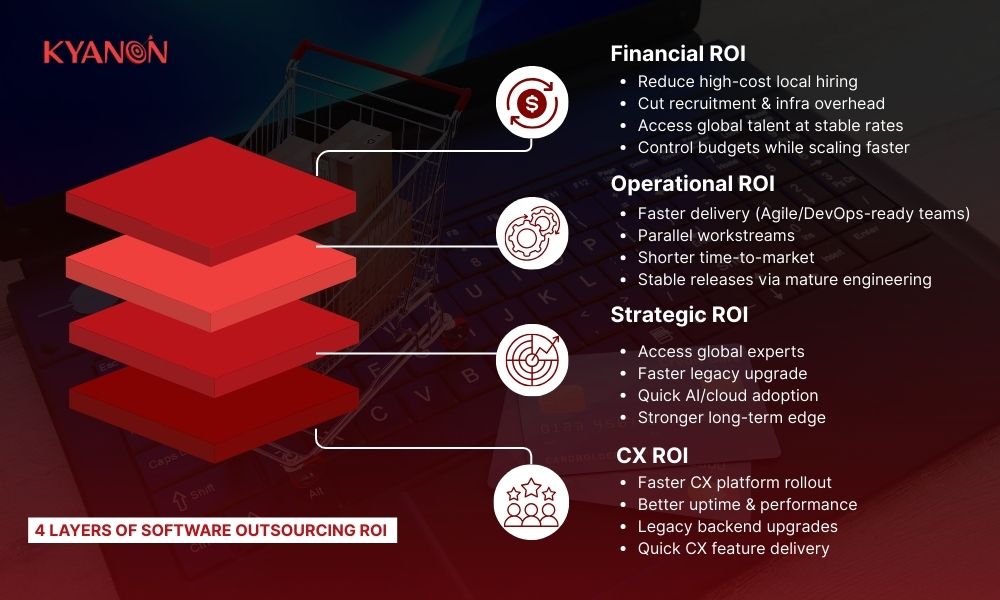
Financial ROI (Cost efficiency)
Singapore stands as one of the world’s most advanced digital economies. Ranked #1 globally in talent competitiveness, the nation offers exceptional skill quality and a strong regulatory ecosystem.
At the same time, Singapore’s ICT market is expanding at speed. The latest Singapore ICT Market Report estimates the industry at USD 69.77B in 2025, projected to nearly double to USD 133.23B by 2030, growing at a 13.81% CAGR. Such rapid growth fuels greater demand for digital talent across cloud, AI, cybersecurity, and platform modernization.
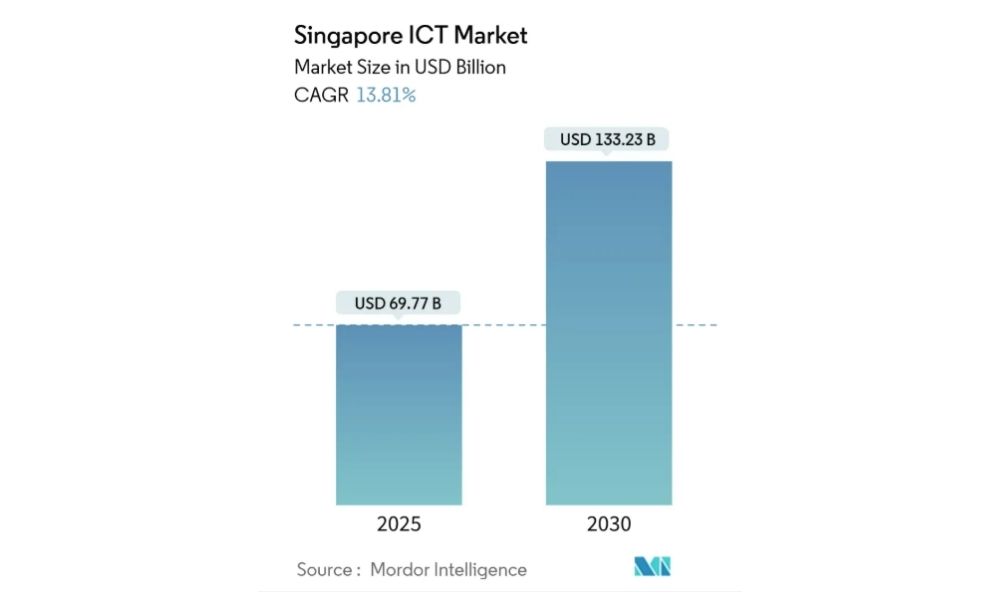
However, workforce capacity cannot keep up; Singapore’s ICT report identifies talent shortages as a key constraint across specialized digital functions, increasing recruitment difficulty and inflating costs.
Software outsourcing service delivers clear financial ROI by enabling enterprises to:
- Reduce reliance on high-cost local hiring for every new initiative.
- Avoid recruitment, onboarding, training, and infrastructure overhead.
- Access global engineering talent at cost-efficient, stable pricing models.
- Leverage teams are already mature in cloud, AI, and automation, which will reduce rework and hidden costs.
Why this matters for Singapore leaders: Software outsourcing services become a financial lever that allows enterprises to control spending while still accelerating modernization in a high-cost, high-demand digital ecosystem.
Operational ROI (Speed & efficiency)
Singapore’s digital adoption curve is steep. With approximately 96 percent internet penetration (Statista), customers expect real-time, seamless digital services across banking, healthcare, logistics, and retail. This creates intense pressure on enterprises to deliver, upgrade, and modernize continuously.
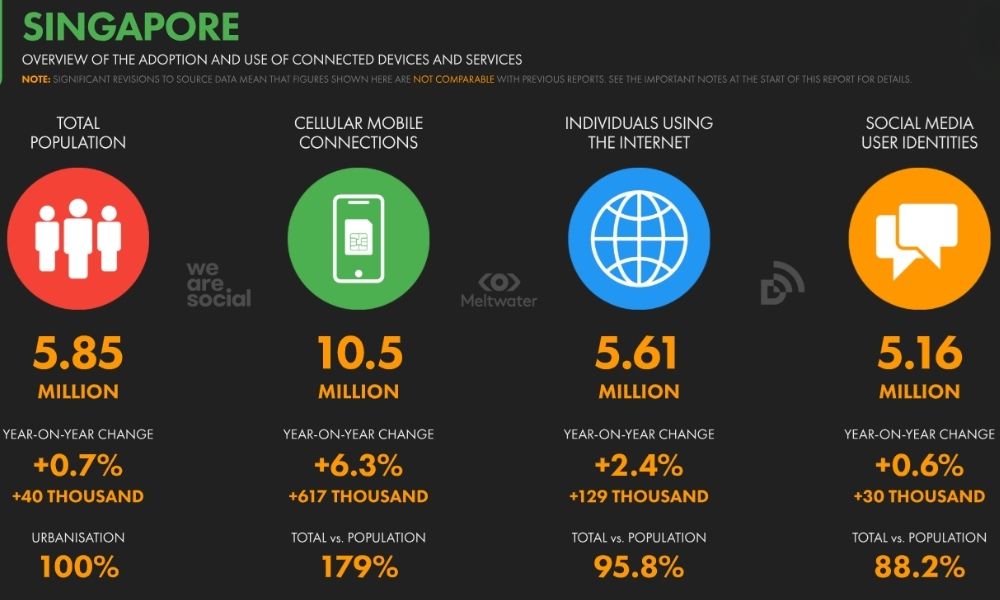
Yet operational execution remains heavily constrained. The Singapore ICT Market Report identifies “Scarcity of Skilled Workforce” as a key market restraint, particularly affecting cloud, AI, cybersecurity, and software engineering roles.
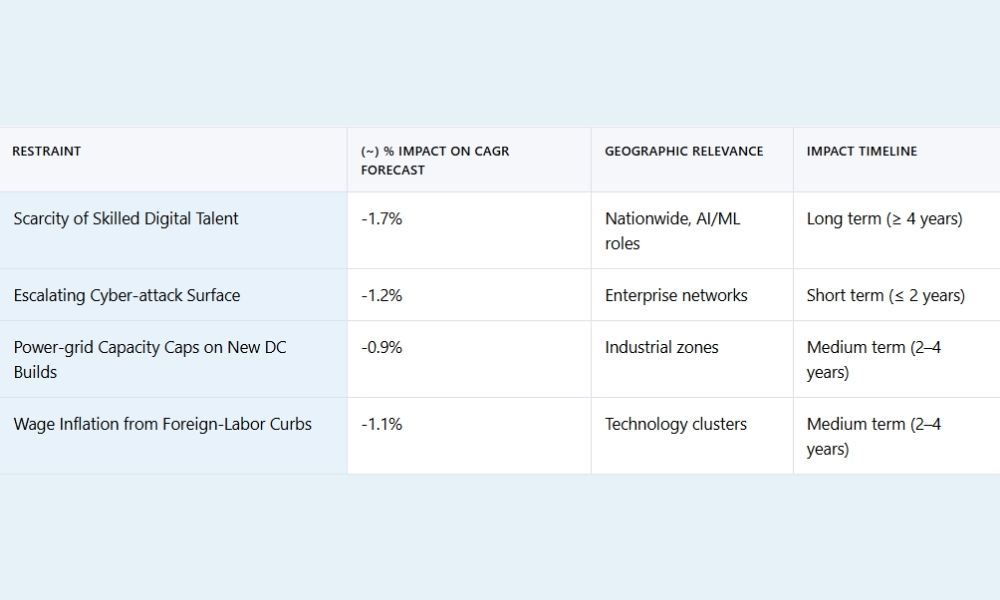
Cybersecurity alone faces a deficit of 2,800–4,400 professionals, driving up salaries and slowing critical rollout cycles. Similar gaps exist in AI engineering and cloud architecture, forcing local firms, especially SMEs, to compete with multinationals for scarce specialists.
As a result, internal teams are often unable to sustain the delivery velocity required for modern digital operations.
Software outsourcing strengthens operational ROI by enabling enterprises to:
- Accelerate delivery through Agile-, DevOps-, and cloud-native–ready squads.
- Run parallel workstreams, avoiding delays caused by limited internal bandwidth.
- Shorten time-to-market by engaging deployment-ready teams.
- Improve release quality and uptime through mature engineering and SRE practices.
With Singapore’s digital transformation advancing across all major industries, outsourcing remains the most practical and reliable lever for eliminating operational bottlenecks and sustaining high-speed delivery in a talent-constrained environment.
Strategic ROI (Innovation & Scalability)
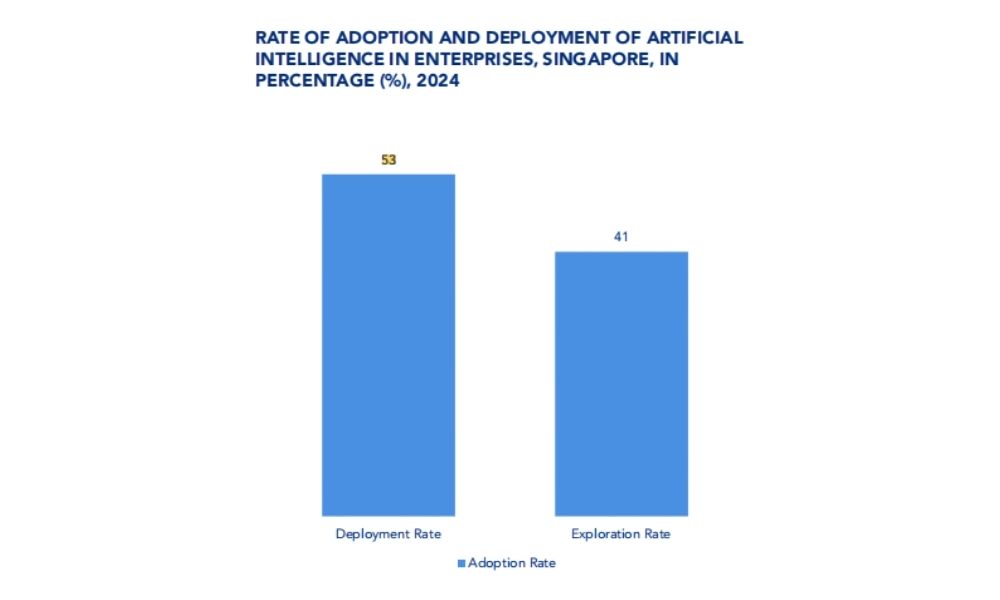
Strategically, Singapore is doubling down on advanced technologies. AI adoption already stands at 53%, one of the highest rates globally.
This aligns with national roadmaps pushing enterprises toward:
- AI-driven automation
- Cloud modernization
- Cybersecurity enhancement
- Data-centric architecture
However, achieving these ambitions requires access to niche technical expertise, AI/ML engineering, DevSecOps, cloud architecture, and data engineering, roles that are in short supply locally.
Software outsourcing creates significant strategic ROI by:
- Unlocking access to global engineering specialists not widely available in Singapore.
- Enabling faster modernization of legacy platforms that are difficult for internal teams to tackle alone.
- Providing scalable talent capacity to support high-impact transformation programs.
- Allowing enterprises to adopt new technologies (AI, microservices, cloud-native design) with lower risk and faster ramp-up.
For Singapore’s C-suite, outsourcing is no longer a workaround; it is a strategic amplification mechanism that supports long-term competitiveness and innovation leadership.
CX ROI (Customer Experience Lift)
Singapore’s digital consumers are among the most demanding in the world. High connectivity, real-time expectations, and the rise of mobile super-apps mean enterprises must deliver fast, stable, secure, and personalized experiences across every touchpoint.
Industries highlighted in the ICT market report: banking, healthcare, logistics, and retail, are especially sensitive to CX reliability and uptime.
Software outsourcing service improve CX ROI by enabling businesses to:
- Deploy modern CX platforms faster (mobile apps, self-service portals, AI-powered journeys).
- Strengthen system uptime and performance using mature DevOps/SRE practices.
- Modernize legacy backends that drag down digital experience quality.
- Build and test CX enhancements more quickly using cross-functional outsourcing squads.
When enterprise growth is tied directly to customer experience quality, outsourcing becomes a critical driver of CX agility and experience-led value creation.
Advanced ROI calculation framework
Modern enterprises can no longer evaluate software outsourcing with a simple “cost savings vs. hourly rate” mindset. For Singapore’s high-cost, talent-constrained market, ROI must be calculated across three layered dimensions.
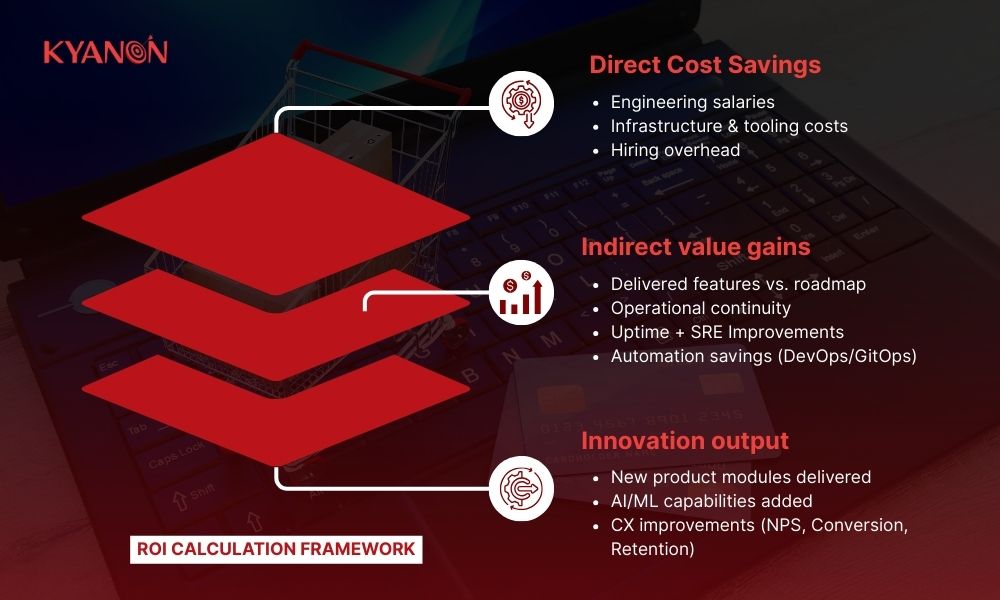
This framework gives leaders a structured, measurable approach to understanding the real economic impact of outsourcing across financial, operational, and strategic layers.
1. Direct cost savings
Direct savings are the most visible ROI layer, but also the easiest to underestimate. They include every financial burden avoided by not building or maintaining a large internal team in Singapore.
Key components
- Engineering salaries
- Outsourcing replaces high local payroll with predictable, contract-based costs.
- Avoids salary inflation, CPF, bonuses, employer contributions, and retention costs.
- Leverages vendor teams with a balanced seniority mix to optimize cost efficiency.
- Infrastructure & tooling costs
- Vendors supply their own DevOps pipelines, CI/CD tools, cloud environments, and QA platforms.
- No need for companies to purchase additional licenses, equipment, or hardware.
- Outsourcing reduces overall TCO for infra-heavy development programs.
- Hiring overhead
- Recruitment costs, sourcing fees, interview cycles, and onboarding time are eliminated.
- Removes 3–6 month hiring delays in Singapore’s competitive tech market.
- Prevents productivity loss caused by turnover and replacement cycles.
Quick direct cost savings table
|
Cost category |
In-house (Singapore) |
Software outsourcing |
|
Engineering salaries |
High (market scarcity + wage pressure) |
Predictable monthly rate |
|
Infra + tools |
Company-funded |
Vendor-provided |
|
Hiring overhead |
Recruitment, CPF, training |
None |
|
Turnover cost |
High |
Vendor-managed |
|
Cost flexibility |
Low (fixed payroll) |
High (scale up/down easily) |
2. Indirect value gains
This is where true ROI expands. Indirect gains reflect operational efficiency, productivity improvements, and lower business risk.
Key components
- Delivered features vs. roadmap
- Outsourcing squads accelerate delivery velocity with Agile & DevOps maturity.
- Faster sprint throughput = more roadmap items delivered per quarter.
- Reduces backlog risk during peak transformation cycles.
- Operational continuity
- Distributed vendor teams reduce dependency on internal headcount.
- Eliminates risk of delivery stalls caused by local attrition or hiring gaps.
- Ensures continuity during system upgrades or modernization waves.
- Uptime + SRE Improvements
- Vendors bring SRE-led practices: observability, incident response, and reliability engineering.
- Improved uptime directly impacts CX, conversion, and revenue.
- Reduces incident volume and MTTR (Mean Time to Repair).
- Automation savings (DevOps/GitOps)
- Outsourcing squads typically bring automation accelerators (CI/CD, IaC, QA automation, and deployment pipelines).
- Reduces manual workload, operational cost, and release risk.
- Shortens cycle time from code to production.
Quick indirect value gains table
|
Value area |
Business impact |
|
Delivery velocity |
Faster roadmap execution → earlier revenue capture |
|
Continuity |
Reduces delays from talent shortages |
|
Uptime |
Higher reliability → improved CX & trust |
| DevOps automation |
Lower release cost → fewer failures |
3. Innovation output
This layer reflects the strategic ROI that strengthens long-term competitiveness.
Key components
- New product modules delivered
- Outsourcing accelerates product expansion and platform capability growth.
- Enables feature development that internal teams cannot prioritize due to BAU load.
- AI/ML capabilities added
- Access to data engineers, ML engineers, and MLOps specialists.
- Faster adoption of AI-driven features: personalization, recommendations, and automation.
- Critical for Singapore’s accelerated AI adoption landscape.
- CX improvements (NPS, conversion, retention)
- Faster load times, better uptime, richer digital interactions.
- Outsourcing helps modernize legacy systems, but it can limit CX performance.
- Enhances digital competitiveness across retail, finance, logistics, and travel.
Quick innovation output table
|
Innovation metric |
How can outsourcing improve |
|
Product modules |
Increases release frequency, shortens innovation cycles |
|
AI/ML adoption |
Provides specialized talent not widely available in Singapore |
| CX metrics |
Faster response times, improved UX performance |
Software outsourcing models for Singapore
Below are the four most effective models for Singapore’s C-level leaders, each designed to solve a specific set of operational and transformation challenges.
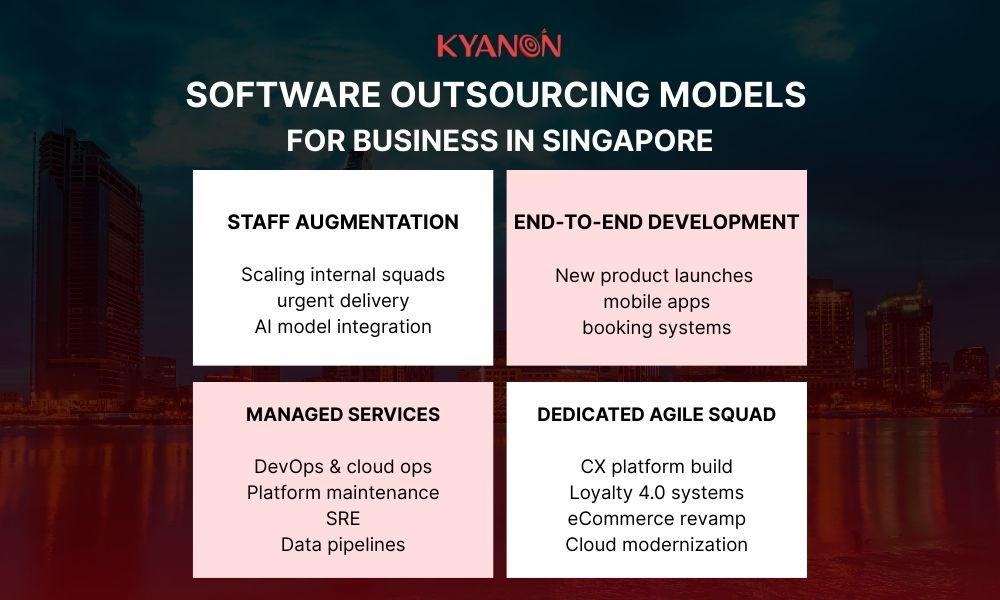
Staff augmentation
Staff augmentation helps Singapore enterprises fill immediate skill gaps and accelerate delivery without long hiring cycles.
Best for:
- Scaling internal squads quickly
- Urgent feature delivery or market-driven deadlines
- AI/ML model integration (requires niche talent)
- Short-term capability gaps in DevOps, QA, or frontend/backend engineering
Why businesses in Singapore should choose this model
Singapore’s talent market is highly competitive. Augmentation gives leaders instant access to senior engineers, cloud specialists, and data/AI talent to supplement their core team while maintaining full project control.
Dedicated agile squad (Most popular in SG)
A dedicated Agile squad gives Singapore enterprises predictable velocity and the engineering maturity needed for complex digital builds.
This is the most popular outsourcing model among Singapore enterprises. A dedicated squad operates as an extension of the company’s product team, combining developers, QA, DevOps, BA/PO, and architects under one sprint governance model.
Best for
- CX platform build (web, mobile, unified experience)
- Loyalty 4.0 systems (AI-powered engagement and personalization)
- eCommerce modernization using MACH, composable commerce, microservices
- Cloud and platform modernization across AWS, Azure, and GCP
- Enterprise digital transformation programs
Why businesses in Singapore should choose this model
- High delivery velocity
- Stable team composition
- Predictable monthly cost
- Mature Agile + DevOps practices
- The ability to run parallel workstreams
This model is ideal for Singapore companies facing aggressive timelines and requiring end-to-end engineering maturity.
End-to-end development
End-to-end development accelerates product launches by leveraging full-stack vendor expertise from design through deployment. In this model, the vendor takes full responsibility for planning, designing, building, and delivering the solution.
Best for
- New product launches
- Mobile apps (consumer or B2B)
- Booking or reservation systems
- Greenfield digital initiatives
- Platform extensions or feature bundles
Why businesses in Singapore should choose this model
This model minimizes internal overhead and accelerates time-to-launch by utilizing complete vendor capabilities, such as product design, architecture, engineering, QA, and DevOps, under a single accountability structure.
Managed services
Managed services offer existing platforms with strengthened uptime, performance, and operational stability across cloud and digital platforms.
Best for
- DevOps & cloud operations
- Platform maintenance & performance management
- SRE (Site Reliability Engineering)
- Security monitoring
- Data pipelines & data operations
- Continuous improvement cycles
Why businesses in Singapore should choose this model
Singapore enterprises increasingly adopt cloud-native architectures and distributed systems. Managed services ensure uptime, stability, and cost efficiency while allowing internal teams to focus on innovation instead of BAU operations.
Case study: Kyanon Digital integrates a smart experience lifestyle platform for CDL
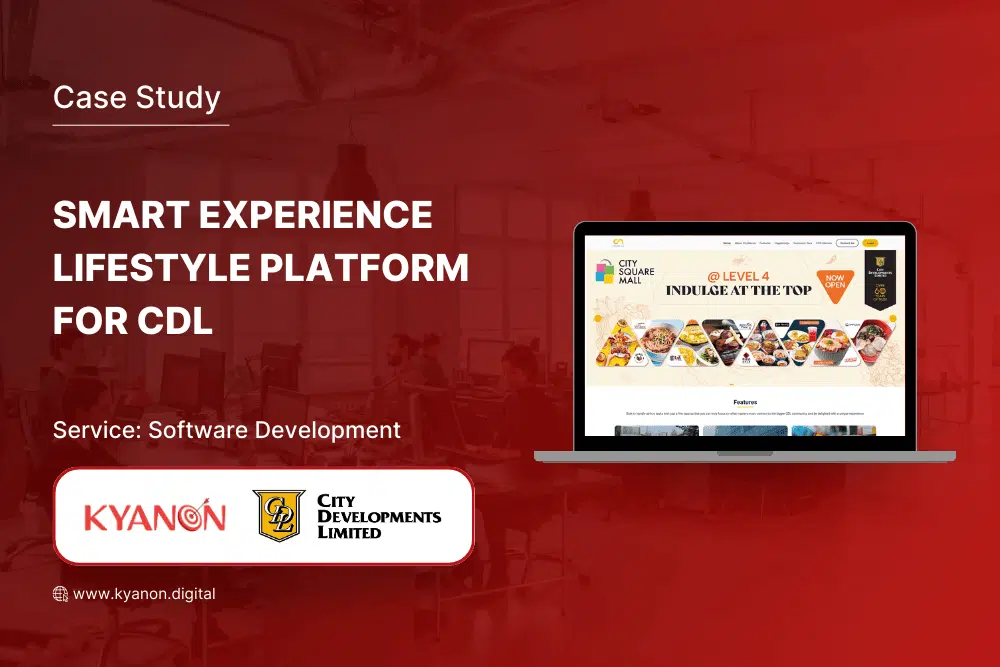
A leading Singapore real estate group (CDL) partnered with Kyanon Digital to build an integrated smart experience lifestyle platform, a multi-module digital ecosystem designed to elevate resident experience across properties.
Challenge
CDL needed a unified digital platform to enhance resident engagement, streamline services, and modernize its lifestyle ecosystem across multiple properties.
Solution
Kyanon Digital delivered a smart experience lifestyle platform with:
- End-to-end development across mobile app, membership ecosystem, and service modules
- Seamless integration with existing property systems and backend services
- Cloud-native architecture and a dedicated Agile squad to accelerate delivery
Key outcomes
- End-to-end platform development covering mobile app, membership ecosystem, and engagement services
- Seamless integration across multiple backend systems and property touchpoints
- Improved customer experience through unified digital journeys
- Faster delivery cycles using dedicated Agile squads and modern cloud-native architecture
Kyanon Digital’s CDL platform showcases how outsourcing accelerates complex CX builds and delivers measurable digital value.
Read more: Smart Experience Lifestyle Platform for CDL
Leadership playbook: How to maximize outsourcing ROI
Software outsourcing delivers ROI only when leaders treat it as a strategic operating model, not a transactional cost lever.
For Singapore enterprises, where digital ambition is high, but talent and time-to-market pressures are intensifying, ROI grows significantly when outsourcing is embedded into the technology architecture, governance, and delivery discipline of the organization.
Below is a C-level playbook with must-have actions designed specifically for Singapore’s business landscape.
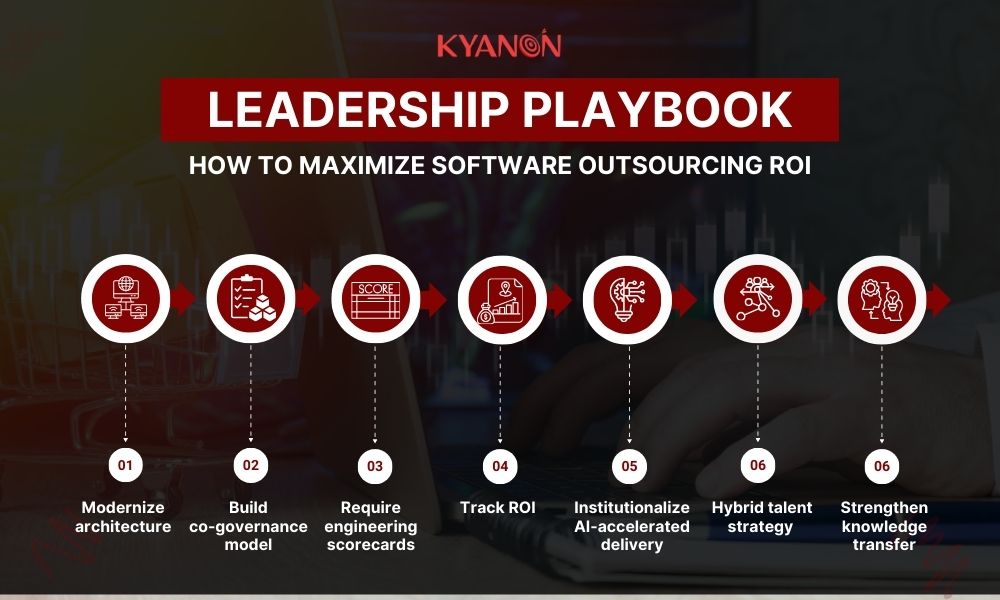
1. Modernize your architecture
Why it matters
Legacy monolithic systems slow down outsourced teams, increase integration friction, and limit the speed at which vendors can deliver features.
If leaders want a predictable outsourcing ROI, architectural modernization must be step zero.
Executive actions
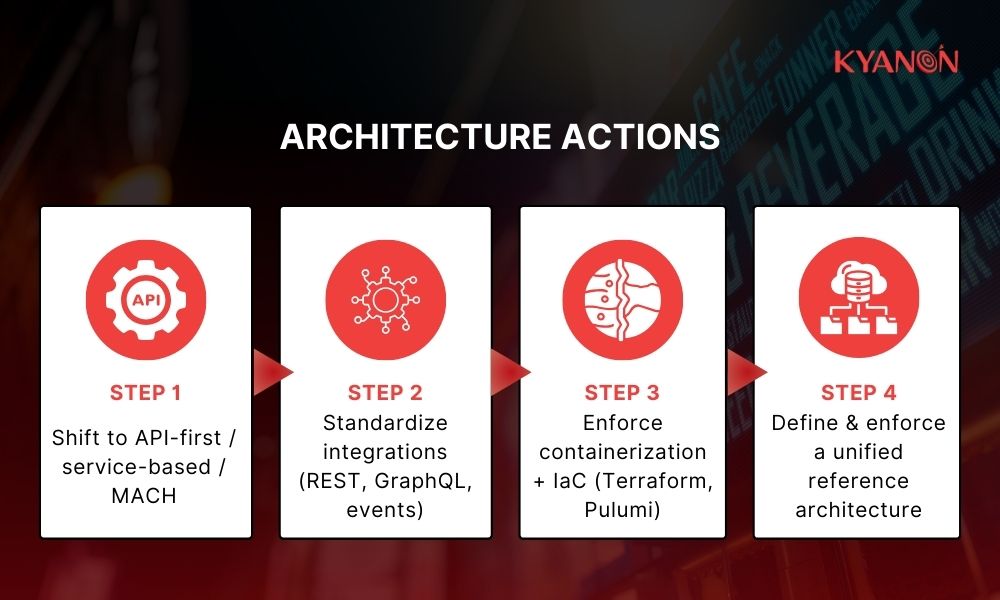
- Transition from monolithic to API-first, service-based, or MACH architectures.
- Standardize integration patterns across systems (REST, GraphQL, event-driven).
- Enforce containerization and infrastructure-as-code (Terraform, Pulumi).
- Establish a reference architecture that every outsourced squad must align with.
ROI impact
- Faster onboarding of vendor teams
- Lower integration cost
- Reduced rework
- Higher reusability across products
- Simplified cloud migration and enhancement
2. Build a co-governance model
Outsourcing fails when leadership treats vendors like “task handlers.” C-level executives who achieve the highest ROI build a co-governance model that aligns enterprise and vendor incentives.
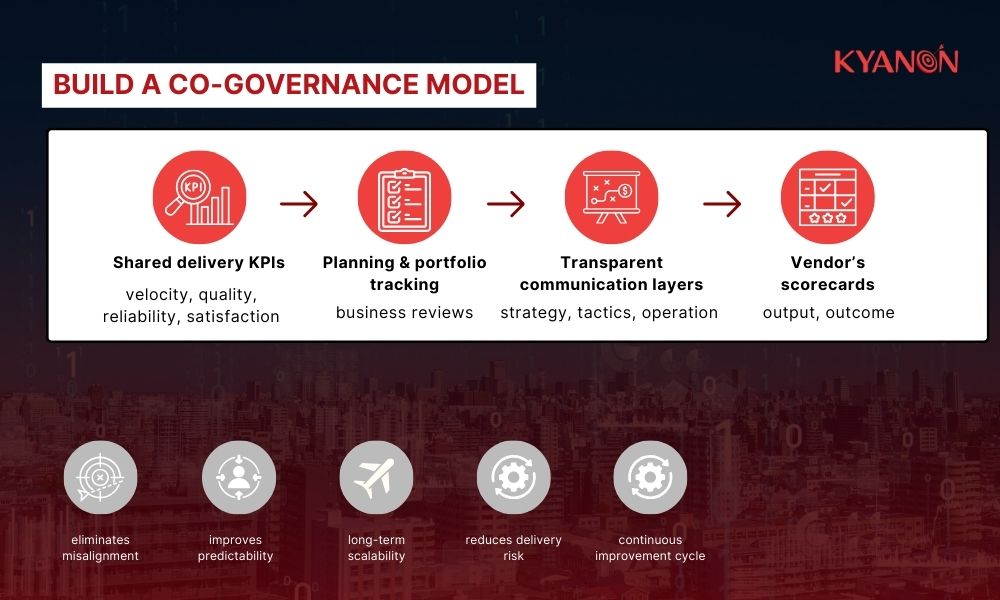
Governance components
- Shared delivery KPIs
- Both sides are accountable for velocity, quality, reliability, and stakeholder satisfaction.
- Joint sprint planning & portfolio tracking
- Vendors should participate in quarterly business reviews, not just stand-ups.
- Transparent communication layers
- Strategic layer: C-level alignment on business outcomes
- Tactical layer: Delivery governance, risk management.
- Operational layer: Sprint-based execution and reporting
- Vendor performance scorecards
- Evaluates both output (velocity, quality) and outcome (customer impact, time-to-market).
ROI impact
- Eliminates misalignment
- Improves predictability
- Reduces delivery risk
- Creates a continuous improvement cycle
- Strengthens long-term partnership value
3. Require engineering scorecards
High-performing enterprises track delivery performance with real engineering KPIs, not generic project status reports.
Engineering scorecard (recommended set)
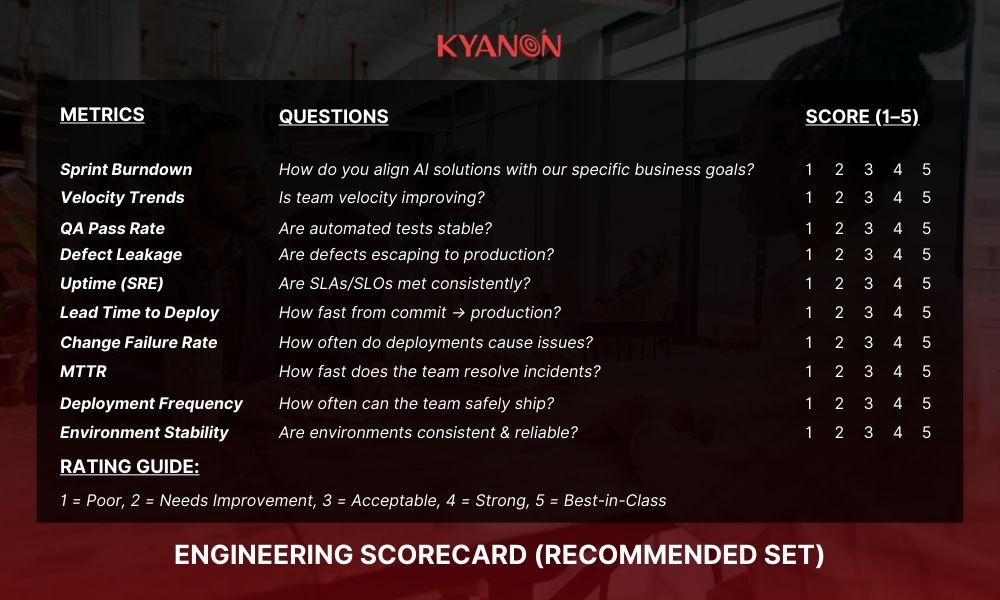
- Sprint burndown: Are teams completing committed work?
- Velocity trends: Is productivity improving or plateauing?
- QA pass rate (Automation): Stability of each release cycle
- Uptime & reliability (SRE): SLA and SLO compliance
- Lead time to deploy: Cycle time from commit → production
- Change failure rate: How often deployments cause incidents
- MTTR: Speed of recovery from production issues
Why it matters for Singapore
With shortages in cloud, AI, DevOps, and backend engineering, enterprises must maintain high visibility into execution quality across external squads.
4. Track ROI using a multi-layer KPI system
Below is a deep KPI matrix covering speed, reliability, CX, and engineering impact.
Quick KPI matrix for maximizing software outsourcing ROI
|
KPI group |
Metric | Target benchmark | What it indicates |
|
Speed |
Sprint velocity | +20–35% improvement over baseline |
Faster feature cycle |
|
Quality |
Defect leakage | <1–3% |
Strong QA & stable releases |
|
Infrastructure |
MTTR | <1 hour |
Mature SRE response |
|
CX Performance |
Uptime | 99.9% |
Platform reliability |
|
Engineering Impact |
Deployment frequency | 2–5x/week |
High DevOps maturity |
|
Product Value |
Lead time to value | Decrease by 25–40% |
Quicker business outcomes |
|
Scalability |
Ramp-up time | 2–4 weeks |
Vendor readiness |
| Cost Efficiency | Cost/feature ratio | Decrease YoY |
Improved engineering productivity |
5. Institutionalize AI-accelerated delivery
Modern vendors increasingly use AI to accelerate engineering. Singapore leaders are maximizing ROI leverage.
AI-enabled capabilities
- Automatic code generation & reviews
- AI test automation
- Predictive sprint planning
- Intelligent backlog grooming
- AI-powered anomaly detection for SRE
ROI impact
- Higher team productivity
- Reduced regression testing effort
- Lower incident frequency
- Faster delivery cycles
6. Commit to a hybrid talent strategy
Singapore enterprises that see the highest outsourcing ROI adopt hybrid models:
Hybrid structure
- Internal: product owners, architects, core IP, strategy
- Vendor: engineering squads, DevOps, AI specialists, modernization streams
This ensures
- Strategic control stays internal
- The delivery scale comes from outsourcing
- Capability gaps (AI, cloud, SRE) are seamlessly filled
- Talent constraints do not block transformation
7. Strengthen knowledge transfer & documentation practices
High-ROI outsourcing requires knowledge continuity, especially in multi-vendor or multi-team environments.
Strong documentation standards should include
- System architecture maps
- API specifications
- IaC (Infrastructure-as-Code) repositories
- CI/CD playbook
- SRE runbooks & escalation processes
- Product domain knowledge guides
ROI impact
- Reduces dependency risk
- Accelerates vendor onboarding
- Enables scalable multi-squad delivery
- Improves long-term maintainability
In conclusion
Singapore’s digital economy is accelerating, but so are the pressures on talent, cost, and delivery speed. As this guide shows, software outsourcing delivers measurable ROI across financial efficiency, operational velocity, strategic capability, and customer experience performance.
Leaders who invest in the right partnerships, especially with APAC engineering hubs, will unlock measurable ROI, faster digital execution, and long-term competitive advantage in 2026 and beyond.
Why partner with Kyanon Digital?
We’re a Tech Partner, Not a Recruiter
We build your team strategically, aligning talents with your software vision and roadmap, not just job requirements. With ongoing upskilling and expert support from our Center of Excellence, your talent stays ahead of challenges and delivers results.
Comprehensive Talent Ecosystem
Kyanon Digital talent ecosystem encompasses over 50,000 technology professionals
- Internal Talent Core: 500+ professionals
- K-Fresh Program: Nurturing Future Digital Leaders from 18 Universities in Vietnam
- External Talent Network: 15,000+ premium candidates
- Partner Network: 1,000+ trusted partners
Your One-Stop Talents Impact Solution
We manage from talent acquisition to HR management for your tech workforce, freeing your team to focus on core business and innovation.
If your organization is ready to accelerate its digital roadmap, Kyanon Digital is here to help. Connect with our team to explore how the right outsourcing model can unlock real, sustainable ROI for your business.