
Thị giác máy tính là gì?
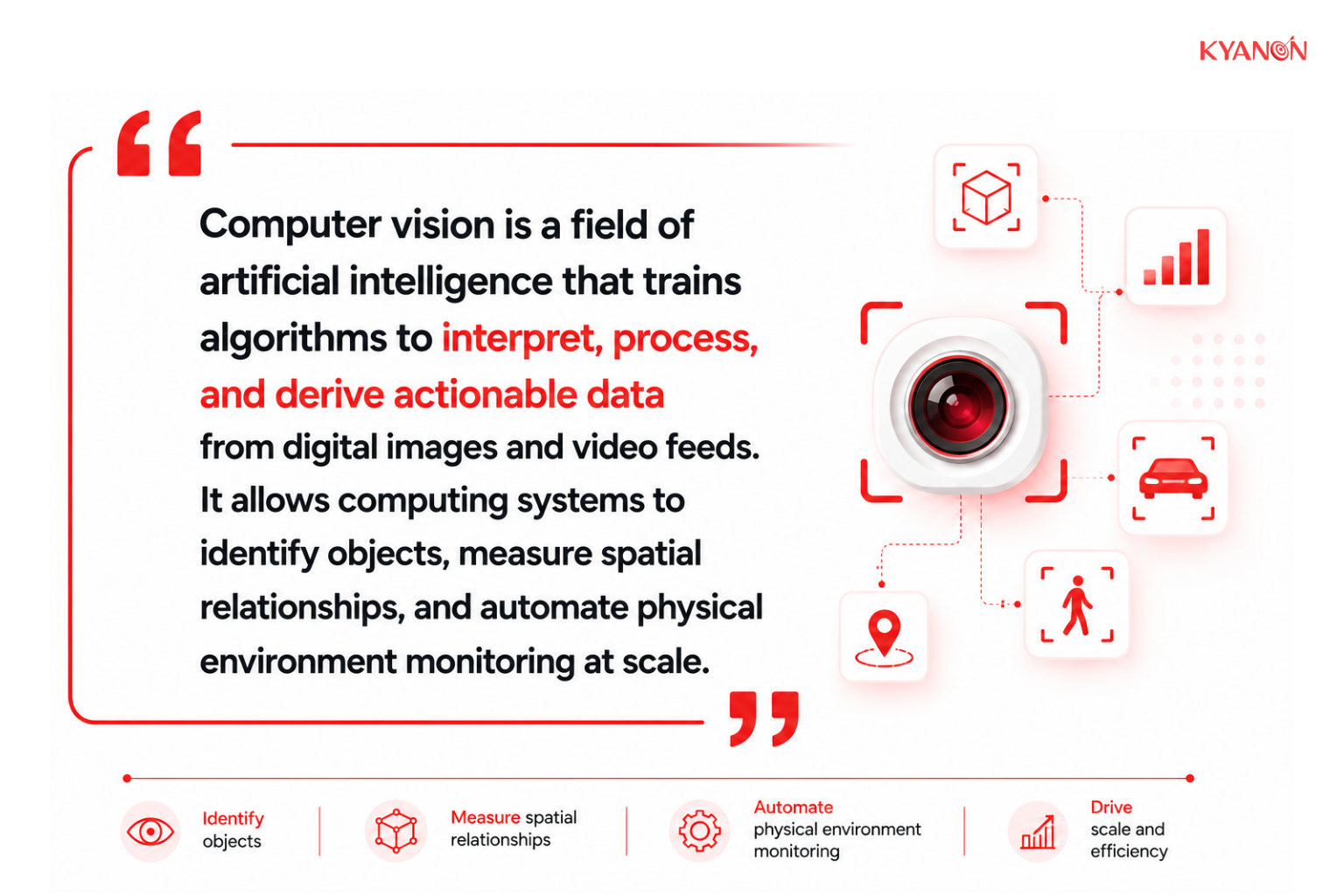
Thị giác máy tính là một lĩnh vực của trí tuệ nhân tạo cho phép các hệ thống diễn giải, xử lý và rút ra những hiểu biết hữu ích từ hình ảnh kỹ thuật số và luồng video. Bằng cách chuyển đổi dữ liệu hình ảnh thô thành thông tin có cấu trúc, nó cho phép máy móc nhận dạng đối tượng, hiểu các mối quan hệ không gian và đưa ra các quyết định tự động trong thời gian thực.
Trong các doanh nghiệp hiện đại, thị giác máy tính đã phát triển từ một khả năng dựa trên nghiên cứu thành một xương sống hoạt động quan trọng. Giờ đây, nó cung cấp sức mạnh cho các hệ thống có thể diễn giải, thích ứng và hành động liên tục trên môi trường hình ảnh, giảm sự phụ thuộc vào việc kiểm tra thủ công và cho phép tự động hóa có thể mở rộng trên nhiều ngành công nghiệp.
Cơ chế hoạt động của thị giác máy tính
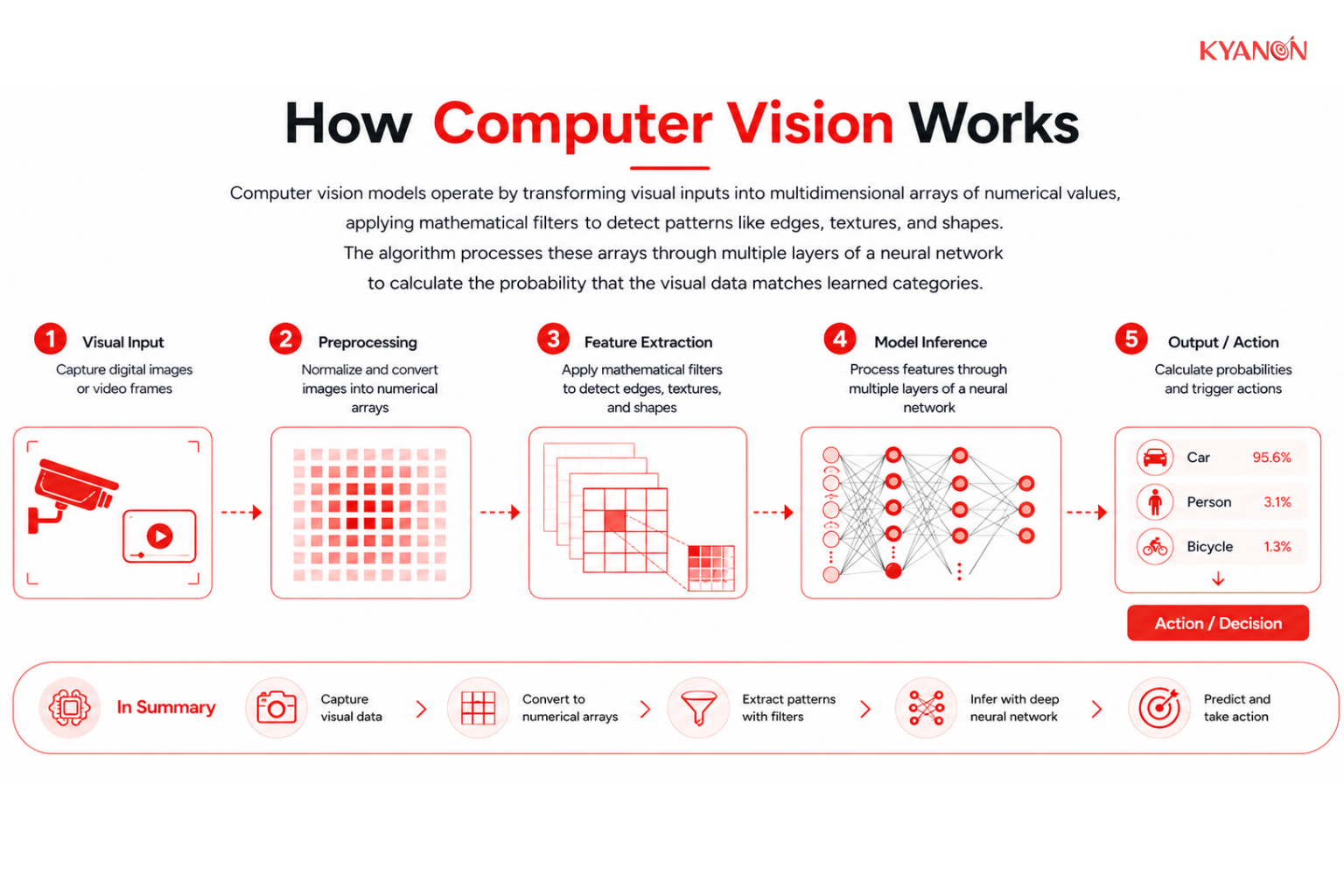
Các hệ thống thị giác máy tính chuyển đổi hình ảnh và video thành dữ liệu số (mảng pixel) và xử lý chúng thông qua các mạng nơ-ron nhiều lớp để trích xuất các mẫu có ý nghĩa.
Các mô hình này thường:
- Phát hiện các cạnh, kết cấu và hình dạng trong các lớp ban đầu
- Kết hợp các đặc điểm thành các biểu diễn cấp cao hơn (đối tượng, cảnh).
- Đưa ra các dự đoán đầu ra như phân loại, hộp giới hạn hoặc kết quả theo dõi chuyển động.
Kết quả cuối cùng thường là một nhãn kèm theo điểm độ tin cậy, có thể kích hoạt các quy trình tự động tiếp theo như cảnh báo, hành động sắp xếp hoặc cập nhật phân tích.

Các thành phần chính của hệ thống thị giác máy tính
1. Lớp tiếp nhận dữ liệu
Thu thập dữ liệu hình ảnh từ camera, cảm biến, LiDAR hoặc thiết bị nhiệt và chuyển đổi chúng thành dữ liệu pixel có cấu trúc. Các bước tiền xử lý như chuẩn hóa và thay đổi kích thước đảm bảo tính nhất quán cho quá trình xử lý tiếp theo.
2. Công cụ trích xuất đặc trưng
Được hỗ trợ bởi các mô hình học sâu như Mạng nơ-ron tích chập (CNN), lớp này phát hiện các mẫu từ các cạnh đơn giản đến các cấu trúc đối tượng phức tạp như các bộ phận máy móc hoặc khuôn mặt người.
3. Lớp suy luận và đầu ra
Áp dụng các mô hình đã được huấn luyện để tạo ra các dự đoán như phát hiện đối tượng, phân loại hoặc theo dõi. Kết quả đầu ra được sử dụng để kích hoạt các quyết định theo thời gian thực trong các hệ thống doanh nghiệp.
Ứng dụng của thị giác máy tính trong doanh nghiệp
Công nghệ thị giác máy tính hiện đang được ứng dụng rộng rãi trong nhiều ngành công nghiệp để nâng cao độ chính xác trong vận hành và giảm sự phụ thuộc vào thao tác thủ công.
Chế tạo
Tự động hóa quy trình kiểm soát chất lượng bằng cách phát hiện các khuyết tật siêu nhỏ (vết xước, vết lõm, linh kiện bị hỏng) trên dây chuyền sản xuất tốc độ cao, giảm thiểu lãng phí và ngăn ngừa các đợt thu hồi sản phẩm tốn kém.
Bán lẻ & Hàng tồn kho
Cho phép giám sát kệ hàng theo thời gian thực để phát hiện các mặt hàng hết hàng, sản phẩm đặt sai vị trí và mô hình di chuyển của khách hàng. Bản đồ nhiệt hỗ trợ tối ưu hóa bố cục cửa hàng và các quyết định trưng bày sản phẩm.
Hậu cần & Chuỗi cung ứng
Hỗ trợ robot và máy bay không người lái điều khiển bằng thị giác cho việc điều hướng trong kho, quét mã vạch, nhận dạng container và phân loại tự động — giúp tăng tốc đáng kể chu kỳ hoàn thành đơn hàng.
An toàn và bảo mật nơi làm việc
Phát hiện các hành vi không an toàn như thiếu thiết bị bảo hộ và xác định sự xâm nhập trái phép vào các khu vực hạn chế, giúp cải thiện việc tuân thủ quy định và giảm thiểu tai nạn lao động.
Chăm sóc sức khỏe
Nâng cao độ chính xác chẩn đoán thông qua phân tích hình ảnh y tế tự động, hỗ trợ quy trình làm việc trong lĩnh vực X quang, bệnh lý học và phát hiện bệnh sớm.
Thị giác máy tính so với thị giác nhân tạo
Kích thước | Thị giác máy tính | Thị giác máy |
| Mục tiêu chính | Giải thích dữ liệu hình ảnh phức tạp | Thực hiện kiểm tra dựa trên quy tắc |
Độ phức tạp xử lý | Cao (mô hình học sâu) | Mức độ khó: Trung bình (thuật toán cố định) |
| Môi trường | Linh hoạt và không có cấu trúc | Môi trường công nghiệp được kiểm soát |
Sự phụ thuộc vào phần cứng | Không phụ thuộc vào phần cứng | Hệ thống công nghiệp chuyên dụng |
| Các trường hợp sử dụng tốt nhất | Phân tích bán lẻ, hệ thống tự động | Kiểm tra dây chuyền lắp ráp, quét mã vạch |
Khi nào nên sử dụng thị giác máy tính?
Hãy cân nhắc áp dụng công nghệ thị giác máy tính nếu:
- Kiểm tra thủ công đang gây ra tắc nghẽn hoặc kết quả chất lượng không nhất quán.
- Bạn cần giám sát kệ hàng bán lẻ và theo dõi tồn kho theo thời gian thực.
- Hoạt động hậu cần của bạn cần hệ thống theo dõi tự động hoặc nhận dạng container.
Việc này có thể không cần thiết nếu hệ thống của bạn chủ yếu xử lý văn bản có cấu trúc hoặc dữ liệu chữ số đơn giản.
Chiến lược triển khai cho doanh nghiệp
Các tổ chức thường áp dụng công nghệ thị giác máy tính thông qua một số phương pháp triển khai khác nhau:
Dịch vụ thị giác máy tính (CVaaS)
Các nhà cung cấp, chẳng hạn như các nhà cung cấp giải pháp doanh nghiệp, cung cấp dịch vụ triển khai trọn gói mà không yêu cầu phát triển mô hình nội bộ, cho phép áp dụng nhanh hơn và giảm rào cản gia nhập.
API dựa trên đám mây
Các nền tảng như Google Cloud Vision API và AWS Rekognition cung cấp các mô hình được huấn luyện sẵn cho OCR, nhận dạng khuôn mặt và gắn nhãn hình ảnh, cho phép tích hợp nhanh chóng vào các ứng dụng.
Trí tuệ biên
Các mô hình được triển khai trên các thiết bị biên (ví dụ: NVIDIA Jetson) cho phép xử lý độ trễ thấp trực tiếp tại chỗ, điều này rất quan trọng đối với các dây chuyền sản xuất, nhà kho và môi trường từ xa.
Tại sao thị giác máy tính lại quan trọng đối với các doanh nghiệp hiện đại?
Thị giác máy tính đã trở thành một công nghệ then chốt trong các doanh nghiệp hiện đại vì nó cho phép các tổ chức tự động diễn giải và xử lý dữ liệu hình ảnh trên quy mô lớn. Thay vì dựa vào con người để kiểm tra hình ảnh, video hoặc sản phẩm vật lý, hệ thống thị giác máy tính có thể phân tích đầu vào hình ảnh liên tục và theo thời gian thực, đưa ra quyết định nhanh chóng và nhất quán hơn.
Sự thay đổi này đặc biệt quan trọng trong các ngành công nghiệp tạo ra lượng lớn dữ liệu hình ảnh mỗi giây, chẳng hạn như sản xuất, bán lẻ, hậu cần và an ninh. Các phương pháp kiểm tra thủ công truyền thống thường bị hạn chế bởi sự mệt mỏi, tính không nhất quán và khả năng mở rộng kém. Thị giác máy tính thay thế phương pháp dựa trên mẫu này bằng việc giám sát liên tục, cho phép phát hiện các khuyết tật, bất thường hoặc sự cố vận hành một cách đáng tin cậy hơn khi chúng xảy ra.
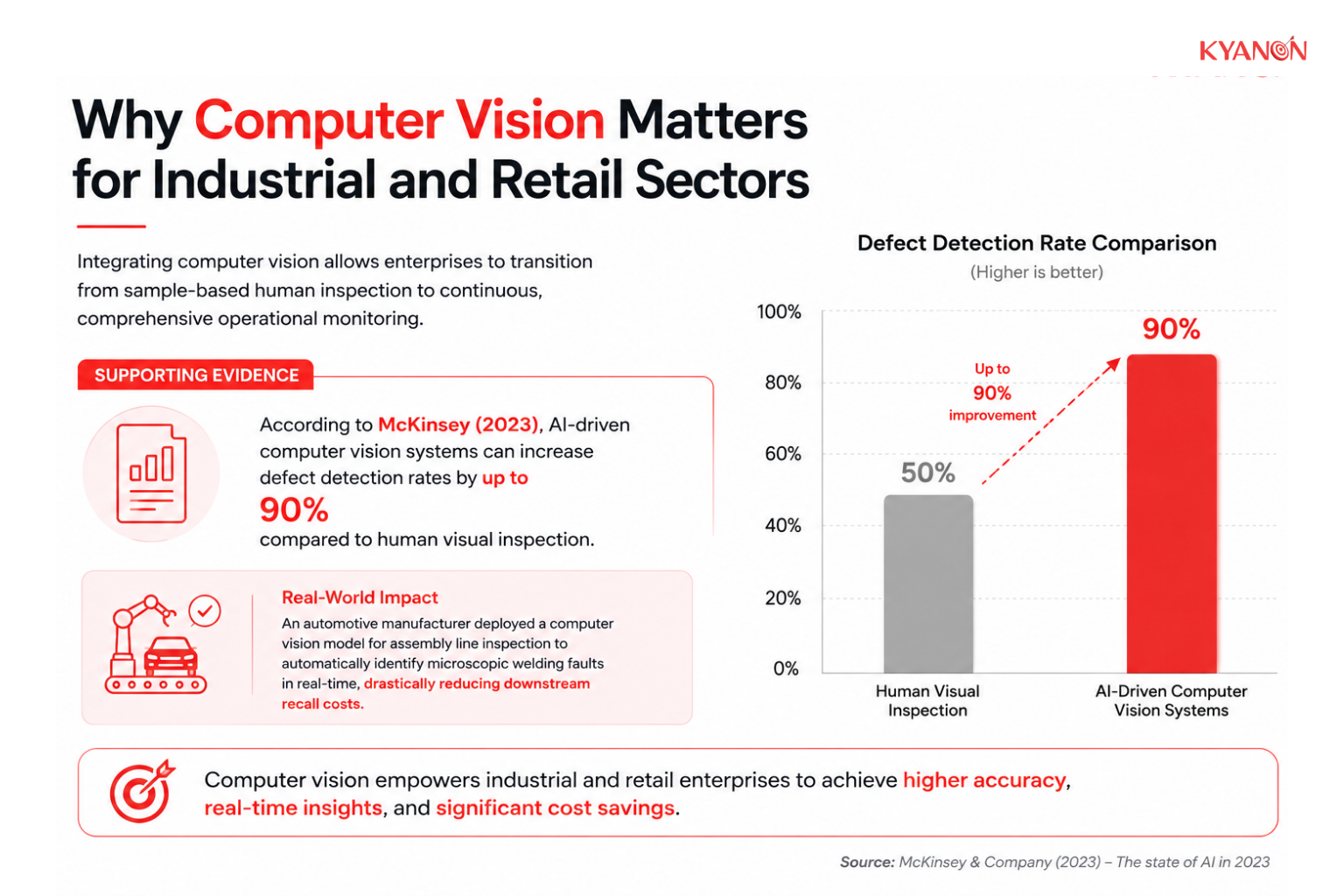
Ví dụ, trong ngành sản xuất ô tô, thị giác máy tính được sử dụng để phát hiện các khuyết tật hàn siêu nhỏ mà mắt người hầu như không thể nhận biết một cách nhất quán. Bằng cách xác định các vấn đề này trong thời gian thực, các nhà sản xuất có thể ngăn chặn các linh kiện bị lỗi tiếp tục tham gia vào quy trình sản xuất. Điều này không chỉ giảm nguy cơ phải thu hồi sản phẩm tốn kém mà còn giảm thiểu tổn thất sản xuất và cải thiện các tiêu chuẩn an toàn tổng thể.
Ngoài lĩnh vực sản xuất, thị giác máy tính còn hỗ trợ các trường hợp sử dụng như giám sát kệ hàng bán lẻ, tự động hóa kho hàng và giám sát an ninh. Trong mỗi lĩnh vực này, giá trị đến từ việc thay thế các bước kiểm tra thủ công chậm chạp bằng các hệ thống tự động hoạt động liên tục và trên quy mô lớn.
Đối với các doanh nghiệp, những khả năng này mang lại lợi ích hoạt động đáng kể. Thị giác máy tính có thể xử lý khối lượng dữ liệu hình ảnh khổng lồ một cách nhất quán, cho phép các tổ chức mở rộng quy mô hoạt động kiểm tra và giám sát vượt xa khả năng của con người. Bằng cách giảm sự phụ thuộc vào việc xem xét thủ công và giảm thiểu lỗi của con người trong các nhiệm vụ lặp đi lặp lại, doanh nghiệp có thể giảm chi phí hoạt động đồng thời cải thiện độ chính xác. Phân tích thời gian thực cũng đẩy nhanh quá trình ra quyết định bằng cách cung cấp thông tin chi tiết hữu ích trực tiếp vào các hệ thống vận hành, cho phép các nhóm phản ứng ngay lập tức với các lỗi, rủi ro an toàn hoặc gián đoạn chuỗi cung ứng. Ở cấp độ chiến lược, thị giác máy tính tạo ra cơ hội đổi mới và khác biệt hóa cạnh tranh, hỗ trợ các mô hình kinh doanh thế hệ tiếp theo như bán lẻ không cần quầy thu ngân, kho tự động và hoạt động hậu cần được hỗ trợ bởi trí tuệ nhân tạo.
Tóm lại, thị giác máy tính đóng vai trò quan trọng đối với các doanh nghiệp hiện đại vì nó chuyển đổi dữ liệu hình ảnh từ đầu vào thụ động thành nguồn lực chủ động trong việc ra quyết định. Nó cho phép các tổ chức hoạt động nhanh hơn, chính xác hơn và linh hoạt hơn trong môi trường mà độ chính xác và quy mô là yếu tố then chốt.
Những quan niệm sai lầm thường gặp
“Thị giác máy tính hiểu hình ảnh giống như con người.”
Thực tế: Các mô hình phân tích mẫu điểm ảnh bằng phương pháp thống kê và không sở hữu khả năng suy luận theo ngữ cảnh giống con người.
“Cần có bộ dữ liệu lớn để bắt đầu.”
Thực tế: Các doanh nghiệp có thể tận dụng các mô hình được đào tạo trước và các kỹ thuật tăng cường dữ liệu để xây dựng các hệ thống hiệu quả với các tập dữ liệu chất lượng cao, tương đối nhỏ.
Cách Kyanon Digital ứng dụng công nghệ thị giác máy tính
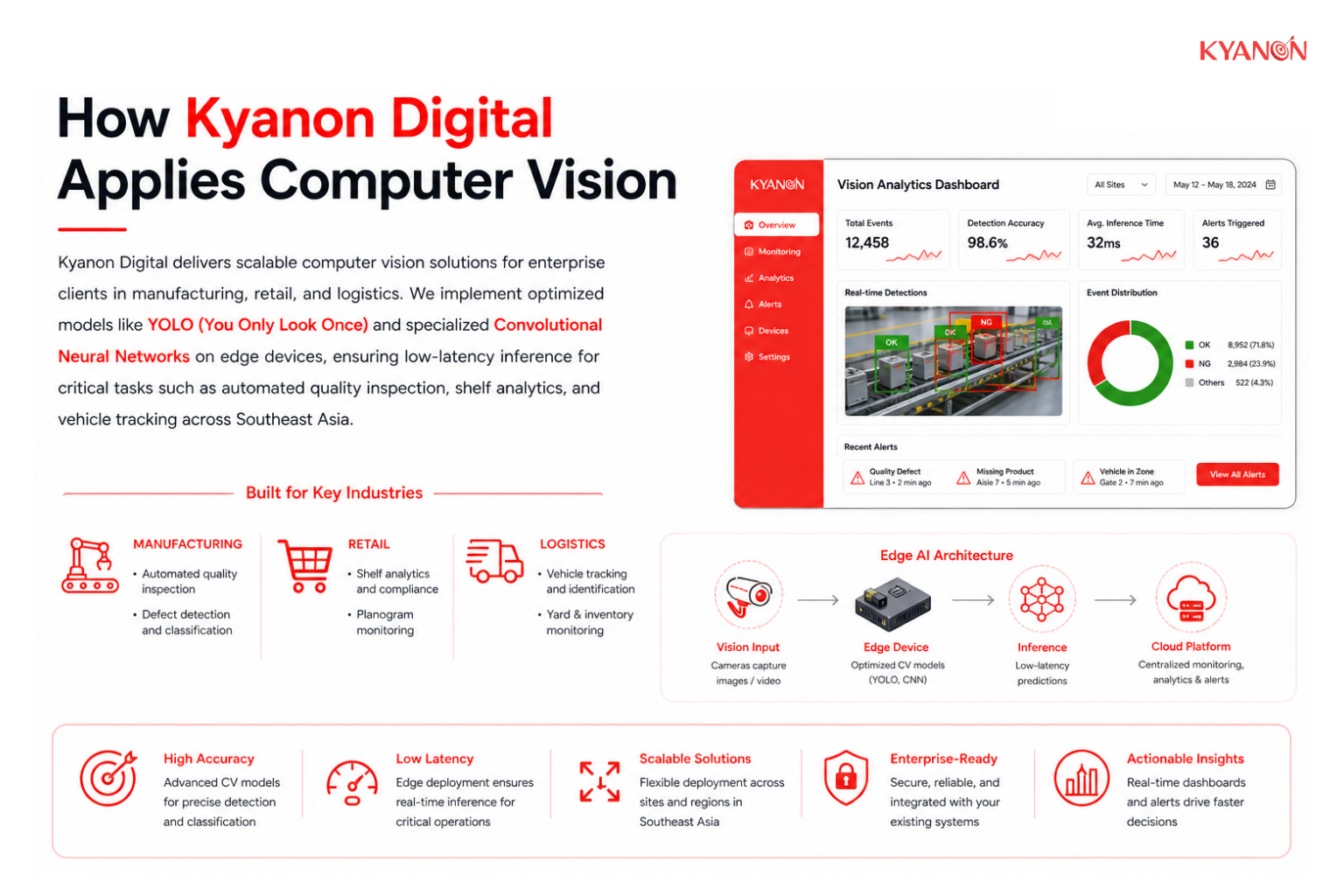
Kyanon Digital cung cấp các giải pháp thị giác máy tính cấp doanh nghiệp cho các lĩnh vực sản xuất, bán lẻ và logistics. Sử dụng các mô hình tiên tiến như YOLO (You Only Look Once) và kiến trúc mạng nơ-ron tích chập (CNN) tùy chỉnh, chúng tôi triển khai các hệ thống thị giác được tối ưu hóa trên các thiết bị biên để đảm bảo xử lý độ trễ thấp cho các hoạt động thời gian thực.
Các giải pháp của chúng tôi hỗ trợ:
- Kiểm tra chất lượng tự động trong sản xuất
- Phân tích kệ hàng và thông tin bán lẻ
- Theo dõi phương tiện và tối ưu hóa hậu cần trên khắp Đông Nam Á.
→ Khám phá các dịch vụ phát triển phần mềm thị giác máy tính tùy chỉnh của chúng tôi .

 Create project brief with AI