



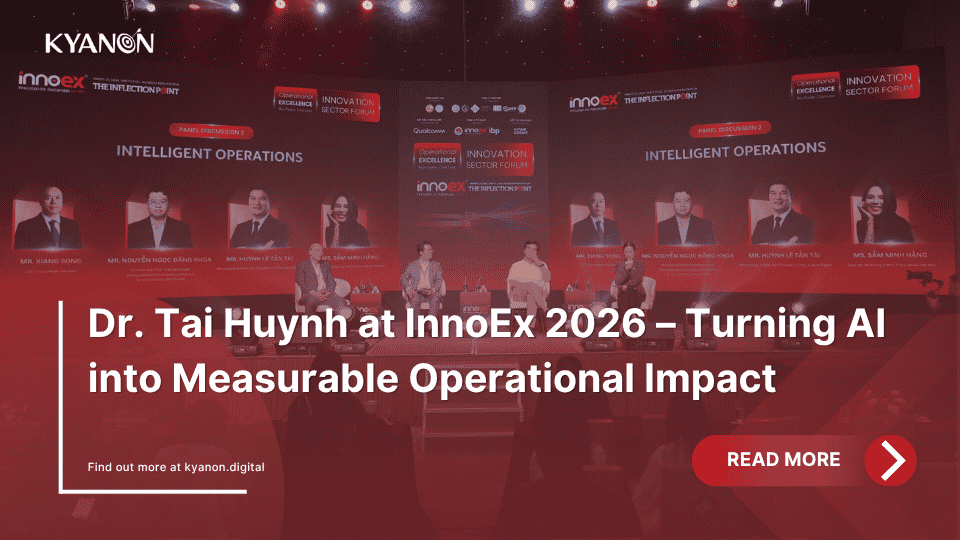
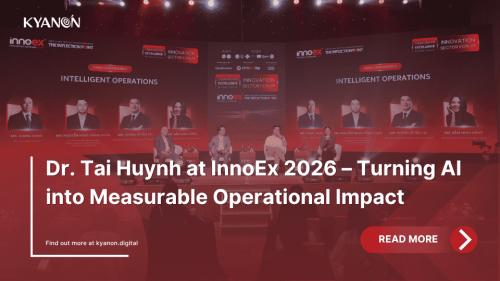
At InnoEx 2026, Dr. Huỳnh Lê Tấn Tài (Tai Huynh), Founder & CEO of Kyanon Digital and Co-President of the CIO Vietnam Community, joined the panel “Intelligent Operations – From Technology Adoption to Operational Impact.”
The discussion addressed a challenge facing many organizations: technology projects may be delivered successfully from an IT perspective, yet still fail to improve revenue, customer experience, or operational performance.
Drawing on Kyanon Digital’s experience working with businesses on technology transformation, Dr. Tai Huynh emphasized a practical principle: technology should begin with a business problem or business aspiration and be measured by the value it creates.
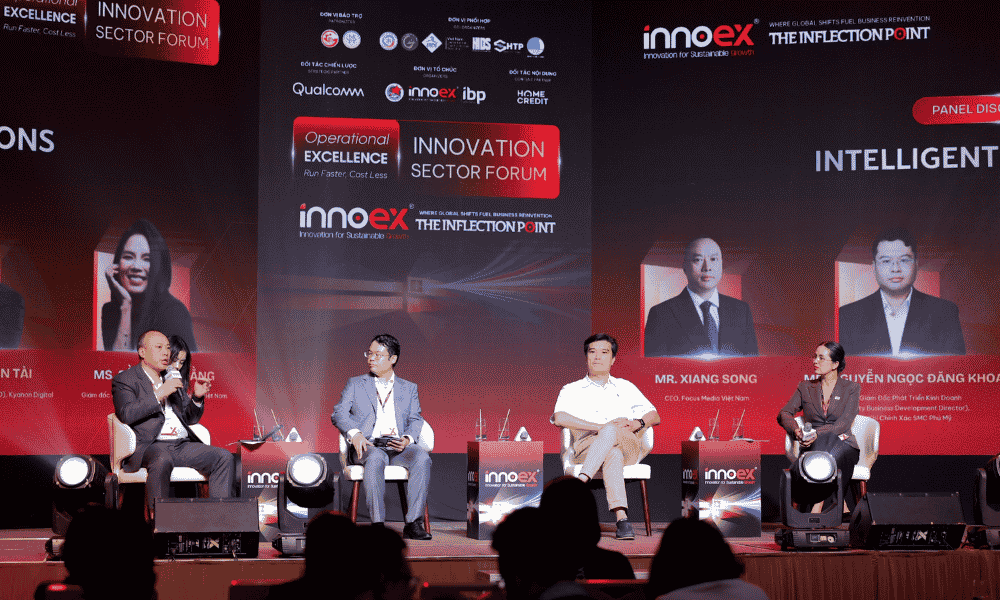
Intelligent operations start with business ownership
Technology implementation alone does not determine whether a transformation succeeds.
During the discussion, Dr. Tai Huynh noted that organizations may implement and operate multiple systems effectively in isolation. At the same time, the overall business journey still underperforms because those systems are not connected around a shared objective.
Some systems directly influence revenue. Others affect customer experience, inventory, finance, or internal operations. Looking at each system separately can therefore hide the wider business impact.
For every transformation initiative, organizations need:
- A clear business objective
- Defined measures of success
- A business unit accountable for the outcome
- IT support to enable the required technology
The distinction is important: the business should own the outcome, while IT enables the technology.
Intelligent operations therefore begin with aligning technology investment to a clearly defined business result rather than treating implementation itself as the finish line.
Start with the business need or a pain point, not the AI use case
A recurring issue in technology projects is starting with a platform, tool, or AI capability before defining what business needs or problems it should solve.
Dr. Tai Huynh emphasized that organizations should instead begin with the bottleneck or pain point.
Before choosing a technology, leaders should ask:
- Where is the business losing revenue or efficiency?
- Where is the customer experience breaking down?
- Which process creates unnecessary cost or delay?
- What business metric should improve?
- Who is accountable for that result?
This approach also requires organizations to look beyond individual applications toward the broader enterprise architecture.
A system rarely operates independently. Commerce, customer experience, inventory, operations, finance, and other enterprise capabilities influence one another. Without understanding these relationships, businesses can optimize one function while creating problems elsewhere.
The goal is therefore not simply to deploy more technology or more systems. It is to understand how each technology initiative contributes to the overall business outcome.
AI should improve decisions, not only automate tasks
During the panel, Dr. Tai Huynh framed one of the biggest challenges in enterprise AI adoption as a shift from Content to Context:
The key trend in AI adoption is moving from Content to Context. Businesses should focus not only on how fast AI creates content, but on how quickly it understands the right context to produce better outcomes.
– Dr. Tai Huynh, translated from his remarks at InnoEx 2026.
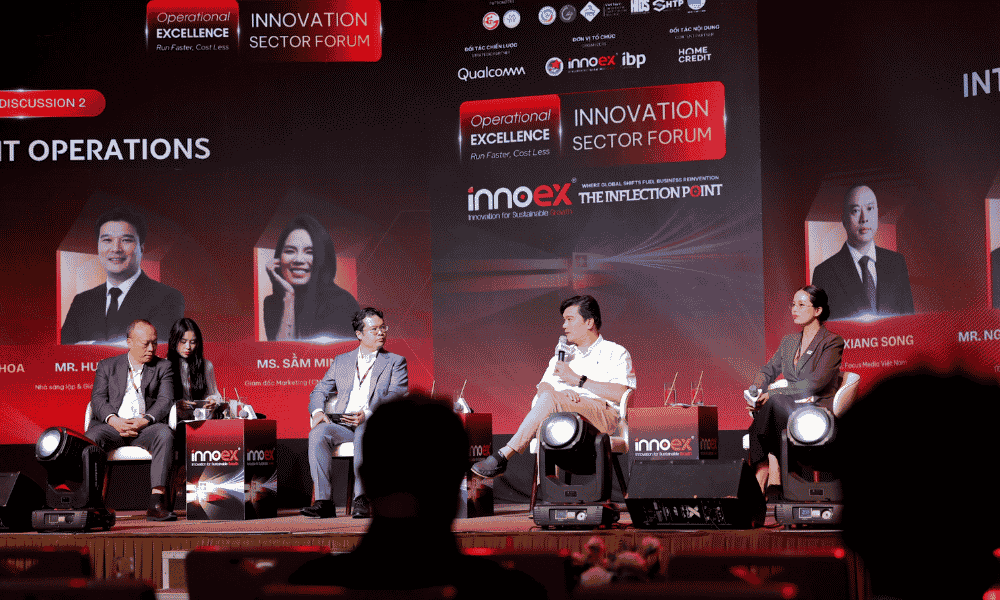
AI can accelerate execution of content production, but speed alone does not guarantee operational value. Dr. Tai Huynh noted that AI often produces generic outputs when it lacks sufficient business context, leaving employees to review, correct, and interpret the results.
In addition, he cited recent market research and a CIO Vietnam survey indicating that around 90% of AI projects fail to meet investor or business expectations. In his view, a major reason is that organizations often apply AI to existing workflows without any re-engineering work.
Many businesses focus on automation and applying AI to existing processes but do not dare to change the process itself or rethink how the work should be done in line with the technology advantage.
Dr. Tai Huynh further highlighted that up to 95% of failures can be attributed to organizations’ unwillingness to replace outdated processes and ways of working. This is why AI initiatives still require business owners who understand the operation, take responsibility for change, and continuously improve the underlying process.
The takeaway is clear: New technology or AI adoption should not simply make an old process faster. It should help to automate the re-engineered business process and make better decisions with the right context.
What CIOs and technology leaders need next
Moving toward intelligent operations requires closer alignment between business and technology teams.
The business understands the customer problem, operational pain point, commercial objective, and expected outcome. IT understands the systems, architecture, integration, security, and technical capabilities required to enable change.
Neither can operate effectively in isolation.
For Dr. Tai Huynh, successful transformation requires organizations to align business and technology within the enterprise architecture.
That also means evaluating technology initiatives from an enterprise perspective rather than allowing individual departments or systems to optimize only their own KPIs.
A technology project is successful when the organization can demonstrate that it has improved the measurable business outcome it was intended to address.
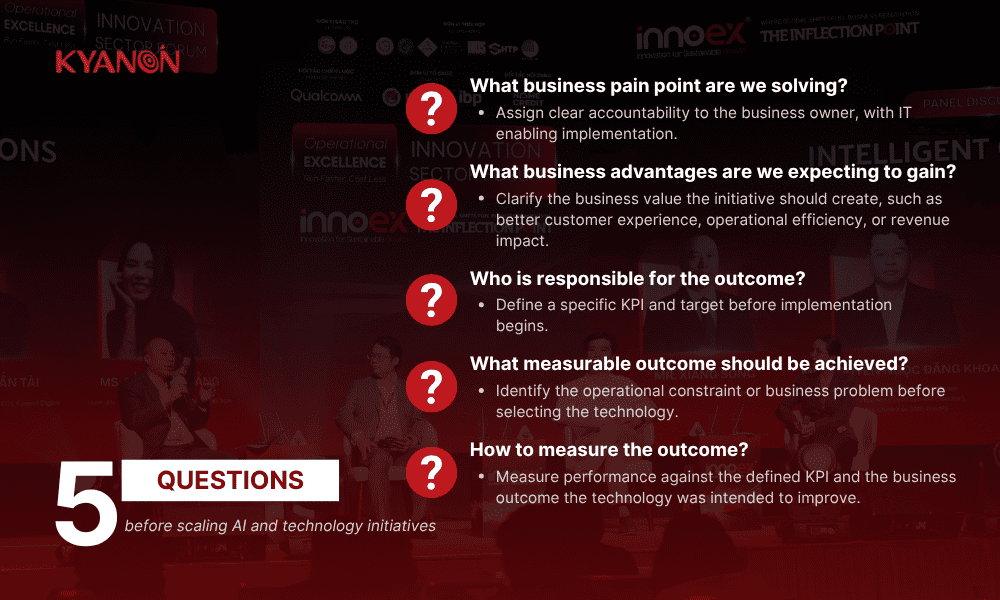
Practical questions before investing AI and technology initiatives
Based on Dr. Tai Huynh’s discussion, business leaders can use the questions below to assess whether an initiative is positioned to create operational value:
- What business pain point are we solving? Or what business advantages are we expecting to gain?
- Who is responsible for the outcome?
- What measurable outcome should be achieved?
- How to measure the outcome?
From AI experimentation to measurable business impact
The key takeaway from Dr. Tai Huynh’s participation at InnoEx 2026 is straightforward: businesses should not measure transformation simply by how much technology or AI they deploy.
Real value comes from understanding where the business is constrained, what needs to improve, who owns the outcome, and how technology can support that change.
AI adds another layer to this challenge. Organizations should move beyond using AI only to generate content or automate existing tasks and instead provide the sufficient context required for AI to support better business decisions.
For Kyanon Digital, intelligent operations mean adopting technologies in the right way to create more measurable business impact for organizations.
Technology is the enabler. Business impact is the goal.
Turn AI investment into measurable operational value. Talk to Kyanon Digital.














 Create project brief with AI