
What is User Research?
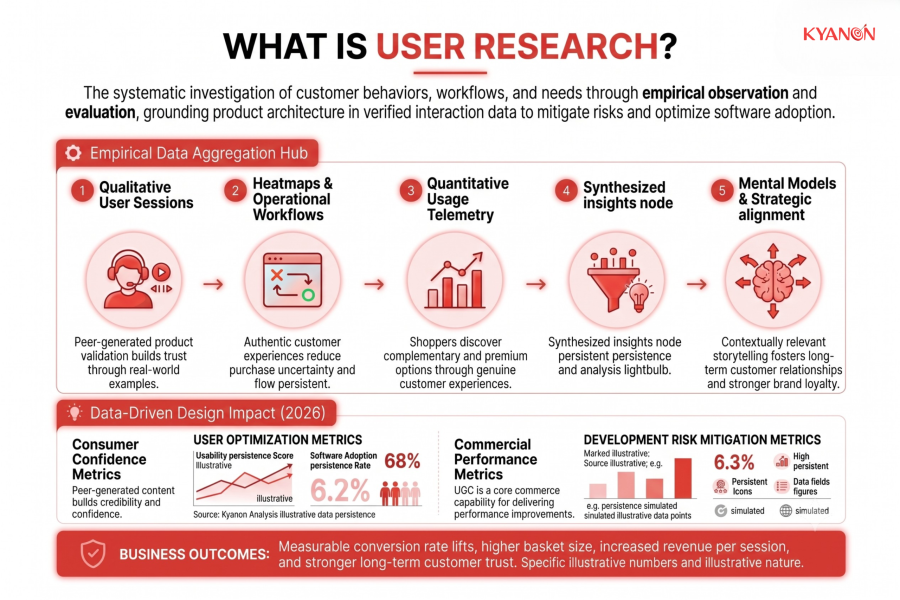
User research is the systematic investigation of customer behaviors, operational workflows, underlying needs, and mental models through empirical observation and analytical evaluation. By grounding product architecture in verified human interaction data, it enables enterprise engineering teams to mitigate development risks, streamline user pathways, and optimize software adoption.
How User Research Works
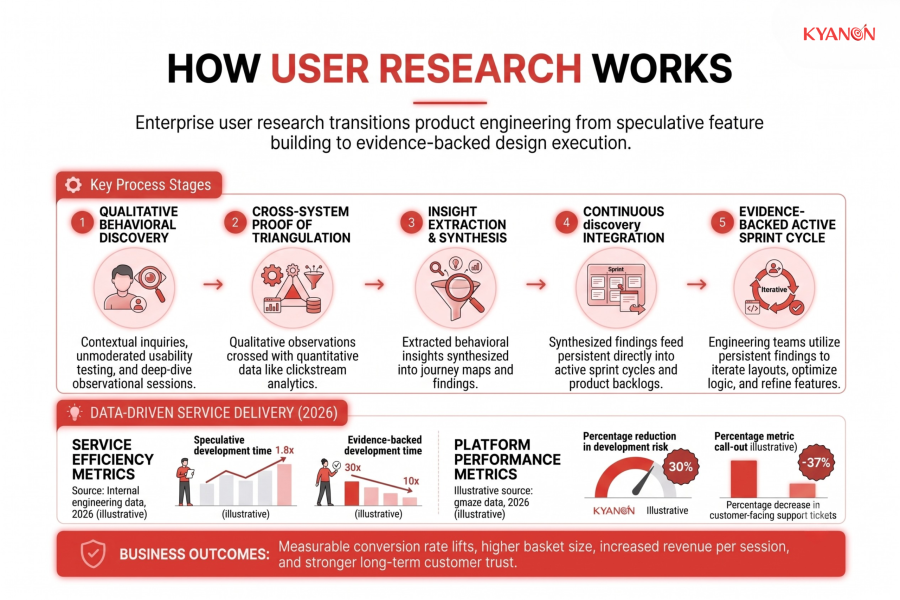
Enterprise user research transitions product engineering from speculative feature building to evidence-backed design execution.
Qualitative Behavioral Discovery
Researchers conduct contextual inquiries, unmoderated usability testing, and deep-dive observational sessions. Rather than asking users what features they want, researchers observe actual interaction barriers, cognitive bottlenecks, and workarounds within production environments.
Quantitative Data Triangulation
Qualitative observations are cross-referenced with quantitative data streams, including clickstream analytics, session replays, funnel drop-off metrics, and interaction telemetry. This step validates whether localized usability issues reflect systemic workflow friction across the broader user base.
Continuous Discovery Integration
Extracted behavioral insights are synthesized into journey maps and usability findings, feeding directly into product backlogs. Engineering teams utilize these insights to iterate interface layouts, optimize API response logic, and refine customer-facing features during active sprint cycles.

Comparative Analysis: Informal Feedback vs. Enterprise User Research
Dimension | Informal Feedback & Assumptions | Enterprise User Research |
| Core Methodology | Casual conversations, internal stakeholder opinions, and speculative surveys | Structured qualitative observation paired with quantitative interaction data |
Data Validity | High risk of confirmation bias, unrepresentative samples, and false positives | Empirically validated behavioral trends and statistical workflow analysis |
| Operational Mindset | Reactive fixes applied after major product launches or drop-offs | Proactive discovery integrated continuously into design and engineering sprints |
Primary Focus | Stated customer preferences and feature request wishlists | Observed human behavior, latent pain points, and unstated operational needs |
| Risk Mitigation | High risk of building features that fail to achieve long-term adoption | Systematic reduction of total cost of ownership (TCO) and rework cycles |
Why User Research Matters
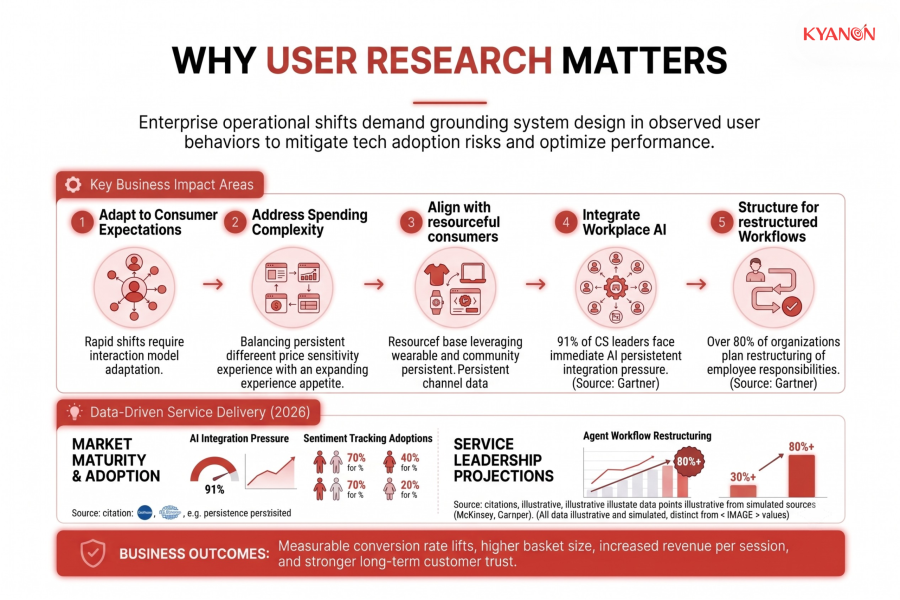
Rapid shifts in consumer expectations require enterprise digital platforms to continuously adapt their underlying interaction models. Findings from a global study by McKinsey & Company show that in-depth sentiment tracking across five global economic markets identifies a tech-driven path to purchase that is reshaping how consumers discover and buy products. Consumer spending habits have become increasingly complex, defined by intense price sensitivity paired with an expanding appetite for the experience economy. Modern audiences proactively leverage wearable technology, custom AI interfaces, and community channels to maximize value, giving rise to a highly resourceful consumer base that demands intuitive, low-friction digital interactions.
Simultaneously, enterprise operational shifts emphasize the necessity of grounding system design in observed user behaviors. A survey by Gartner reveals that 91% of customer service and support leaders face immediate executive pressure to integrate AI tools into frontline ticketing ecosystems. This rapid technological transition is radically altering human workflows, with over 80% of enterprise organizations actively planning to restructure frontline employee responsibilities. As organizations adapt their training frameworks and expand technical skills to manage AI-assisted workflows, continuous internal user research becomes vital for engineering leaders seeking to minimize cognitive fatigue and prevent operational downtime.
Common Misconceptions
Research is just asking users what they want
Teams often treat user research like a simple survey, asking customers to design features. True research focuses on observing actual behaviors, identifying underlying pain points, and uncovering unstated operational needs that users cannot articulate in open-ended surveys.
We already know our users so we don’t need research
Stakeholders frequently assume their internal perspective mirrors the customer’s reality. Familiarity with a target demographic or industry domain is not a substitute for empirical behavioral evaluation and continuous data collection.
Research takes too much time and costs too much
Many organizations believe effective studies require massive budgets and months of analysis. Lightweight methods—such as testing prototype workflows with just five representative users or reviewing session replays—surface critical usability bugs quickly without slowing down deployment schedules.
Anyone can do valid research
Casual conversations with friends, family, or internal coworkers are often mislabeled as user research. Without formal research methodologies and active bias mitigation, informal feedback yields skewed conclusions and poor product execution.
Research is a one-time project
Organizations often view research as a launch-phase checkbox rather than an ongoing process. Customer expectations, market conditions, and software environments change continuously, requiring continuous discovery to sustain long-term business alignment.
How Kyanon Digital Applies User Research
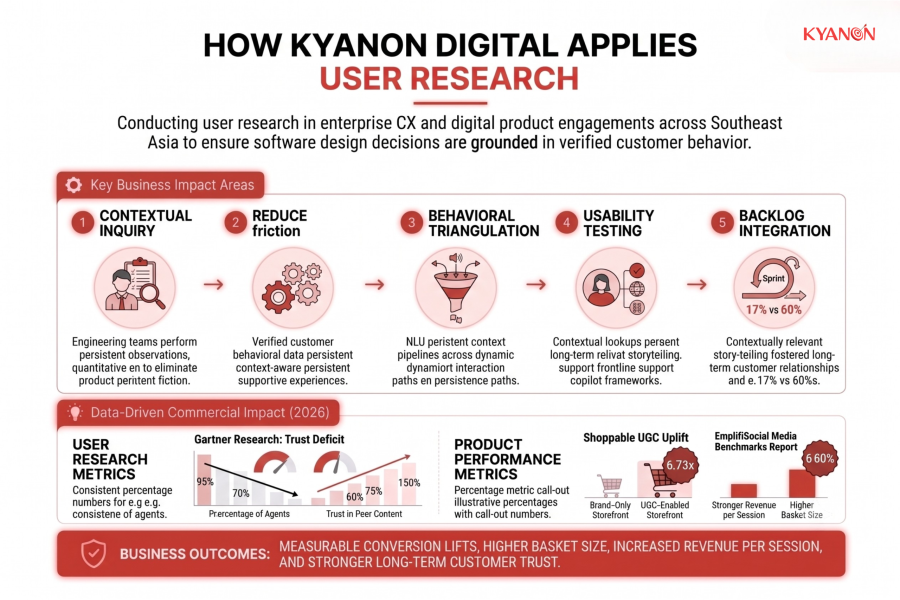
Kyanon Digital conducts user research in enterprise CX and digital product engagements across Southeast Asia to ensure software design decisions are grounded in verified customer behavior. Our research engineering team combines field observations, quantitative telemetry, and rapid prototyping to eliminate product friction and accelerate technology adoption.
Explore our services:

 Create project brief with AI