
What is Zero-Party Data?
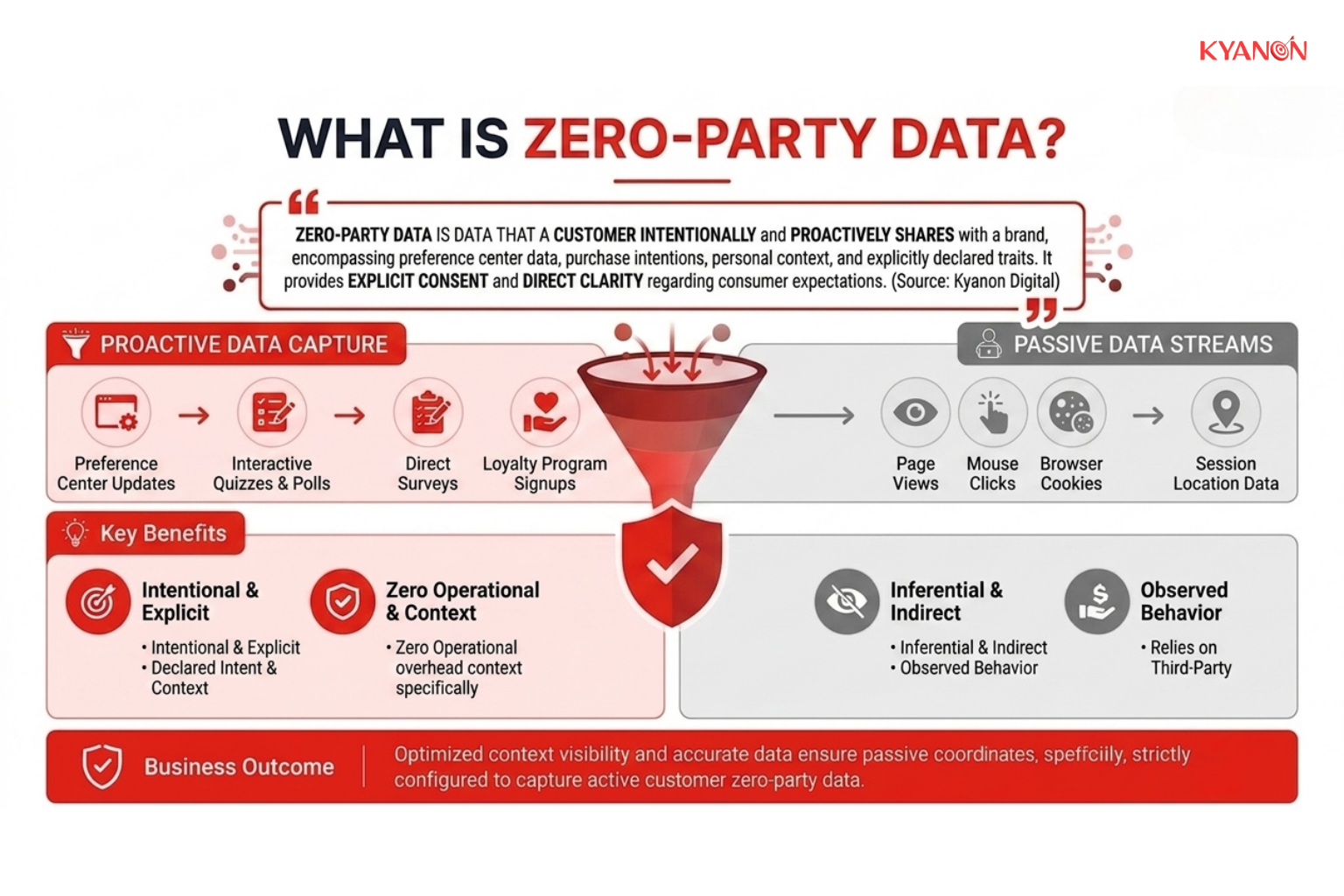
Zero-Party Data is data that a customer intentionally and proactively shares with a brand, encompassing preference center data, purchase intentions, personal context, and explicitly declared traits. Unlike passively observed behavioral data, zero-party data provides explicit consent and direct clarity regarding consumer expectations.
How Zero-Party Data Works
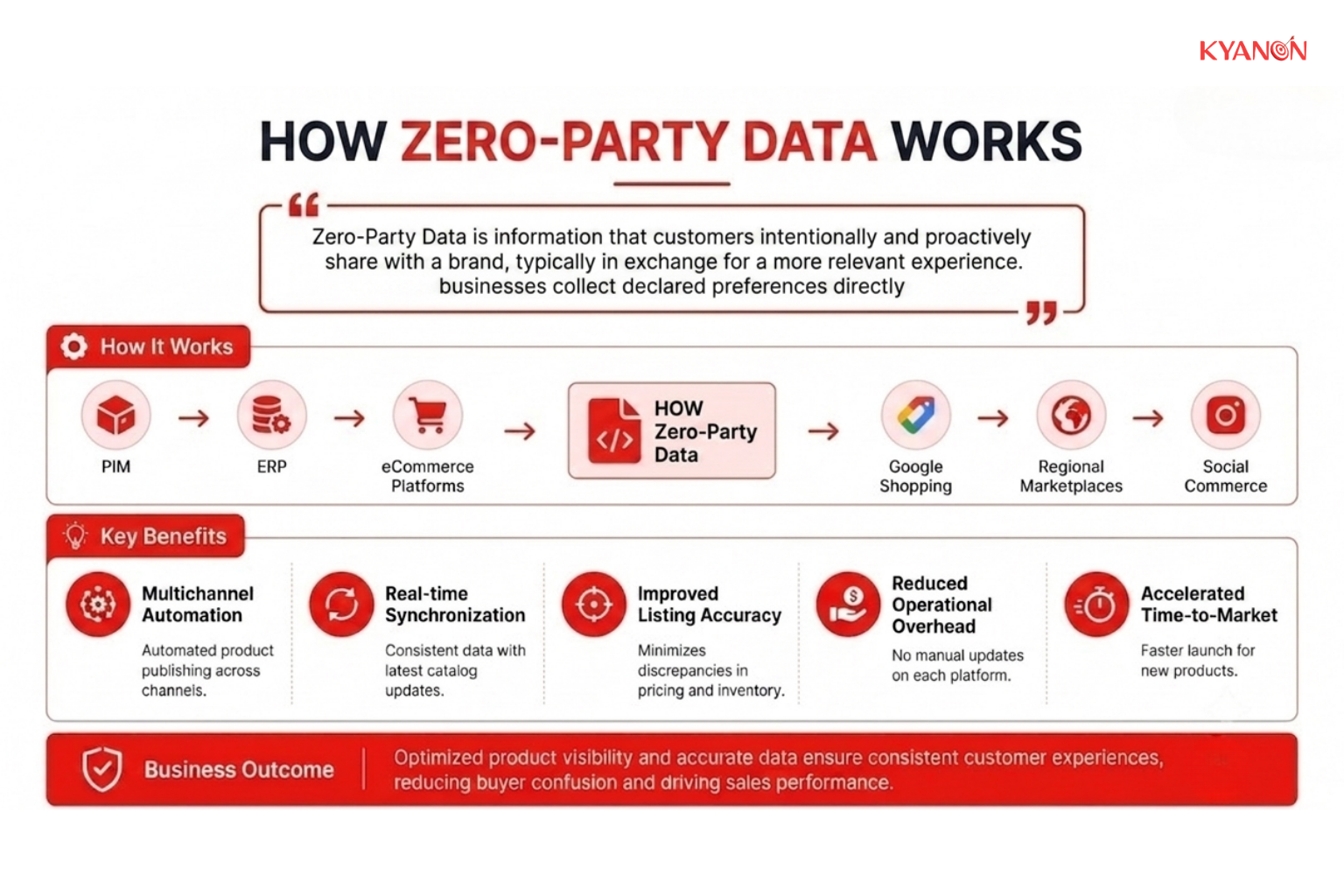
Zero-party data is information that customers intentionally and proactively share with a brand, typically in exchange for a more relevant experience. Instead of inferring preferences from behavior, businesses collect declared preferences directly and use them to personalize products, offers, and experiences.
Interactive Capture Interfaces
Brands can collect explicit preferences through customer-facing interfaces designed to make data sharing simple and relevant.
Common capture points include:
- Onboarding quizzes
- Conversational widgets
- Preference centers
- Product finders and recommendation flows
By collecting information within relevant customer journeys, brands can make data sharing feel useful rather than intrusive.
Value Exchange Trigger Engine
Customers are more likely to provide meaningful information when they receive an immediate and visible benefit in return.
The orchestration layer can connect preference collection to:
- Personalized product recommendations
- Exclusive rewards or offers
- Customized product filters
- Instant profile or experience personalization
This creates a clear value exchange: customers share what they want, and brands respond with a more relevant experience.
Unified Profile Ingestion Pipelines
Once preferences are submitted, event-driven APIs can transfer the declared attributes into a unified customer profile.
The ingestion pipeline should:
- Capture declared preferences with clear provenance
- Record consent and permission metadata
- Synchronize attributes across customer platforms
- Make trusted preference data available to downstream marketing and personalization systems
This gives businesses a more reliable source of customer intent while maintaining transparency around what customers shared and how that data can be used.

Comparative Analysis: Zero-Party Data vs. First-Party Data
Understanding the distinction between user-declared data and system-observed data is critical for building privacy-compliant, hyper-personalized consumer platforms.
Dimension | Zero-Party Data | First-Party Data | Business Impact |
| Data Origin | Direct, explicit user declaration | Passive behavioral tracking | Eliminates inference errors in buyer intent |
User Intent Clarity | Explicitly stated by the user | Inferred from interactions | Increases personalization relevance and conversion |
| Privacy Risk | Low (Explicit consent given) | Moderate (Requires policy disclosures) | Mitigates regulatory scrutiny and compliance fines |
Collection Method | Quizzes, preference centers, surveys | Clicks, purchase history, web logs | Replaces third-party tracking dependencies |
| Scale & Volume | High quality, lower volume | High volume, continuous capture | Combines with behavioral data for accurate profiling |
Why Zero-Party Data Matters
Navigating tightening privacy regimes and shifting consumer engagement channels requires enterprise architectures grounded in explicit user consent. Regulatory bodies worldwide are aggressively enforcing user data boundaries, elevating corporate legal exposure. According to Gartner, U.S. states alone levied $3.425 billion in privacy-related fines in 2025, an amount larger than the previous five years combined.
Concurrently, modern commerce relies heavily on AI engines that demand direct, structured intent signals to orchestrate customer experiences. The commercial scope of this architecture is expanding rapidly; research from McKinsey & Company projects that by 2030, $3 trillion to $5 trillion in global B2C retail revenue will be orchestrated through agentic commerce models. Furthermore, McKinsey & Company reports that 38% of European consumers already rely on GenAI tools to research and decide what to buy. Capturing zero-party data ensures enterprise platforms feed highly accurate, structured preference data directly into AI decision engines.
Common Misconceptions
Zero-party data is just a new name for first-party data
While both data types originate from direct user interaction, first-party data consists of passively observed behavior such as click paths, page views, and transactional logs. Conversely, zero-party data represents actively and explicitly declared intent, such as stated sizing, personal preferences, or specific product goals.
Zero-party data completely solves data scale problems
While zero-party data offers high accuracy and quality, it only captures parameters that active users consciously choose to share. It cannot match the sheer volume or continuous stream of passive behavioral logging across broad audience segments.
Stated user intent equals absolute operational truth
Declared preferences recorded during interactive quizzes or preference setup are not infallible indicators of future behavior. What consumers state they prefer in a survey often diverges from their actual purchasing behavior when presented with real-time promotions or price variations.
Zero-party data guarantees permanent retention immune to compliance
Receiving data through explicit consent does not render it immune to data governance regulations. The data remains consumer property, meaning users retain the legal right to request deletion or revoke consent at any time under regulations like GDPR.
Zero-party data is a brand-new technological concept
While the specific industry terminology gained widespread traction recently, the underlying mechanics, asking customers directly about their needs via preference forms, surveys, or loyalty programs, have been practiced in retail and service industries for decades.
How Kyanon Digital Applies Zero-Party Data
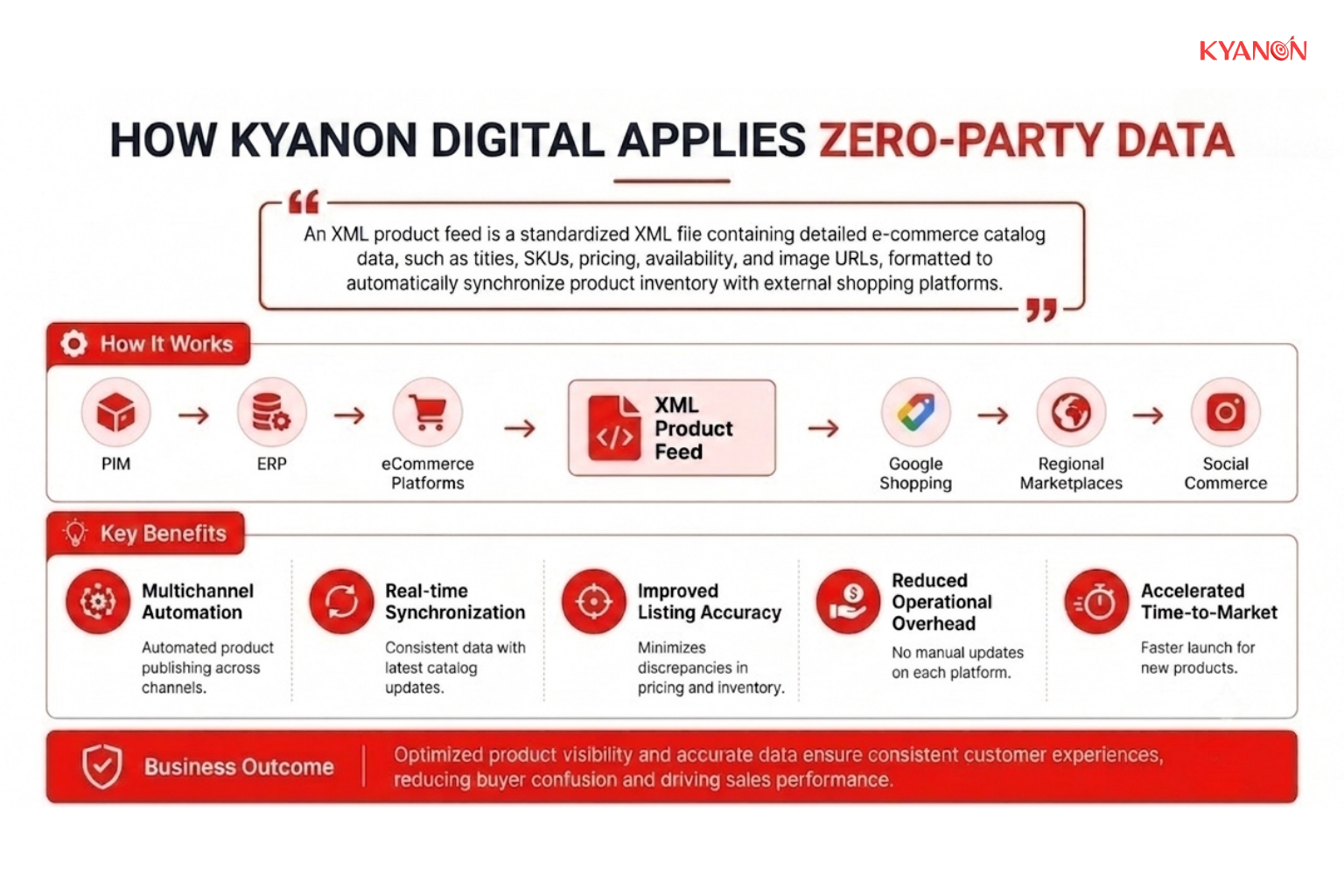
Kyanon Digital designs and builds robust zero-party data capture mechanics embedded within loyalty and hyper-personalization platforms for enterprise clients across Southeast Asia. By leveraging API-first architectures, we construct seamless preference centers, interactive onboarding quizzes, and real-time consent management pipelines that connect directly to modern CDPs and enterprise commerce systems.
Explore our services:

 Create project brief with AI