

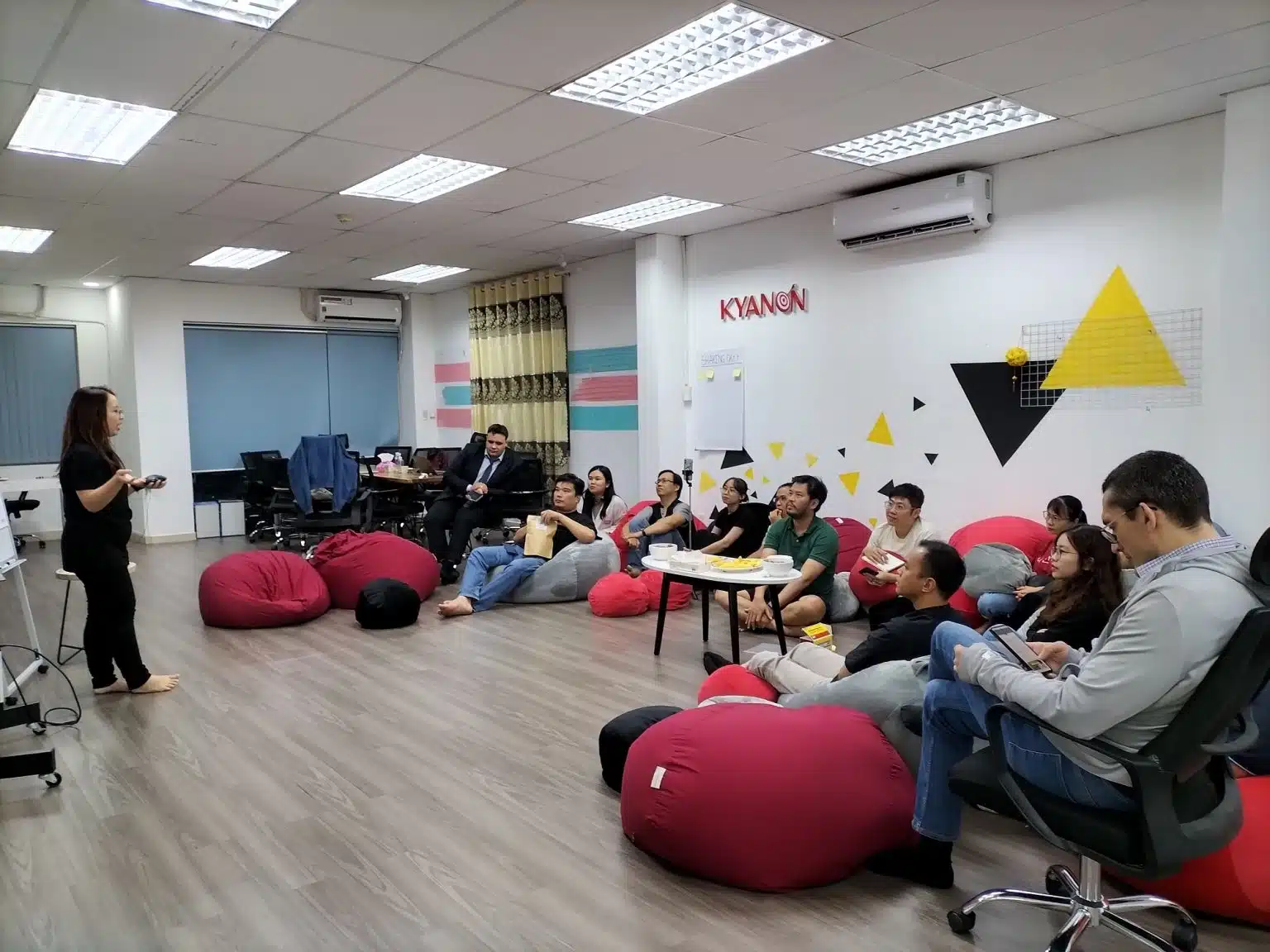
On May 17, Kyanon Digital hosted Leaders’ Talk #2 on the theme of Effective Goal Setting with OKRs for Managers. The session was led by Ms. My Tran, Executive Assistant to the CEO, and featured active and enthusiastic participation from nearly 20 managers and key team members.
To provide a comprehensive understanding of OKRs, the discussion focused on four core pillars:
- Why OKRs are highly effective and uniquely suited for startup environments.
- How to structure and set goals using OKRs.
- A hands-on OKR workshop.
- Critical pitfalls to avoid and best practices when implementing OKRs.
The cost of lacking an effective goal management system
Effective goal management aligns teams, keeping them razor-focused on their primary objectives. It ensures every small squad recognizes its unique contribution to the company’s grand vision. As a result, individual employees clearly understand their direction, take ownership of their deliverables, and seamlessly collaborate across departments. When everyone is aligned with the company’s ultimate vision, it fosters a bold, “can-do” collective mindset.
Conversely, ineffective goal management leads to organizational silos. Without a unified vision, teams chase isolated priorities, resulting in disjointed operations and heavily underutilized resources.
A brief history of global goal-setting frameworks
Over time, various goal-setting methodologies have dominated the corporate world, such as Management by Objectives (MBO), S.M.A.R.T. criteria, KPIs, and the Balanced Scorecard, before OKRs were famously adopted and proven at scale by Google.
For startups still mapping out their long-term trajectories, OKRs provide an ideal framework to set short-term, ambitious milestones that trigger breakthrough growth in the near term.
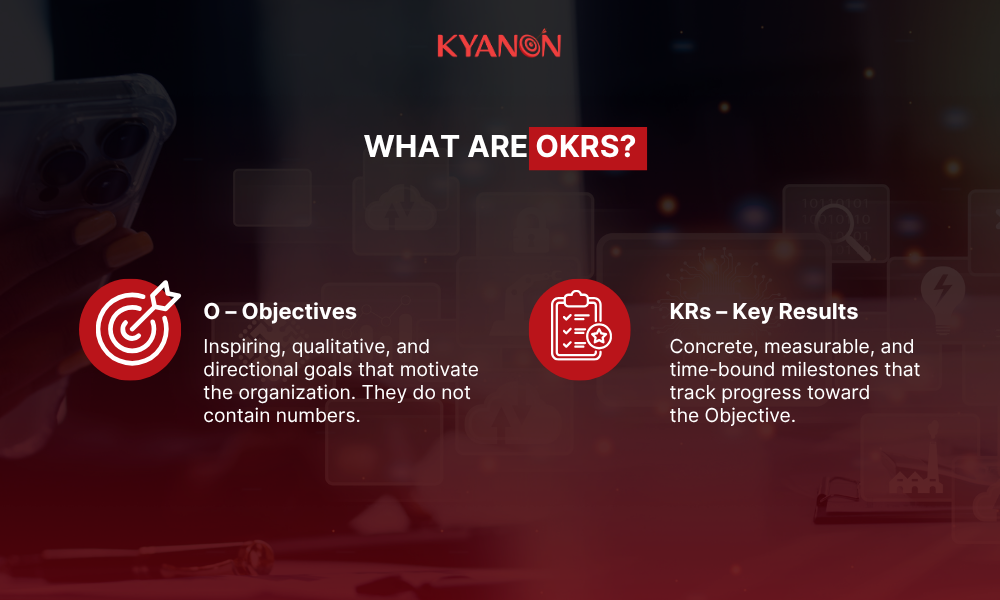
What are OKRs?
OKRs consist of two interconnected parts:
- O – Objectives: Inspiring, qualitative, and directional goals that motivate the organization. They do not contain numbers.
- KRs – Key Results: Concrete, measurable, and time-bound milestones that track progress toward the Objective.
Think of the Objective as the ultimate destination you want to reach, and the Key Results as the roadmap and milestones that prove you are getting there.
Core attributes and benefits of OKRs
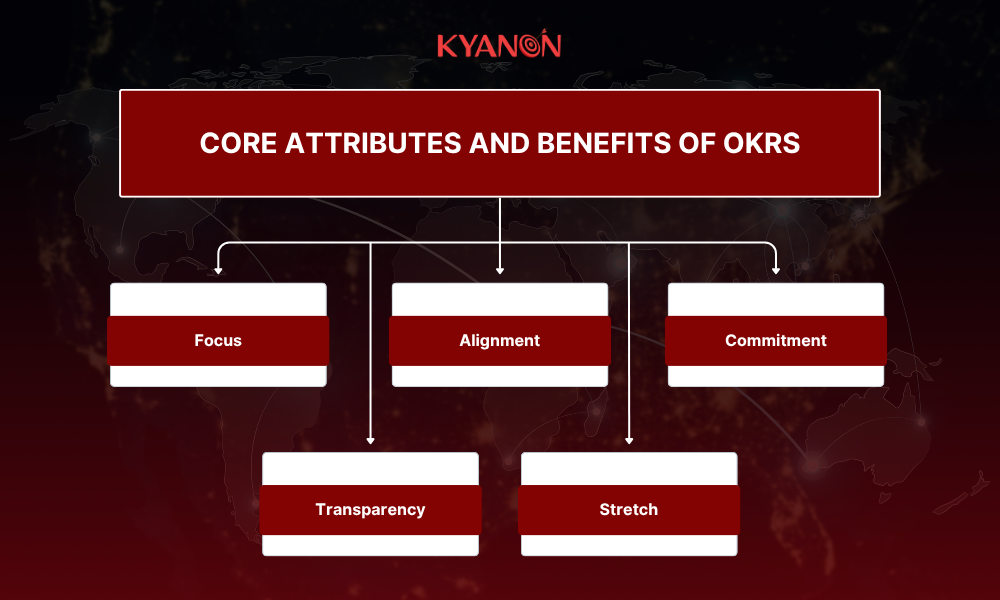
The power of OKRs relies heavily on five key superpowers:
- Focus: The organization prioritizes only what truly matters to drive meaningful change. Typically, a team should maintain only 3–5 Objectives, with each Objective supported by 3–5 Key Results.
- Alignment: Planning operates bidirectionally. Leadership sets the company-wide direction (top-down), while individual departments propose their own OKRs to support those organizational goals (bottom-up). This shared architecture bridges departmental divides and fuels cross-functional collaboration.
- Commitment: Because progress is fully trackable, individuals naturally take deep accountability for their outcomes. They see exactly how their work creates tangible value for the organization.
- Transparency: Because OKRs are visible company-wide, everyone knows what other departments are working on and why. This transparency breeds immense trust and mutual support across teams.
- Stretch: Setting aspirational, high-impact goals pushes individuals and teams out of their comfort zones, driving them to achieve the organization’s “big picture.”
Hands-on OKR practice
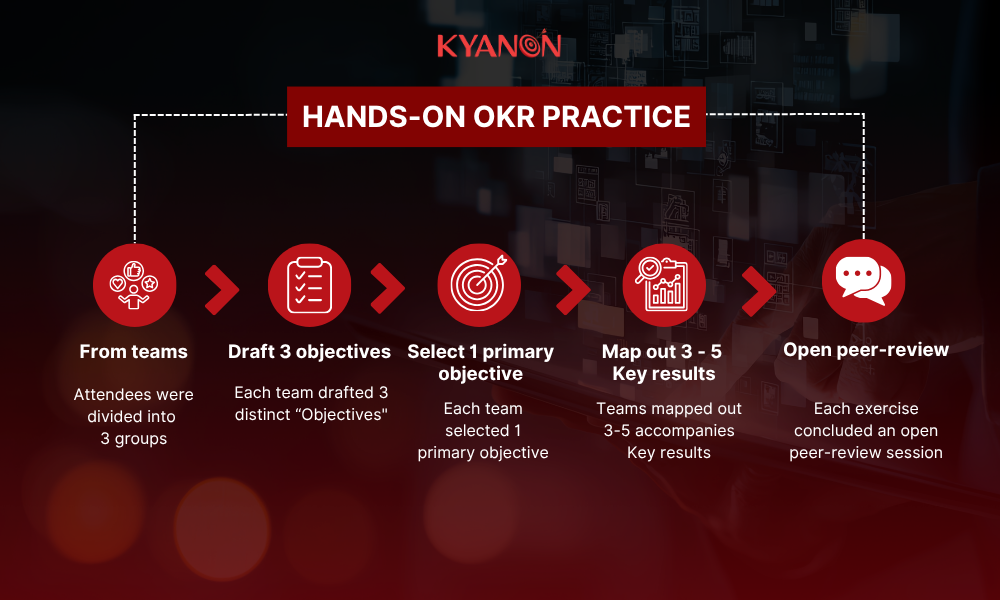
To put theory into practice, attendees were divided into three groups. First, each team drafted 3 distinct “Objectives.” They then selected one primary Objective to map out 3–5 accompanying “Key Results.” Each exercise concluded with an open peer-review session.
This workshop allowed leaders to directly analyze what they learned, share past challenges, and extract practical lessons from implementing OKRs within their respective Squads and projects.
Critical pitfalls and keys to success
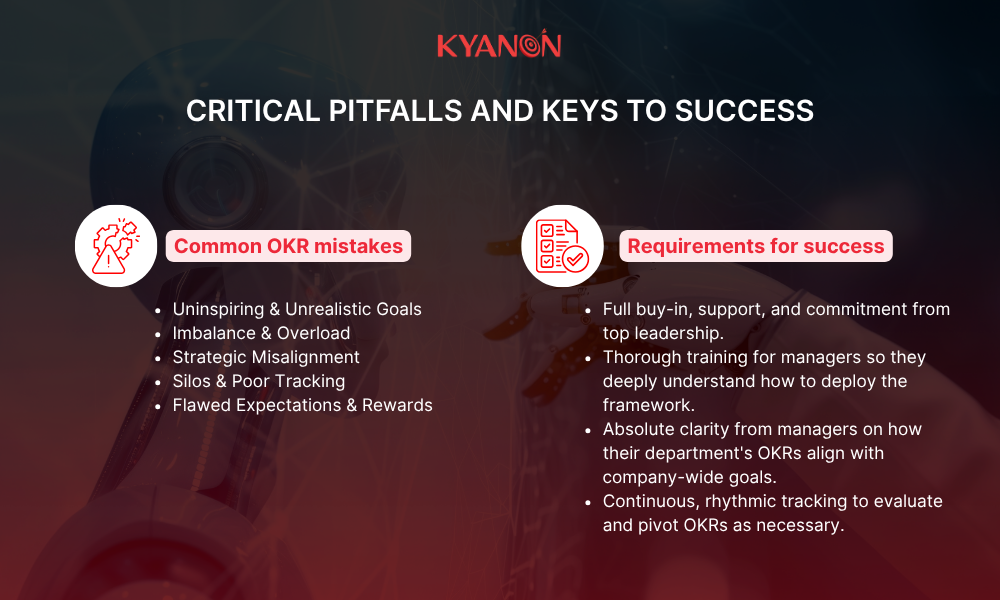
Common OKR mistakes:
- Setting uninspiring goals that fail to spark team creativity.
- Chasing impossible, unrealistic targets that ignore actual resource constraints.
- Failing to balance aspirational goals (ambitious targets that push boundaries) with committed goals (the absolute minimum requirements the team must hit).
- Overloading teams with more than 3–5 Objectives per quarter.
- Drafting OKRs that are completely detached from the company’s core vision and strategy.
- Adopting a “set-and-forget” mentality instead of adjusting OKRs mid-quarter based on real-time data.
- Working in silos without consulting dependencies in other departments.
- Mistakenly tying OKR achievement directly to KPI-driven financial bonuses.
- Expecting immediate, flawless results overnight.
Requirements for success:
To implement OKRs successfully, organizations must secure:
- Full buy-in, support, and commitment from top leadership.
- Thorough training for managers so they deeply understand how to deploy the framework.
- Absolute clarity from managers on how their department’s OKRs align with company-wide goals.
- Continuous, rhythmic tracking to evaluate and pivot OKRs as necessary.
“Think Big – Start Small – Act Now.” — Ms. My Tran, Executive Assistant, CEO Office
ABOUT LEADERS’ TALK
Leaders’ Talk is a monthly knowledge-sharing initiative curated exclusively for the management team at Kyanon Digital to nurture a culture of continuous learning among “Archers.” Grounded in “Craft”, one of Kyanon Digital’s 7 core values, this series ensures that, along with refining software engineering and technology expertise, our leaders build the internal management strengths necessary to stay ahead of the curve and unlock peak team performance.
















 Create project brief with AI