

An omnichannel loyalty program unifies customer rewards across all channels — in-store, eCommerce, mobile app, and social — so shoppers earn and redeem points seamlessly wherever they engage. Does your current retail loyalty platform truly recognize customers when they switch from browsing online to purchasing offline?
According to Walmart research, 80%–94% of shoppers engage both in-store and digital experiences, making omnichannel behavior the norm rather than the exception. Customers increasingly expect brands to recognize them across every touchpoint and deliver consistent experiences regardless of channel. When customer data remains fragmented between online and offline systems, even loyal customers can experience disconnected interactions. This expectation is reflected in the widespread adoption of omnichannel shopping and the growing demand for seamless cross-channel experiences.
This comprehensive guide breaks down how to design and implement a rewards architecture that reduces friction, enables hyper-personalization through unified data, and significantly increases customer lifetime value.
Read on to explore actionable strategies to build a highly effective omnichannel loyalty program.
Key takeaways
- Shoppers often feel “invisible” when switching channels because most systems operate in disconnected silos.
- An omnichannel loyalty program creates a unified engine that syncs data across all touchpoints in real time.
- Retailers must integrate their POS, CRM, and eCommerce systems via API-first architectures to create a single customer identity.
- Shoppers experience seamless convenience and consistent recognition, drastically preventing churn.
- Rewarding non-linear shopping journeys and passive engagements leads to a 15–25% uplift in Customer Lifetime Value.
Further reading:
- A Practical Guide To Retail Loyalty Programs
- Customer Loyalty Programs Advantages For E-commerce Brands
- How AI Is Redefining Customer Loyalty in SEA
Why most loyalty programs still fail to retain customers
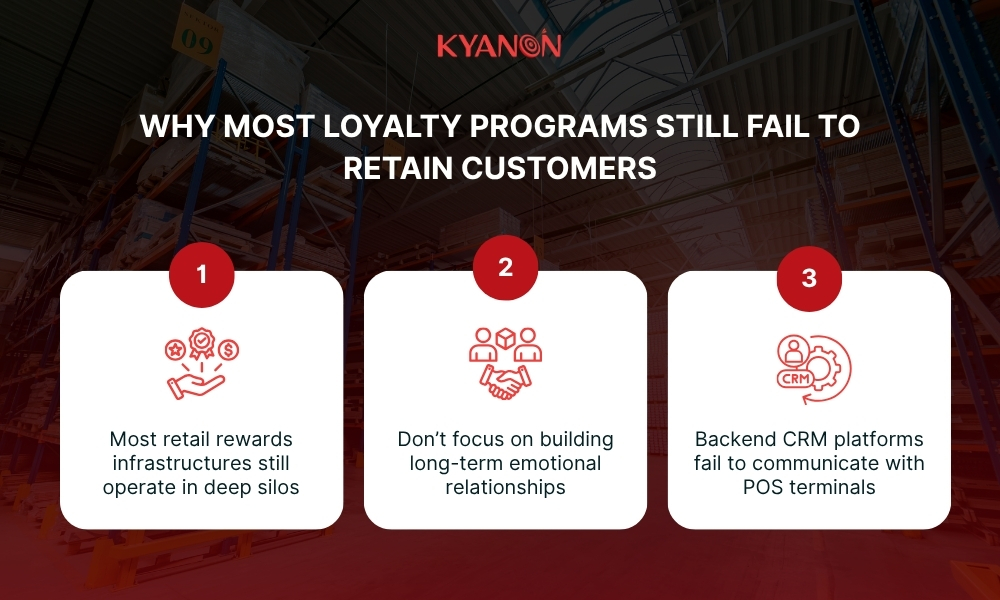
Shopping today has become heavily “phygital,” representing a continuous journey that blends physical and digital worlds rather than keeping them as separate channels. According to McKinsey, 60–70% of consumers research and shop both in-store and online. Despite this reality, most retail rewards infrastructures still operate in deep silos. Points earned online frequently cannot be redeemed in-store, and backend CRM platforms fail to communicate with POS terminals. Consequently, customers who switch channels lose their recognition entirely, leading to a frustrating experience.
Most loyalty programs fail to retain customers because they focus heavily on short-term transactions instead of building long-term emotional relationships. While brands invest heavily in points and discount infrastructure, research from BCG shows that the average consumer belongs to more than 15 loyalty programs but actively engages with only a fraction of them. This drop-off happens because programs quickly lose relevance and feel like marketing tactics rather than a genuine relationship.

What is an omnichannel loyalty program and how it differs from multi-channel
Multi-channel systems represent what the majority of brands currently deploy. Under this model, each channel operates its own separate program, such as distinct email campaigns, in-store points, and app rewards, but they do not connect with one another. Customer profiles remain heavily fragmented because data fails to sync in real-time. The result is that whenever a customer switches channels, they lose their recognition, context, and shopping momentum.
Conversely, an omnichannel setup utilizes a single, unified loyalty engine that receives interaction events from every possible touchpoint, including POS, eCommerce, mobile apps, and social platforms. Because synchronization occurs in real-time, points earned at a physical checkout instantly appear in the mobile app, and online rewards can easily be redeemed at a physical counter. Every interaction is tied back to a single customer identity, ensuring personalization is driven by unified behavioral data rather than limited channel-specific inputs.
Dimension | Multi-Channel | Omnichannel |
| Data | Siloed per channel | Unified customer profile |
Points/Rewards | Separate per channel | Single balance across all |
| Recognition | Only within channel | Consistent everywhere |
Personalization | Channel-level | Behavior-driven across all |
| Architecture | Multiple disconnected tools | Central loyalty engine + API integrations |
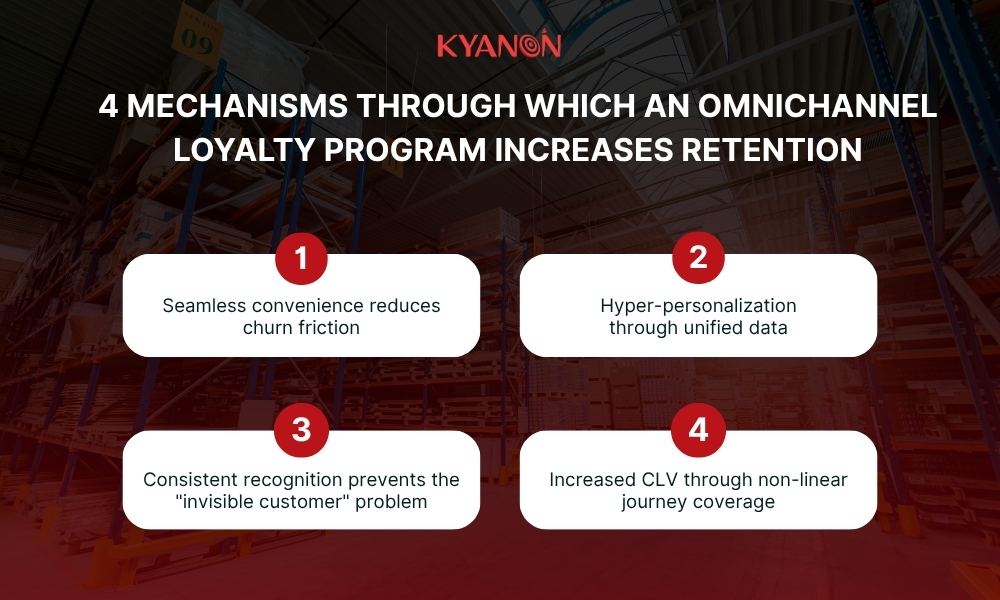
4 mechanisms through which an omnichannel loyalty program increases retention
To solve the “invisible customer” problem, brands must move beyond siloed reward systems and embrace a truly unified approach. An omnichannel loyalty program bridges the gap between digital and physical touchpoints, ensuring shoppers are recognized and rewarded no matter how they choose to buy. By turning fragmented interactions into a cohesive experience, this cross-channel strategy actively drives long-term engagement.
Here are the four core mechanisms through which an omnichannel loyalty program increases customer retention.
Seamless convenience reduces churn friction
Modern customers demand to interact in ways they prefer, not in the rigid ways a digital loyalty platform was originally designed to function. They expect the flexibility to earn rewards in-store and seamlessly redeem them online, or browse a website, finish the purchase at a physical location, and have points automatically credited to their account. According to a Harvard Business Review study of 46,000 shoppers, customers who engaged across multiple channels made 23% more repeat shopping trips within six months, spent 4% more in-store, and spent 10% more online than single-channel shoppers. Ultimately, systemic friction causes churn, whereas seamlessness acts as a powerful driver for retention.
Hyper-personalization through unified data
Maintaining a single customer identity empowers retailers to know exactly what a consumer buys, where they buy it, exactly when, and through which specific channel. Powerful use cases include recommending products based exclusively on in-store behavior, or triggering a push notification when a user browses an online store but fails to make a purchase. Data from Segment reveals that 49% of Amazon shoppers purchased an item they did not originally intend to buy after encountering a hyper-personalized recommendation.
“Retention is the ultimate metric of a successful retail strategy. When you integrate a loyalty program across all channels, you gain a 360-degree view of your customer’s behavior. That insight allows you to deliver real-time gratification and hyper-personalized offers, shifting the focus from costly customer acquisition to maximizing the lifetime value of the buyers you already have.” — Kyanon Digital Loyalty Specialist
Consistent recognition prevents the “invisible customer” problem
A highly common issue occurs when a shopper spends substantial amounts in physical stores, but the brand’s online systems fail to recognize their spending history or VIP status. This makes the shopper feel completely invisible, drastically elevating the risk of churn. An omnichannel loyalty program provides an immediate architectural fix by ensuring real-time loyalty status synchronization.
Regardless of which channel a customer uses, their tier status and rewards balance remain perfectly accurate, sending a strong emotional signal that the brand values the relationship, not just the isolated transaction.
Increased CLV through non-linear journey coverage
Today’s consumer journeys are non-linear; a typical path might involve browsing an app, visiting a physical store, buying a product online, and later redeeming points in-store. Traditional frameworks strictly reward linear behaviors, missing entirely on non-purchase engagements. An advanced digital loyalty platform effectively rewards every touchpoint, from app check-ins and product reviews to referrals, social media shares, and newsletter clicks.
Omnichannel shoppers have approximately 30% higher customer lifetime value (CLV) than single-channel shoppers because they engage more frequently across multiple touchpoints and maintain longer relationships with brands. (Loyalty Pass)
5 retail brands doing omnichannel loyalty right
While many retailers have launched loyalty programs, only a select few have successfully connected rewards, customer data, and personalized experiences across every channel. These brands recognize customers consistently whether they shop online, in-store, through mobile apps, or across digital touchpoints.
Here are five retail brands that have set the benchmark for omnichannel loyalty execution.
Starbucks Rewards — The Gold Standard
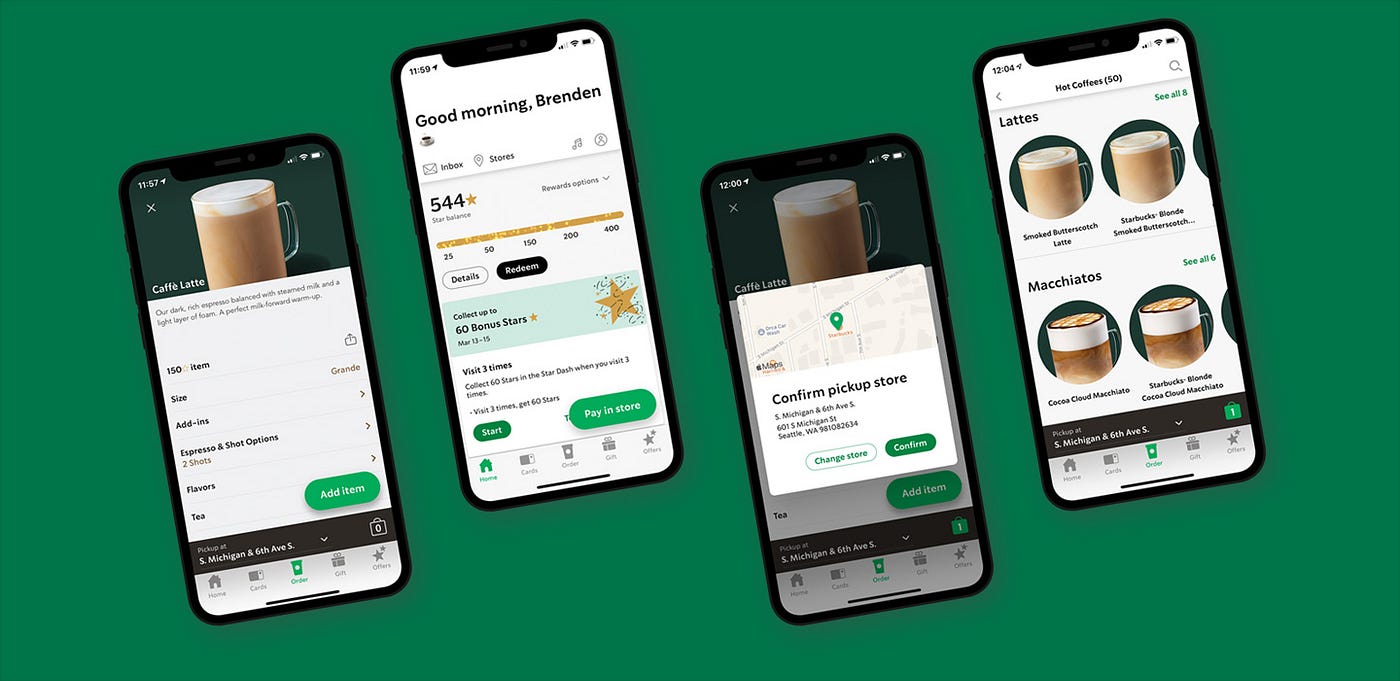
Spanning their mobile app, physical stores, drive-thrus, and website, Starbucks ensures that ‘Stars’ are earned across every single ordering method. The system operates flawlessly due to real-time synchronization, gamified in-app challenges, and mobile ordering functionality tightly tied to loyalty profiles. As a retention metric, over 50% of Starbucks sales come directly from Rewards members.
The foundational architecture behind this success relies on POS, mobile, and CRM systems being tightly integrated via a robust API.
Sephora Beauty Insider — Personalization at Scale
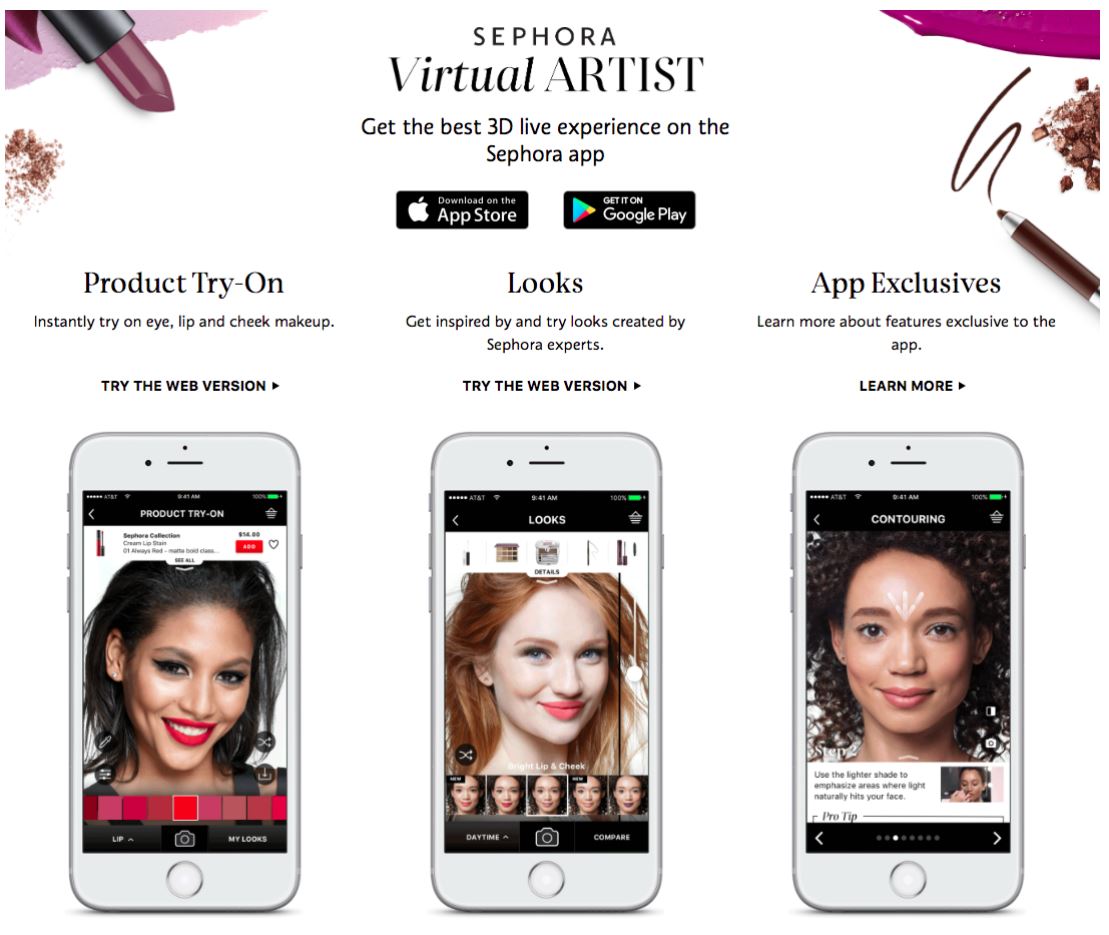
Sephora leverages in-store, web, mobile app, and social channels, intelligently linking online AR trials directly to in-store product data. Points are highly flexible, allowing members to redeem rewards or donate them and personalized offers are triggered based on skin type and previous purchase history.
The critical recognition signal is that member status seamlessly follows the consumer both online and offline without any friction.
Target Circle — Democratized Omnichannel
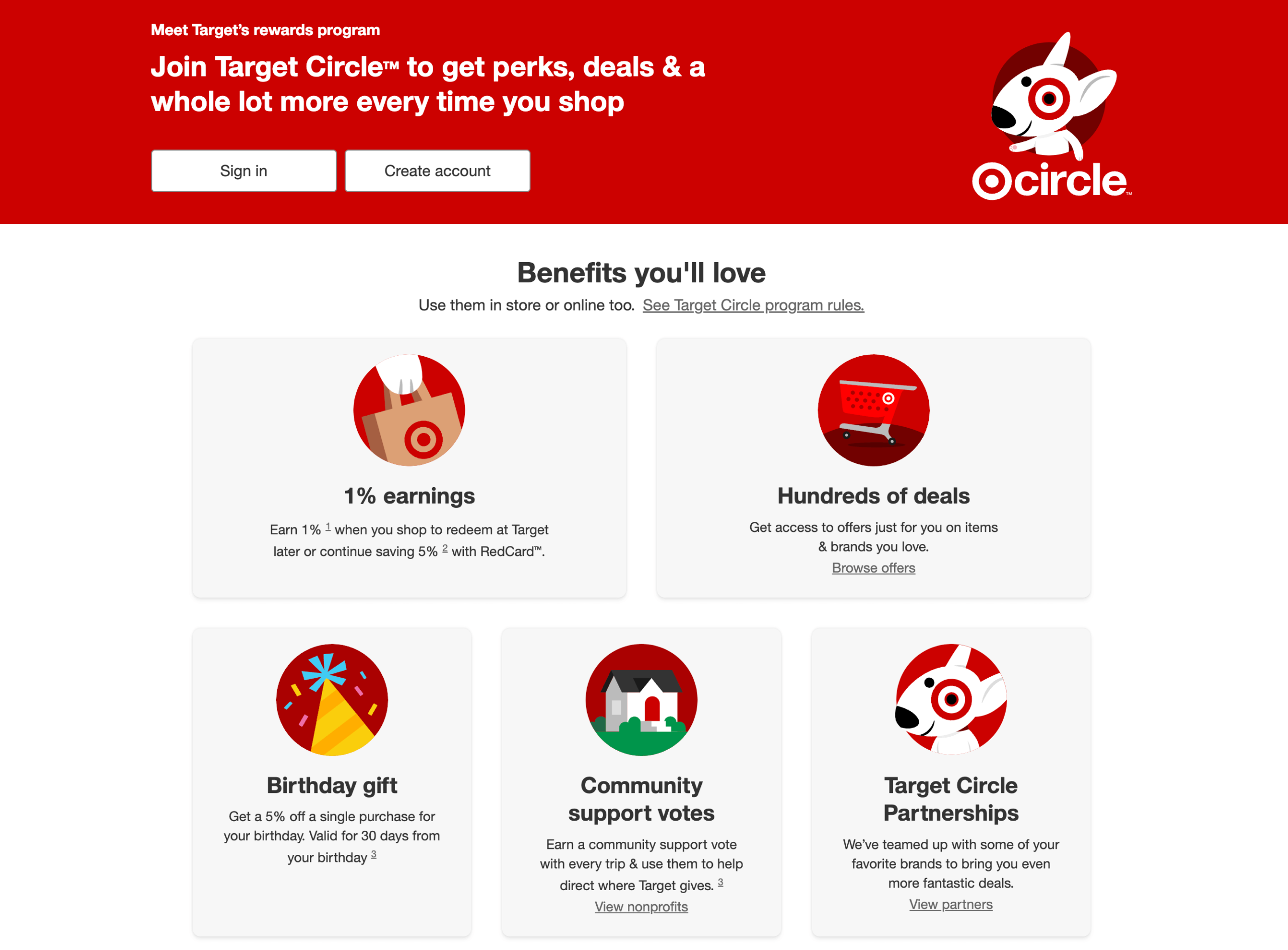
Operating across physical stores, online portals, mobile apps, and curbside pickup options, Target offers 1% back on every single purchase made through any channel. They utilize personalized deals in the app based entirely on user behavior, providing a unified account whether a shopper clicks online or visits in person.
This serves as crucial proof for mid-market retailers that building a premium retail loyalty platform does not strictly require a luxury brand budget.
Nike Membership — Beyond Transactions
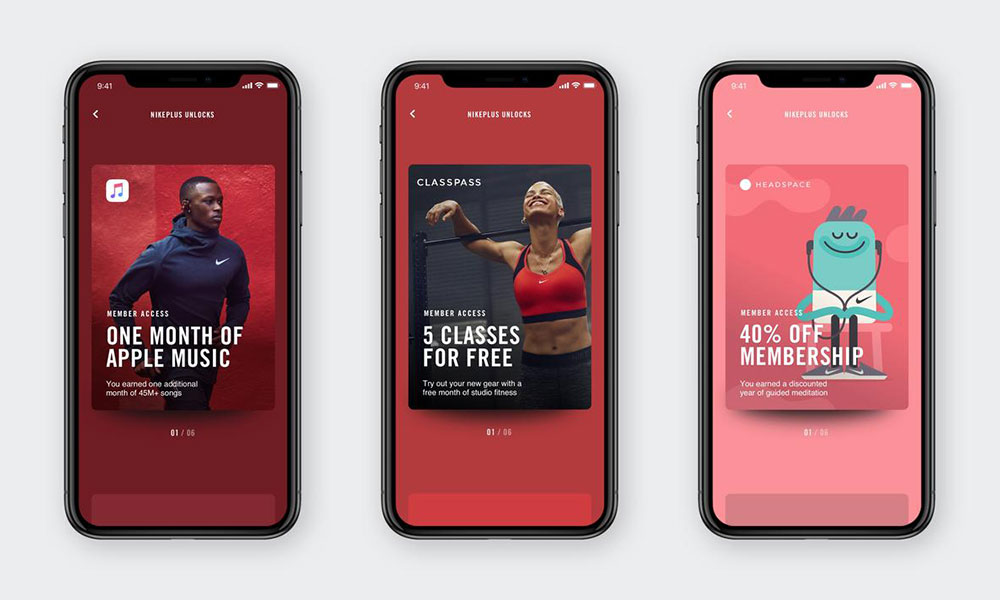
Through its SNKRS app, NTC app, website, and physical stores, Nike rewards vital non-purchase engagements, such as completing guided workouts, attending events, and writing product reviews. By offering exclusive access rather than relying solely on deep discounts, Nike drives high brand aspiration.
The core retention lesson here is that genuine loyalty is about building a relationship, not just tallying arbitrary points.
The North Face XPLR Pass — Activity-Based Engagement
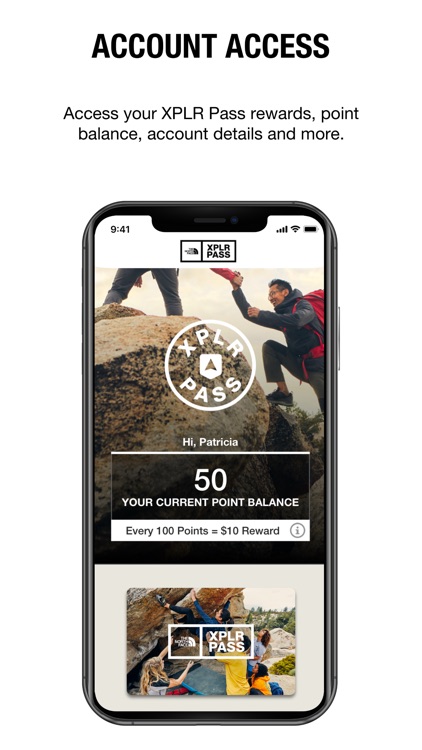
Connecting their website, mobile app, and physical locations, The North Face allows customers to earn points by physically checking into national parks via the app, referring friends, and making standard purchases.
This program beautifully reflects the brand’s core values surrounding outdoor adventure. Aligning the digital loyalty programs’ mechanics directly with brand identity effectively creates powerful emotional stickiness.
How to build an omnichannel loyalty program: A step-by-step framework
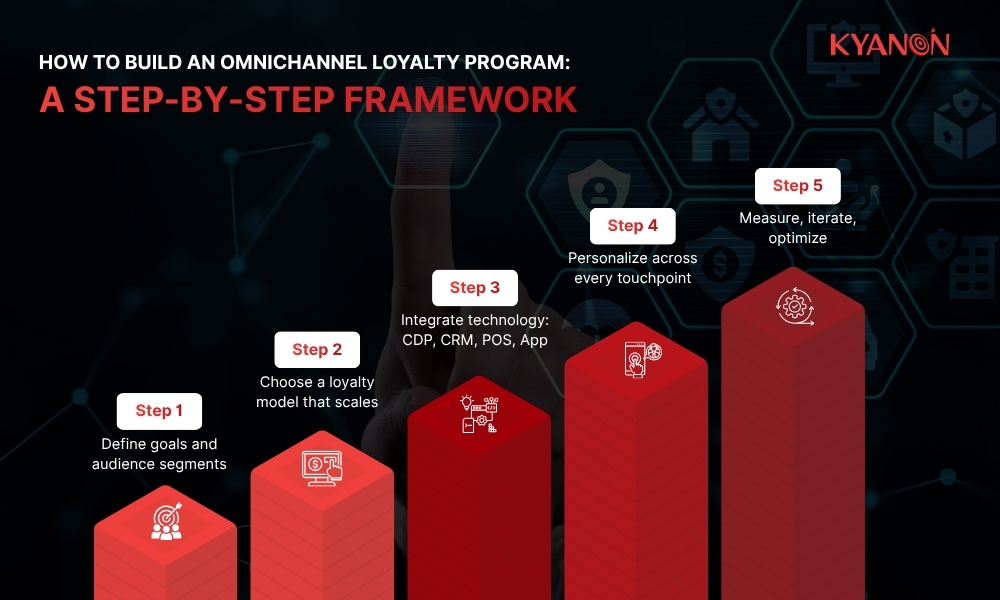
Building an omnichannel loyalty program requires connecting data, technology, and rewards across all physical and digital customer touchpoints. Here is a step-by-step framework to design, build, and launch a successful program.
Step 1 — Define goals and audience segments
Before designing any mechanics, you must clearly determine what exact business problem you are trying to solve, whether it is high churn, low repeat purchase rates, or poor CLV. You must segment your audience before designing rules; high-value loyalists require significantly different strategies than occasional shoppers or brand new customers. The absolute rule is to prioritize objectives first and mechanics second—do not design a complex points system before knowing exactly what specific behavior you intend to drive.
Step 2 — Choose a loyalty model that scales
There are four common foundational models: points-based, tier-based, cashback, and hybrid. The hybrid model is generally the most recommended setup for modern retail and any ecommerce loyalty program, as it combines points for transactions, tiers for status, and non-purchase rewards for engagement. Regarding architectural considerations, the model must be deeply scalable so you never have to rebuild the entire core logic when adding a new operational channel or tracking a new behavior type.
Step 3 — Integrate technology: CDP, CRM, POS, App
This specific phase is where many programs break down entirely, simply because disparate legacy systems refuse to “talk” to each other. The required technological integrations encompass real-time event streaming between POS and the loyalty engine, direct connectors for the eCommerce platform, customer profile synchronization with the CRM or CDP, and SDK integration for mobile apps. As a technical baseline, a sub-150ms API response time is the absolute minimum requirement to properly process real-time reward events. API-first loyalty engines like Open Loyalty are specifically designed for complex multi-system integration without needing bulky middleware bolt-ons.
Getting the integration architecture right
The technology integration step is where most loyalty programs stall — not because the platforms are bad, but because connecting POS, loyalty engine, CRM, and eCommerce correctly requires both technical depth and retail domain expertise. Kyanon Digital is an APAC-based enterprise transformation partner specialising in omnichannel eCommerce and loyalty platform integration — including deployments using Open Loyalty, one of the leading API-first loyalty engines globally. Kyanon Digital’s team has helped Retail and F&B brands across Singapore, Australia, and Southeast Asia build unified loyalty infrastructure that connects physical and digital channels without disrupting existing operations.
Talk to Kyanon Digital about your loyalty integration.
Step 4 — Personalize across every touchpoint
Utilize your unified customer data to intelligently trigger behavioral incentives, such as sending a push notification containing a customized offer when a customer browses a product but fails to purchase. You should deeply customize tier perks based on channel preferences and dynamically adapt communication cadences by audience segment. At all costs, avoid mass-blasting the exact same offer to everyone, as this is a glaring symptom of a siloed program, not a true omnichannel strategy.
Step 5 — Measure, iterate, optimize
Key Performance Indicators (KPIs) that demand rigorous tracking include redemption rates by specific channel, overall cross-channel engagement rates, and CLV uplifts specifically measured against non-loyalty customers. You should strictly monitor tier migration rates and churn rates across different loyalty tiers. The recommended operational cadence involves a quarterly overall program review, a monthly KPI review, and granular weekly campaign performance checks. A highly common pitfall is measuring redemption activity without equally measuring broader cross-channel behavior, which only gives you half the analytical picture.
4 mistakes that undermine omnichannel loyalty programs
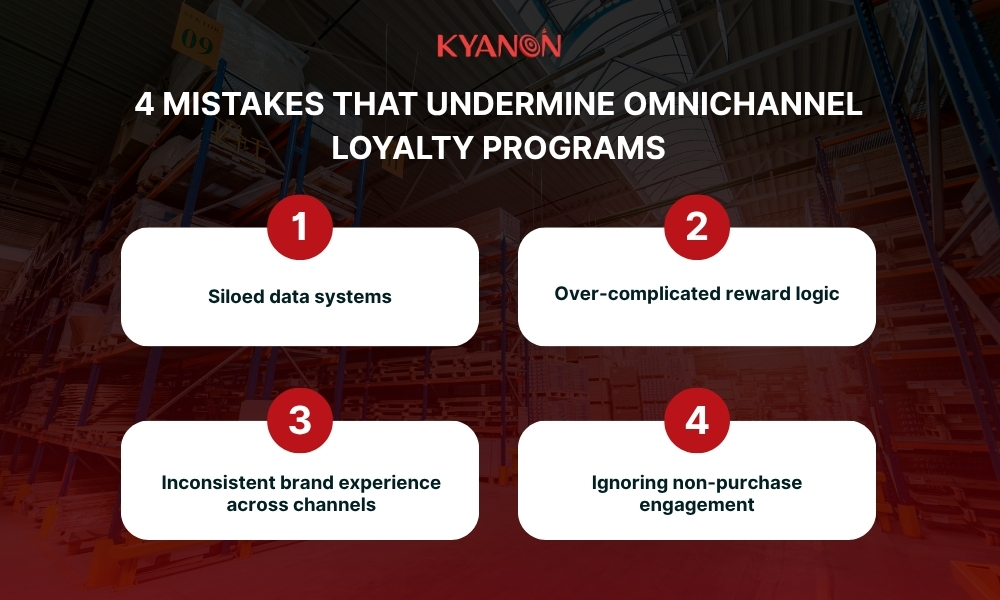
Four critical errors can break the connection between your digital and physical shopping experiences, driving customers away from your loyalty program.
Pitfall 1: Siloed data systems
If points balances differ between the mobile app and physical stores, or if customer service agents cannot view full histories, the system is fundamentally siloed. The fix requires implementing a central engine that handles real-time synchronization instead of slow, outdated batch updates.
Pitfall 2: Over-complicated reward logic
If customers cannot easily explain how they earn or redeem points, and staff struggle to explain the rules, the UX has failed. The core mechanic must be entirely explainable in just one sentence. While complexity can safely exist underneath, the user experience must remain pristine. Gartner research shows that reducing customer effort drives significantly more loyalty than merely over-delivering on specific experiences.
Pitfall 3: Inconsistent brand experience across channels
An ecommerce loyalty program that feels radically different online versus in-store—featuring different tones, offers, and UX—creates massive brand confusion. The architectural fix involves utilizing a single campaign management layer to distribute one consistent campaign across multiple diverse channels.
Pitfall 4: Ignoring non-purchase engagement
When only raw purchase events trigger rewards, valuable actions like app opens, product reviews, peer referrals, and social shares go unrewarded. Brands must broaden the event types that trigger loyalty mechanics to successfully convert passive digital browsing into active customer engagement.
Omnichannel loyalty trends shaping retail in 2026
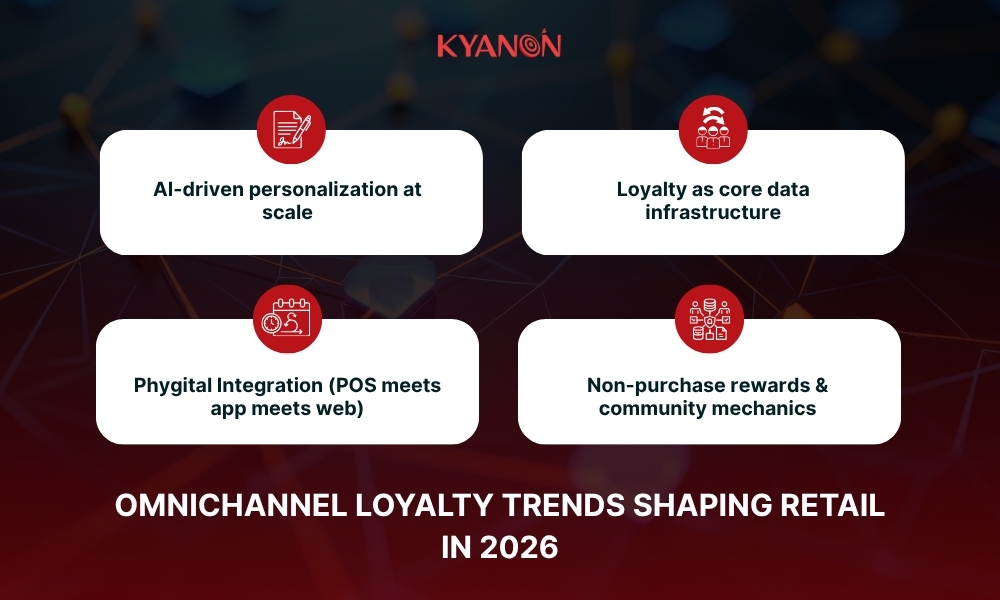
Based on recent developments in loyalty technology, retail media, and customer data platforms, four major trends are emerging in omnichannel loyalty programs: AI-powered personalization, loyalty as a first-party data engine, API-first omnichannel architectures, and engagement-based rewards beyond transactions.
AI-driven personalization at scale
By 2026, generic, tier-based points systems are no longer competitive. Advanced brands have deployed machine learning layers directly over unified loyalty data to automate hyper-targeted consumer interactions.
- Predictive Analytics: Systems analyze real-time behaviors to calculate churn risks, trigger preventative retention offers, and predict the precise “next-best-offer” for every individual customer profile.
- Optimal Reward Timing: AI models calculate exactly when a shopper is most likely to convert, sending personalized incentives at the specific hour and day they typically shop to maximize margin efficiency.
- No-Code Campaign Builders: Leading loyalty platforms now feature native, embedded generative AI toolkits. Marketing teams can deploy hyper-personalized, multi-channel campaigns instantly without needing dedicated data scientists or SQL developers.
- Real-world example: Tesco integrating AI with Clubcard loyalty data for personalized offers. (Reuters)
Loyalty as core data infrastructure
The strategic purpose of loyalty programs has fundamentally changed. Retailers no longer view loyalty as a costly marketing discount tool, but rather as their primary infrastructure for first-party data collection. MarketWatch discussion referencing loyalty programs as extensive customer data collection systems:
- The Cookie Alternative: With the total deprecation of third-party tracking cookies, loyalty programs serve as the ultimate vehicle to gather compliant, zero-party, and first-party consumer insights.
- Unified Ecosystem Ecosystems: Every single swipe, app click, and product scan creates a distinct data point. This data instantly feeds into corporate Customer Data Platforms (CDPs), CRM software, and algorithmic product recommendation engines.
- Monetization Opportunities: Retailers leverage this rich, verified first-party data asset to fuel their own Retail Media Networks (RMNs), allowing brand partners to purchase highly targeted advertisements based on real offline and online purchase history.
Phygital Integration (POS meets app meets web)
The boundary between physical storefronts and digital web portals has completely dissolved. Instantaneous, cross-channel synchronization has shifted from a premium feature to standard customer expectation.
- Headless Architecture: Retailers rely heavily on headless, API-first loyalty engines. This decoupled infrastructure allows brands to rapidly inject loyalty features into any new touchpoint, such as smart mirrors, self-checkout kiosks, or connected vehicles without rewriting core backend logic.
- Embedded Payment Flows: In high-adoption markets across APAC (particularly Singapore and Australia/New Zealand), loyalty is embedded directly into mobile payment rails. Consumers automatically earn rewards and apply discounts instantly when tapping their phone to pay via Apple Pay, Google Wallet, or local banking apps.
- Contextual In-Store Apps: When a loyalty member walks into a physical store, their mobile app transforms in real-time, displaying an in-store map, localized inventory levels, and location-targeted digital coupons.
Non-purchase rewards & community mechanics
Modern retention strategies look beyond the register. Brands are actively moving away from purely transactional rewards, choosing instead to incentivize holistic brand advocacy and community building. Gamification has emerged as the top loyalty priority for 2026, according to Loyalty Program Trends 2026 report by Open Loyalty, with visual progress bars appealing to 81% of consumers surveyed.
- Advocacy Incentives: Shoppers earn measurable loyalty points for completing valuable non-purchase actions, including writing detailed product reviews, referring friends, generating user-content (UGC), and attending brand-sponsored events.
- Advanced Gamification: Retailers utilize deep gamification mechanics, such as time-bound streak challenges, digital achievement badges, and community leaderboards to maintain high app engagement levels even between purchase cycles.
- Mid-Market Adoption: While global giants like Nike and The North Face pioneered this community model, mid-market apparel, beauty, and lifestyle retailers are rapidly adopting these exact frameworks to defend their market share.
Conclusion
Customer retention in 2026 depends on a retailer’s ability to recognize and engage customers consistently across every touchpoint, not just the channels where loyalty programs are easiest to operate. As consumers move seamlessly between stores, websites, mobile apps, social commerce, and marketplaces, fragmented loyalty experiences create friction that directly impacts engagement and repeat purchases.
The brands setting the standard today, including Starbucks, Sephora, and Nike, are not winning loyalty solely because they offer better rewards. They are winning because customers receive a seamless, personalized experience and are recognized consistently regardless of where they interact with the brand. The loyalty program becomes an extension of the customer experience rather than a standalone marketing initiative.
The good news is that the technology required to deliver omnichannel loyalty is more accessible than ever. Modern loyalty platforms, customer data platforms, cloud POS systems, and API-first architectures provide the foundation needed to connect customer journeys across channels. For most retailers, the primary challenge is no longer technology availability, it is organizational alignment, data integration, and selecting the right implementation approach.
A unified customer data foundation will determine how effectively your program can deliver personalization, real-time recognition, and long-term retention outcomes.
If you’re planning to build or upgrade your omnichannel loyalty program and want to get the data architecture and channel integration right from the start — Kyanon Digital’s team offers free initial consultations for Retail and eCommerce brands in Singapore, Australia, Malaysia, and Southeast Asia. Book a free consultation.







 Create project brief with AI