
Trí tuệ nhân tạo theo ngữ cảnh là gì?
Trí tuệ nhân tạo theo ngữ cảnh (Contextual AI) là một khung trí tuệ nhân tạo xử lý thông tin nền, các tương tác trong quá khứ và các biến môi trường thời gian thực để tạo ra các kết quả đầu ra có tính liên quan cao và được tùy chỉnh cho các tình huống cụ thể của người dùng. Bằng cách neo các dự đoán thuật toán vào dữ liệu hoạt động chính xác, nó hạn chế các kết quả đầu ra chung chung và ngăn hệ thống tạo ra các phản hồi không liên quan hoặc nằm ngoài phạm vi.
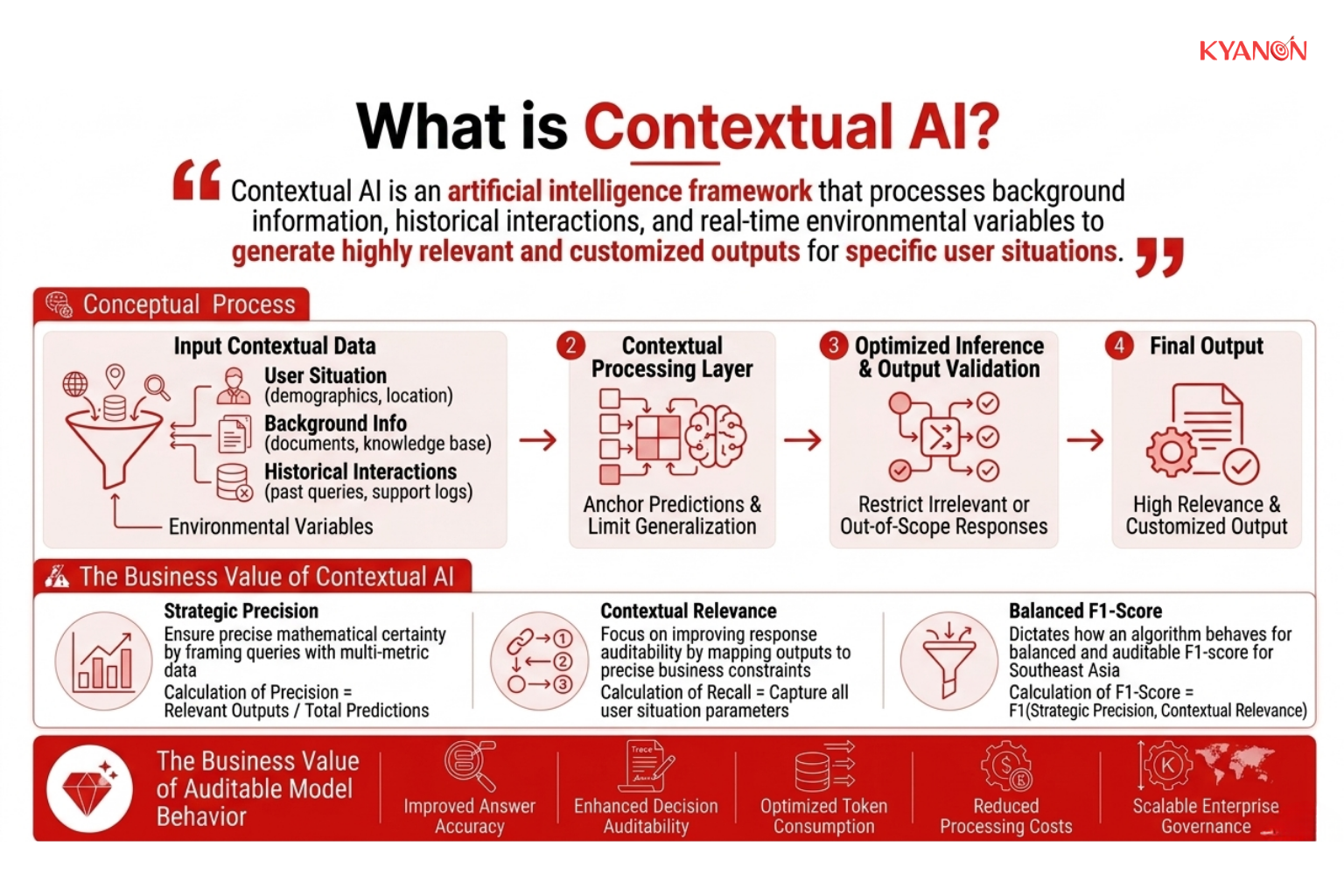
Trong môi trường doanh nghiệp, cơ chế nền tảng này cho phép các hệ thống AI vượt ra ngoài khả năng dự đoán tổng quát và thay vào đó cung cấp các phản hồi gắn trực tiếp với dữ liệu giao dịch trực tiếp, lịch sử khách hàng, chính sách tổ chức và điều kiện kinh doanh hiện tại. Kết quả là một lớp AI đáng tin cậy hơn nhiều và sẵn sàng cho sản xuất, có khả năng hỗ trợ các hoạt động trải nghiệm khách hàng quan trọng, quy trình thương mại thông minh và tự động hóa kiến thức doanh nghiệp.
Thay vì phụ thuộc hoàn toàn vào các tham số mô hình được huấn luyện sẵn tĩnh, các hệ thống AI theo ngữ cảnh chủ động thu thập và đồng bộ hóa thông tin bên ngoài trong quá trình suy luận. Điều này giúp giảm đáng kể hiện tượng ảo giác, cải thiện độ chính xác cá nhân hóa và cho phép các tổ chức vận hành AI một cách an toàn trên các hệ thống nội bộ và tương tác với khách hàng.
Cách thức hoạt động của Trí tuệ nhân tạo theo ngữ cảnh
Các hệ thống AI theo ngữ cảnh chủ động tiếp nhận các luồng dữ liệu đa nguồn để điều chỉnh các mô hình xác suất của chúng tại thời điểm suy luận, thay vì chỉ dựa vào các trọng số tĩnh đã được huấn luyện trước.
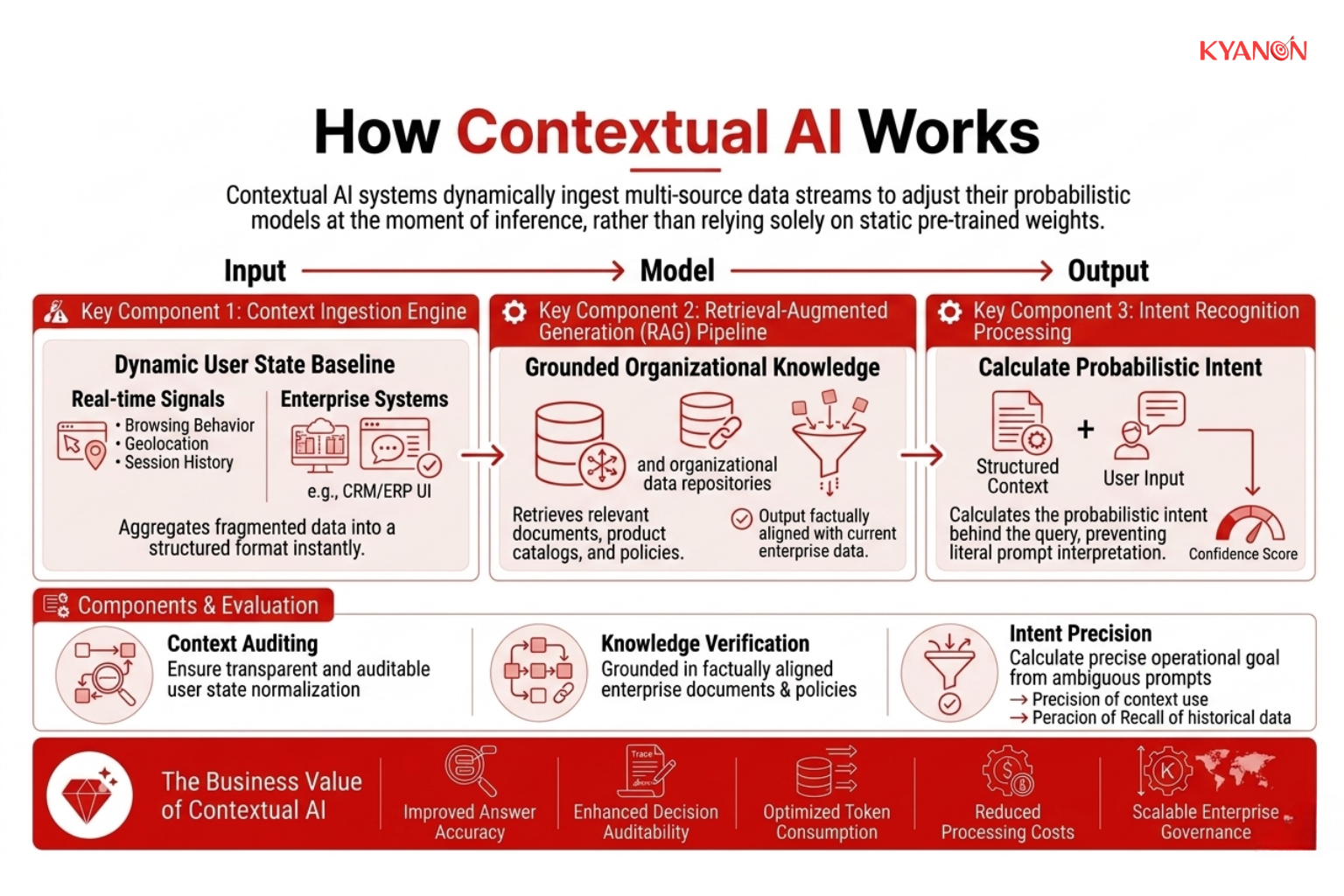
Thay vì chỉ dựa vào các tham số được huấn luyện trước và cố định trong quá trình tạo mô hình, các hệ thống học máy theo ngữ cảnh liên tục cập nhật trạng thái tình huống nội bộ của chúng chính xác vào thời điểm người dùng đưa ra suy luận.
Vòng lặp vận hành này hoạt động liền mạch trên ba thành phần kiến trúc chính:
Thành phần chính 1: Công cụ tiếp nhận ngữ cảnh
Công cụ thu thập ngữ cảnh đóng vai trò như hệ thần kinh vận hành thời gian thực của kiến trúc AI ngữ cảnh. Trách nhiệm chính của nó là liên tục thu thập, đồng bộ hóa và chuẩn hóa các tín hiệu hành vi tốc độ cao và luồng dữ liệu doanh nghiệp thành một trạng thái ngữ cảnh thống nhất mà hệ thống AI có thể xử lý ngay lập tức trong quá trình suy luận.
Trong môi trường doanh nghiệp, dữ liệu khách hàng và dữ liệu vận hành hiếm khi tồn tại trong một nền tảng tập trung duy nhất. Thay vào đó, thông tin bị phân mảnh trên các hệ thống CRM, nền tảng ERP, công cụ thương mại điện tử, nền tảng dữ liệu khách hàng (CDP), công cụ phân tích, hệ thống hỗ trợ và cơ sở dữ liệu giao dịch, vốn được cập nhật với tốc độ khác nhau và hoạt động dưới các cấu trúc dữ liệu khác nhau.
Lớp tiếp nhận liên tục tổng hợp các tín hiệu như:
- Hoạt động duyệt web
- Hành vi clickstream
- Các sửa đổi giỏ hàng đang hoạt động
- Định vị địa lý
- Loại thiết bị
- Trạng thái khách hàng thân thiết
- Lịch sử giao dịch
- Hỗ trợ tương tác
- Mô hình tương tác sản phẩm
- Thời lượng phiên
- Thông tin về tình trạng hàng tồn kho theo thời gian thực
Các tín hiệu rời rạc này sau đó được chuẩn hóa thành các biểu diễn có cấu trúc mà các hệ thống học máy có thể diễn giải một cách nhất quán trong nhiều môi trường khác nhau.
Đối với các tổ chức doanh nghiệp, lớp điều phối này có tầm quan trọng chiến lược vì việc cá nhân hóa theo thời gian thực phụ thuộc hoàn toàn vào khả năng của hệ thống AI trong việc duy trì sự hiểu biết chính xác về trạng thái hoạt động hiện tại của người dùng. Nếu không có các đường dẫn thu thập dữ liệu được đồng bộ hóa, các hệ thống theo ngữ cảnh sẽ nhanh chóng suy giảm thành các công cụ đề xuất tổng quát không thể phản ứng linh hoạt với sự thay đổi hành vi của khách hàng.
Thành phần chính 2: Quy trình tạo dữ liệu tăng cường bằng truy xuất (RAG)
Quy trình Tạo lập Tăng cường bằng Truy xuất (RAG) đóng vai trò là cơ chế nền tảng thực tế cho các hệ thống AI theo ngữ cảnh. Thay vì cho phép các mô hình ngôn ngữ lớn tạo ra phản hồi hoàn toàn từ các mẫu xác suất được mã hóa trong quá trình huấn luyện trước, lớp RAG chủ động truy xuất kiến thức doanh nghiệp đã được xác minh tại thời điểm suy luận và đưa trực tiếp vào quá trình tạo lập.
Kiến trúc này đặc biệt quan trọng trong môi trường doanh nghiệp, nơi thông tin vận hành thay đổi liên tục. Danh mục sản phẩm phát triển nhanh chóng, cấu trúc giá cả biến động, tình trạng hàng tồn kho thay đổi theo khu vực, chính sách hỗ trợ thay đổi theo thời gian và các yêu cầu tuân thủ khác nhau giữa các khu vực pháp lý. Một mô hình AI tạo sinh độc lập không thể duy trì nhận thức một cách đáng tin cậy về những điều kiện năng động này vì dữ liệu huấn luyện nội bộ của nó trở nên lỗi thời gần như ngay lập tức sau khi triển khai.
Hệ thống RAG giải quyết hạn chế này bằng cách kết nối mô hình AI với các kho kiến thức bên ngoài và cơ sở dữ liệu vectơ chứa thông tin doanh nghiệp trực tiếp.
Khi người dùng gửi truy vấn, hệ thống trước tiên chuyển đổi yêu cầu thành các vector nhúng thể hiện ý nghĩa ngữ nghĩa chứ không phải mối quan hệ chính xác giữa các từ khóa. Sau đó, các vector nhúng này được so sánh với cơ sở dữ liệu vector của doanh nghiệp để truy xuất thông tin có liên quan đến hoạt động, chẳng hạn như:
- Thông số kỹ thuật sản phẩm
- Chính sách vận chuyển
- Hồ sơ khách hàng
- Tài liệu bảo hành
- Quy trình nội bộ
- Cơ sở kiến thức hỗ trợ
- Dữ liệu giá cả
- Thỏa thuận mức độ dịch vụ (SLA)
Thông tin thu thập được sẽ được đưa vào quy trình suy luận trước khi mô hình tạo ra phản hồi. Điều này giúp đảm bảo kết quả đầu ra dựa trên kiến thức tổ chức đã được kiểm chứng thay vì các giả định chung chung.
Đối với những người ra quyết định trong doanh nghiệp, tầm quan trọng của kiến trúc này vượt xa tính chính xác đơn thuần về mặt dữ liệu. RAG giảm đáng kể nguy cơ ảo giác, cải thiện khả năng kiểm soát quản trị, đẩy nhanh quá trình cập nhật kiến thức và cho phép các tổ chức vận hành AI một cách an toàn trong môi trường tương tác trực tiếp với khách hàng.
Thành phần chính 3: Xử lý nhận diện ý định
Xử lý nhận diện ý định là lớp diễn giải ngữ nghĩa chịu trách nhiệm xác định mục tiêu có thể có của người dùng trong bối cảnh hoạt động rộng hơn của tương tác. Thay vì phân tích các lời nhắc dưới dạng các chuỗi văn bản riêng lẻ, các hệ thống AI theo ngữ cảnh đánh giá đầu vào hội thoại cùng với lịch sử hành vi, trạng thái giao dịch và các biến môi trường thời gian thực để suy luận ý định có thể xảy ra một cách xác suất.
Sự phân biệt này rất quan trọng vì các tương tác trong doanh nghiệp thường mơ hồ, không đầy đủ hoặc phụ thuộc vào ngữ cảnh. Người dùng hiếm khi giao tiếp bằng những yêu cầu được cấu trúc hoàn hảo. Thay vào đó, họ cung cấp các hướng dẫn rời rạc, câu hỏi viết tắt, mục tiêu ngụ ý hoặc ngôn ngữ đàm thoại đòi hỏi sự diễn giải theo ngữ cảnh.
Đối với các tổ chức triển khai AI trên toàn bộ môi trường trải nghiệm khách hàng, khả năng nhận diện ý định hiệu quả tác động trực tiếp đến:
- Tỷ lệ giải quyết vấn đề của chatbot
- Mức độ phù hợp của khuyến nghị
- Độ chính xác tìm kiếm doanh nghiệp
- Khả năng mở rộng tự động hóa
- Giảm thiểu nỗ lực của khách hàng
- Sự liên tục của cuộc trò chuyện
Nó cũng đóng vai trò quan trọng trong việc giảm thiểu sự cản trở giữa các điểm tiếp xúc kỹ thuật số. Thay vì buộc người dùng phải liên tục làm rõ thông tin hoặc cung cấp thủ công các định danh có cấu trúc, các hệ thống AI theo ngữ cảnh sẽ tự động suy luận ngữ cảnh còn thiếu bằng cách sử dụng nhận thức về trạng thái hoạt động.

Trí tuệ nhân tạo theo ngữ cảnh so với trí tuệ nhân tạo tạo sinh truyền thống
Cả hai hệ thống đều sử dụng học sâu để tạo ra các phản hồi tự động, nhưng chúng khác nhau hoàn toàn ở cách xử lý các biến số tình huống trong thời gian thực.
Kích thước | Trí tuệ nhân tạo theo ngữ cảnh | Trí tuệ nhân tạo tạo sinh truyền thống |
| Nối đất dữ liệu | Dữ liệu doanh nghiệp thời gian thực | Bộ dữ liệu tĩnh được huấn luyện trước |
Mức độ liên quan của phản hồi | Rất cụ thể đối với người dùng hiện tại | Tổng quát và áp dụng phổ biến |
| Dung lượng bộ nhớ | Sử dụng bộ nhớ ngoài (RAG, Vector DBs) | Giới hạn trong cửa sổ ngữ cảnh nhắc nhở tức thì |
Trường hợp sử dụng kinh doanh chính | Thương mại điện tử cá nhân hóa, trải nghiệm khách hàng năng động | Soạn thảo nội dung, lên ý tưởng tổng quát. |
| Độ phức tạp tích hợp | Cao (yêu cầu đường dẫn dữ liệu) | Chi phí thấp (thường là API cắm và chạy) |
Khi nào nên cân nhắc sử dụng Trí tuệ nhân tạo theo ngữ cảnh?
Hãy cân nhắc sử dụng Trí tuệ nhân tạo theo ngữ cảnh nếu:
- Nền tảng thương mại điện tử của bạn trả về các đề xuất sản phẩm chung chung, bỏ qua lịch sử mua hàng gần đây và hành vi phiên hiện tại của người dùng đã đăng nhập.
- Chatbot hỗ trợ khách hàng của bạn đang chuyển một lượng lớn yêu cầu đến nhân viên hỗ trợ trực tiếp vì chúng không thể truy cập trạng thái bảo hành hiện tại hoặc nội dung giỏ hàng của người dùng.
- Công cụ tìm kiếm doanh nghiệp của bạn truy xuất hàng ngàn tài liệu không liên quan thay vì lọc kết quả dựa trên bộ phận cụ thể của nhân viên và giai đoạn dự án hiện tại.
Có thể đó không phải là ưu tiên đúng đắn nếu:
- Tổ chức của bạn đang vận hành với các hệ thống dữ liệu phân mảnh và riêng lẻ, trong đó việc tích hợp API thời gian thực giữa CRM và danh mục sản phẩm hiện chưa khả thi về mặt kỹ thuật.
Tại sao trí tuệ nhân tạo theo ngữ cảnh lại quan trọng đối với thương mại điện tử và trải nghiệm khách hàng?
Việc tích hợp nhận thức ngữ cảnh vào các hệ thống tương tác với khách hàng sẽ chuyển đổi các tương tác kỹ thuật số từ các quy trình làm việc tĩnh, phản ứng thụ động thành các trải nghiệm thích ứng và cá nhân hóa, liên tục phát triển song song với hành vi của khách hàng. Thay vì buộc khách hàng phải liên tục chỉ định thủ công các tùy chọn, ý định hoặc chi tiết giao dịch, các hệ thống AI ngữ cảnh sẽ tự động diễn giải các tín hiệu hành vi và dữ liệu hoạt động trong thời gian thực để tự động cá nhân hóa các tương tác.
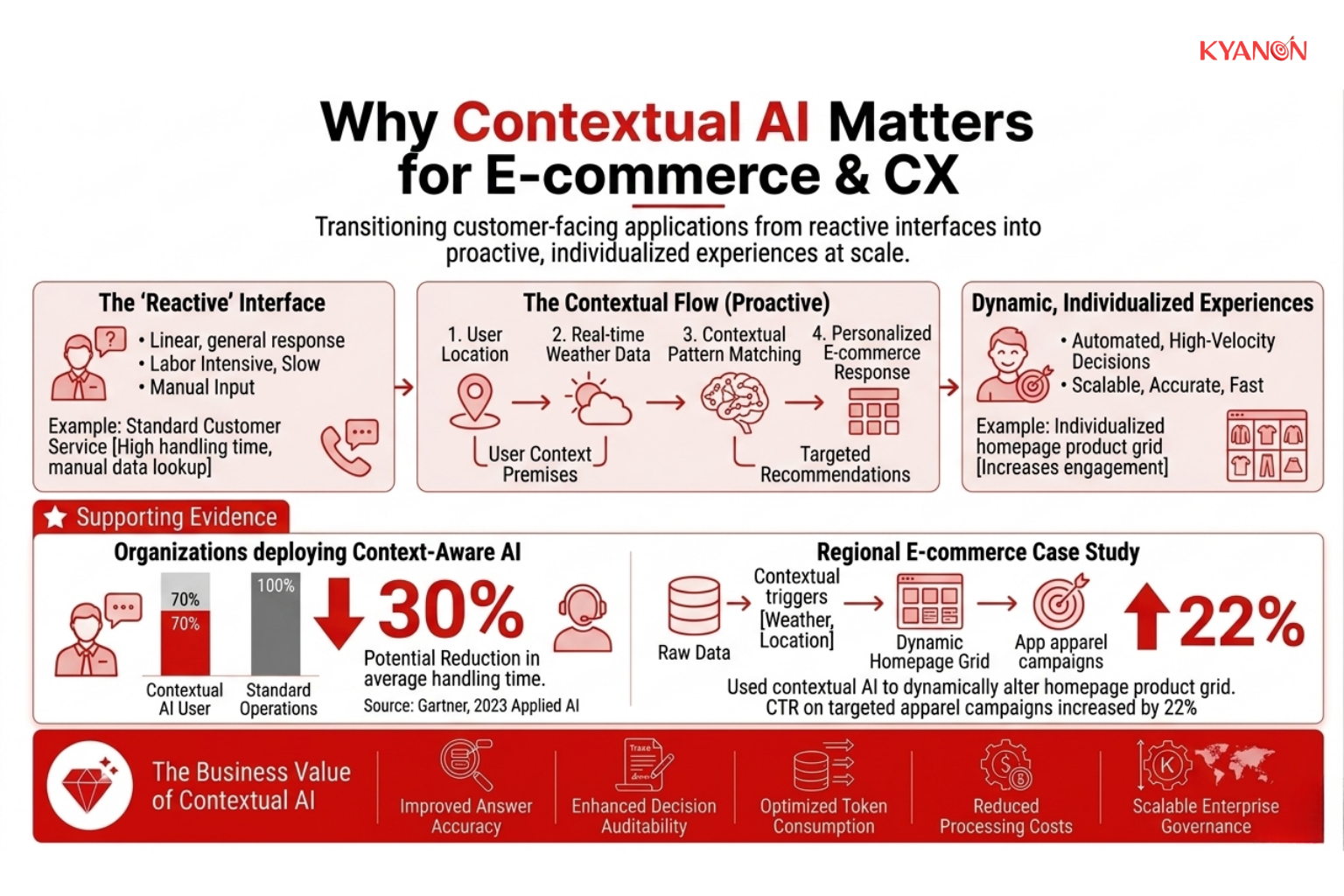
Đối với các tổ chức thương mại điện tử doanh nghiệp, khả năng này ngày càng trở nên quan trọng vì người tiêu dùng hiện đại kỳ vọng các nền tảng kỹ thuật số hoạt động thông minh ở mọi giai đoạn của hành trình khách hàng. Các hệ thống đề xuất truyền thống và giao diện AI tổng quát thường không thích ứng được với ý định của khách hàng thay đổi nhanh chóng, dẫn đến các đề xuất sản phẩm không phù hợp, trải nghiệm hỗ trợ lặp đi lặp lại và chất lượng tương tác giảm sút.
Một hệ thống đề xuất thông thường có thể tiếp tục quảng bá sản phẩm chỉ dựa trên mối tương quan mua hàng trong quá khứ mà bỏ qua những gì khách hàng đang thực hiện trong phiên hiện tại. Tương tự, nhiều chatbot hỗ trợ khách hàng hoạt động mà không có quyền truy cập vào hệ thống vận hành trực tiếp, buộc người dùng phải liên tục cung cấp số đơn đặt hàng, chi tiết vận chuyển, thông tin bảo hành hoặc thông tin tài khoản đã tồn tại ở nơi khác trong cơ sở hạ tầng của tổ chức.
Trí tuệ nhân tạo theo ngữ cảnh giải quyết những hạn chế về mặt vận hành này bằng cách liên tục đồng bộ hóa dữ liệu đo lường hành vi trực tiếp với các hệ thống doanh nghiệp trong quá trình tạo ra suy luận. Điều này cho phép các hệ thống AI cá nhân hóa tương tác một cách năng động bằng cách sử dụng các tín hiệu ngữ cảnh theo thời gian thực thay vì chỉ dựa trên các giả định lịch sử tĩnh.
Những quan niệm sai lầm thường gặp
Quan niệm sai lầm 1: “Trí tuệ nhân tạo hiểu bối cảnh của khách hàng chính xác như một nhân viên bán hàng.”
Thực tế: Trí tuệ nhân tạo theo ngữ cảnh thiếu khả năng thấu hiểu thực sự cảm xúc của con người, các sắc thái xã hội hoặc bối cảnh văn hóa. Nó chỉ dựa vào mô hình xác suất và các mẫu dữ liệu thống kê để mô phỏng sự hiểu biết dựa trên các biến số định lượng được đưa vào hệ thống của nó.
Quan niệm sai lầm 2: “Việc cung cấp thêm dữ liệu thô cho mô hình sẽ tự động dẫn đến ngữ cảnh tốt hơn.”
Thực tế: Việc đưa một lượng lớn dữ liệu không liên kết, không có cấu trúc từ các hệ thống khác nhau vào một mô hình sẽ gây ra nhiễu tính toán và làm tăng tỷ lệ ảo giác. Trí tuệ nhân tạo theo ngữ cảnh hiệu quả đòi hỏi phải có quá trình tiền xử lý dữ liệu có chủ đích, quản trị chặt chẽ và các quy trình truy xuất chính xác để hoạt động đáng tin cậy.
Cách Kyanon Digital ứng dụng Trí tuệ nhân tạo theo ngữ cảnh
Kyanon Digital xây dựng các kiến trúc AI theo ngữ cảnh bằng cách sử dụng công nghệ Tạo tăng cường truy xuất (RAG) và các cơ sở dữ liệu vector chuyên dụng cho các khách hàng thương mại điện tử và trải nghiệm khách hàng doanh nghiệp trên khắp Đông Nam Á và Hoa Kỳ. Các nhóm kỹ thuật của chúng tôi tích hợp trực tiếp các mô hình này vào các nền tảng thương mại có thể kết hợp để cá nhân hóa các đề xuất sản phẩm và tự động hóa các phản hồi hỗ trợ khách hàng, quản lý chặt chẽ quản trị dữ liệu và độ trễ API để đảm bảo hiệu suất thời gian thực.
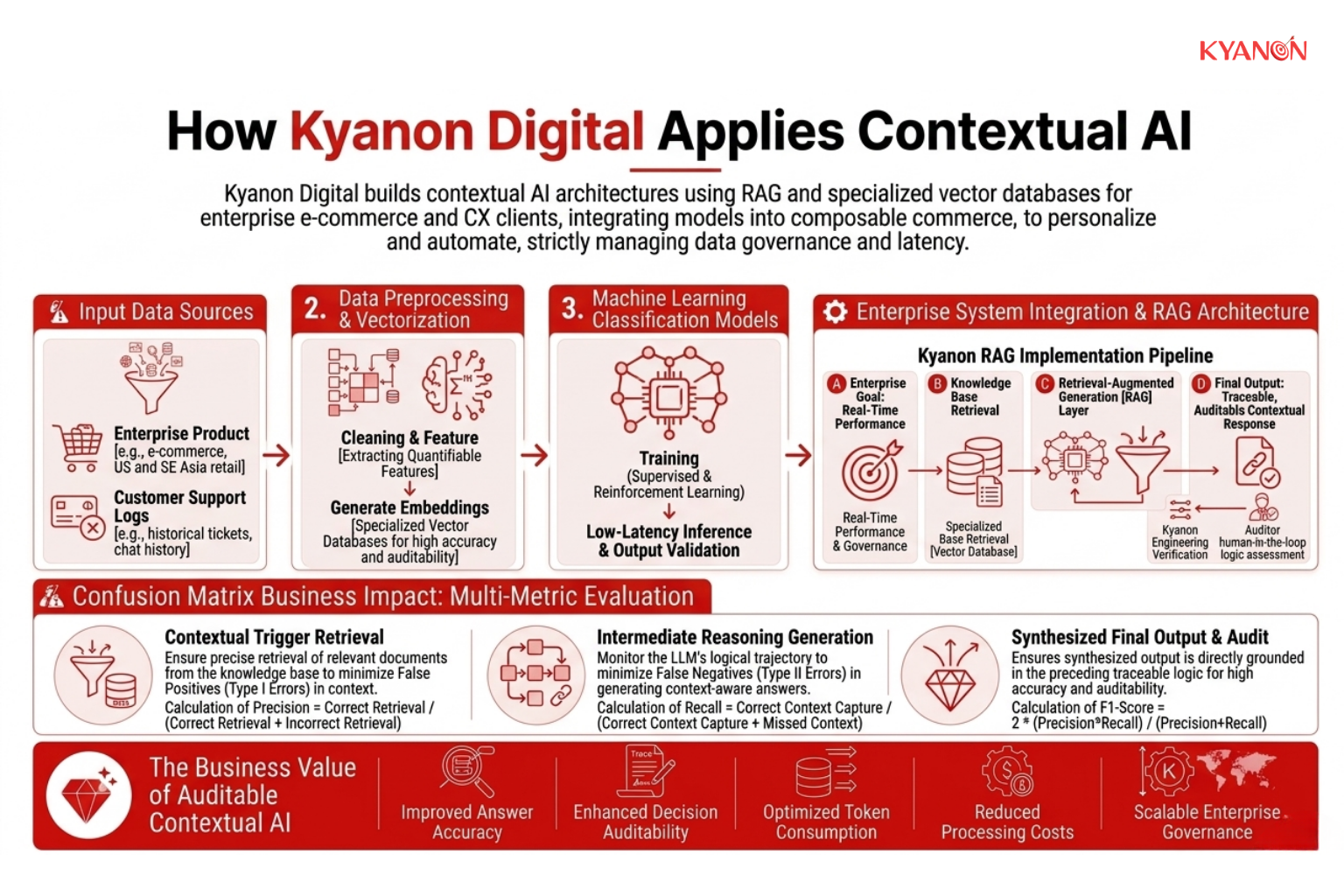
→ Khám phá các dịch vụ Phát triển Phần mềm Trí tuệ Nhân tạo của chúng tôi .

 Create project brief with AI