
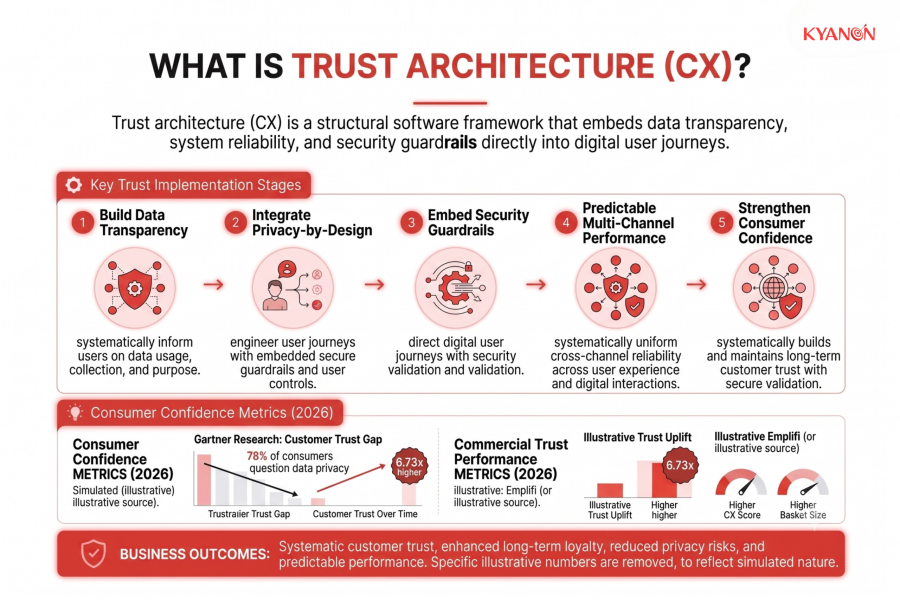
What is Trust Architecture (CX)?
Trust architecture (CX) is a structural software framework that embeds data transparency, system reliability, and security guardrails directly into digital user journeys. By unifying privacy-by-design engineering with predictable cross-channel performance, it systematically builds and maintains consumer confidence across enterprise platforms.
How Trust Architecture (CX) Works
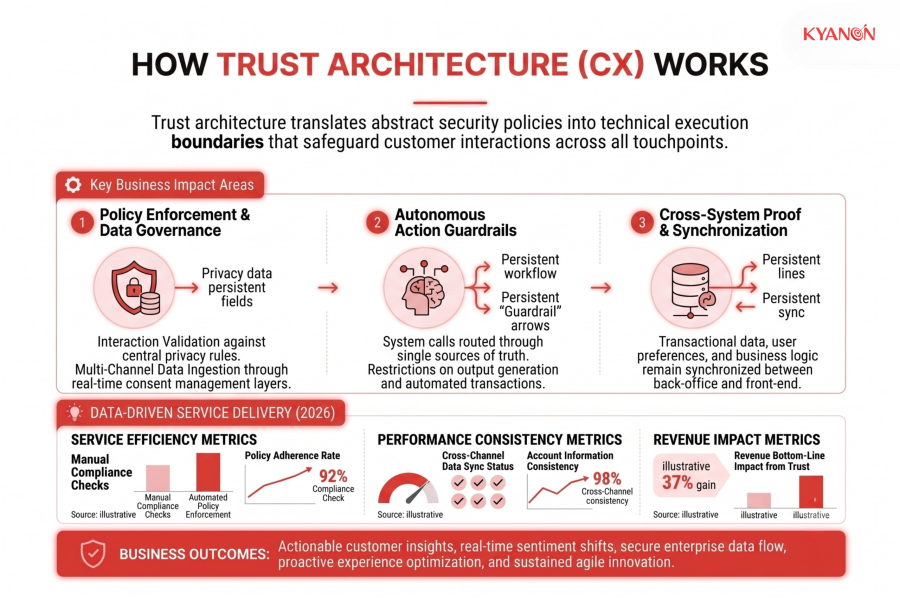
Trust architecture translates abstract security policies into technical execution boundaries that safeguard customer interactions across all touchpoints.
Policy Enforcement & Data Governance
Every inbound interaction is validated against centralized privacy rules. Dynamic consent management systems ensure that zero-party data and personal records are ingested, processed, and stored strictly in compliance with global regulations like GDPR, preventing silent data misuse.
Autonomous Action Guardrails
When integrating automated or generative capabilities into customer touchpoints, the architecture enforces programmatic boundaries. System calls are routed through single sources of truth, restricting output generation and preventing unauthorized transaction execution without explicit authentication.
Cross-System Proof & Synchronization
Data states, policy updates, and transactional histories are continuously synchronized across back-office tools and front-end channels. This ensures that business logic, return windows, and account information remain perfectly consistent across web, mobile, and customer service endpoints.

Comparative Analysis: Traditional CX Security vs. Modern Trust Architecture (CX)
Dimension | Traditional CX Security | Modern Trust Architecture (CX) |
| System Focus | Perimeter security, firewalls, and isolated login portals | End-to-end journey transparency and continuous interaction verification |
Data Privacy | Passive privacy policy footers and basic cookie banners | Active, user-controlled data management and transparent preference controls |
| AI Integration | Unrestricted model prompting relying on generic guardrails | Programmatic execution limits and validated knowledge-base grounding |
Channel Consistency | Fragmented business rules across separate channel silos | Unified cross-system proof ensuring identical logic across touchpoints |
| Metric Tracking | Reactive audit logs following data breaches or compliance failures | Proactive tracking of Customer Effort Scores, opt-outs, and consent drift |
Why Trust Architecture (CX) Matters
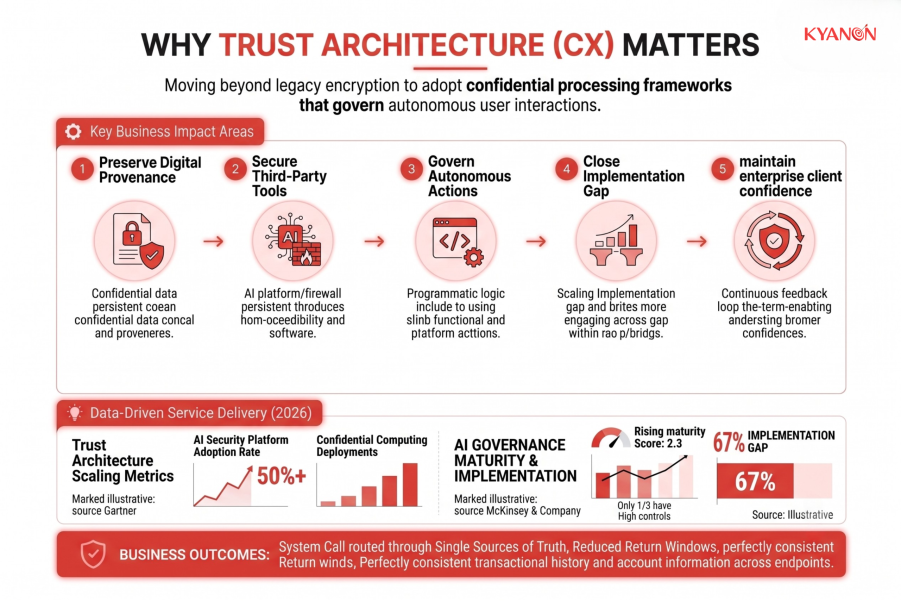
Building an enterprise trust architecture requires moving beyond legacy encryption to adopt confidential processing frameworks that preserve digital provenance. According to research from Gartner, over 50% of enterprises will actively deploy unified AI security platforms to continuously secure third-party and custom-built digital tools. This shift toward “Vanguard” security architectures reflects a broader corporate focus on preserving enterprise trust, mitigating data leakage, and governing autonomous user interactions across digital touchpoints.
As organizations scale automated and agentic capabilities, establishing strict operational oversight becomes critical to maintaining client confidence. Findings from McKinsey & Company reveal that while the global Responsible AI maturity score reached 2.3 in 2026, only one-third of enterprises possess high maturity levels in active governance and agentic AI controls. This implementation gap demonstrates that rapid system expansion frequently outpaces organizational oversight, making integrated trust layers essential for preventing unverified autonomous actions.
Common Misconceptions
Treating Trust as a Sentiment Rather Than a System
Trust is an architecture, not a feeling. While marketing can spark an initial emotional bond, long-term trust is sustained by underlying backend systems that make positive outcomes repeatable. If backend infrastructure fails to protect data, enforce uniform policies across channels, or prevent AI hallucinations, customer trust fails regardless of brand messaging.
Confusing a Secure Portal with a Trust Architecture
Data security is merely one component of a broader trust framework. Silent trust erosion occurs when customer-facing structures are poorly designed or rely on dark patterns, such as hidden opt-out settings or confusing consent prompts. Real trust architecture builds transparent, user-controlled data mechanisms directly into the customer journey.
Assuming AI Agents Should Figure It Out on Their Own
Deploying AI models without strict architectural boundaries creates major compliance and reputational liabilities. Systemic trust requires an architecture that restricts autonomous decision-making through rigid guardrails, verified single sources of truth, and programmatic limits on unassisted agent actions.
Overlooking Cross-Channel Information Disconnects
Disconnected data silos act as silent trust killers. If a website displays one set of terms, an automated chatbot quotes another, and a customer service representative provides a third, structural trust breaks down. Preventing this requires a unified cross-channel system of proof that aligns policies across all physical and digital touchpoints.
Assuming Trust Metrics are Captured by Standard CSAT/NPS
Satisfaction metrics evaluate immediate interactions rather than long-term organizational trust. A customer may express satisfaction with a refund process while actively migrating away due to aggressive data harvesting or intrusive UX practices. Evaluating trust architecture requires monitoring systemic markers, including Customer Effort Scores (CES), data-deletion requests, and opt-out rates.
How Kyanon Digital Applies Trust Architecture (CX)
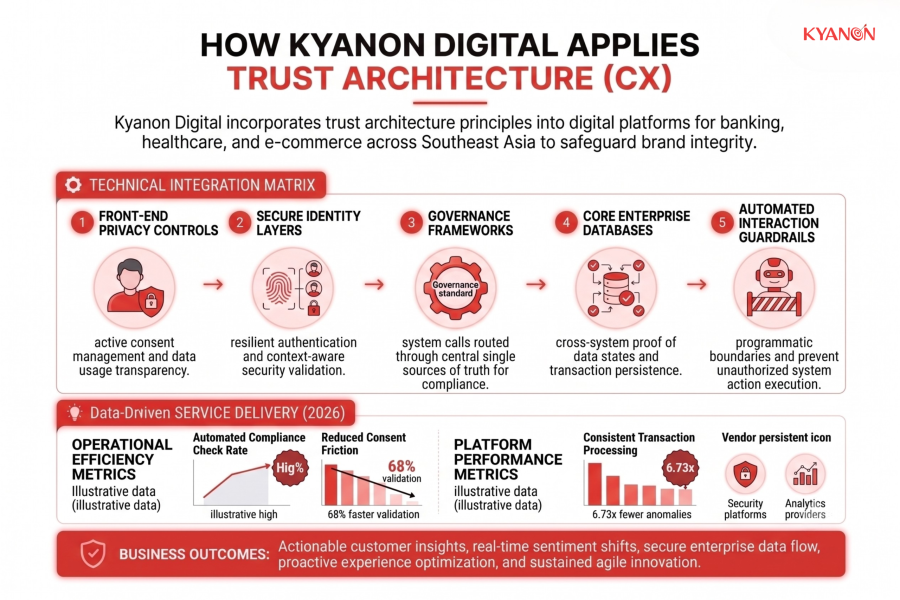
Kyanon Digital incorporates trust architecture principles into enterprise digital platforms for banking, healthcare, and e-commerce organizations. We design resilient software architectures, configure active consent management pipelines, and build security guardrails into automated interactions to safeguard brand integrity across Southeast Asia.
Explore our services:

 Create project brief with AI