
What is Upsell / Cross-Sell Experience?
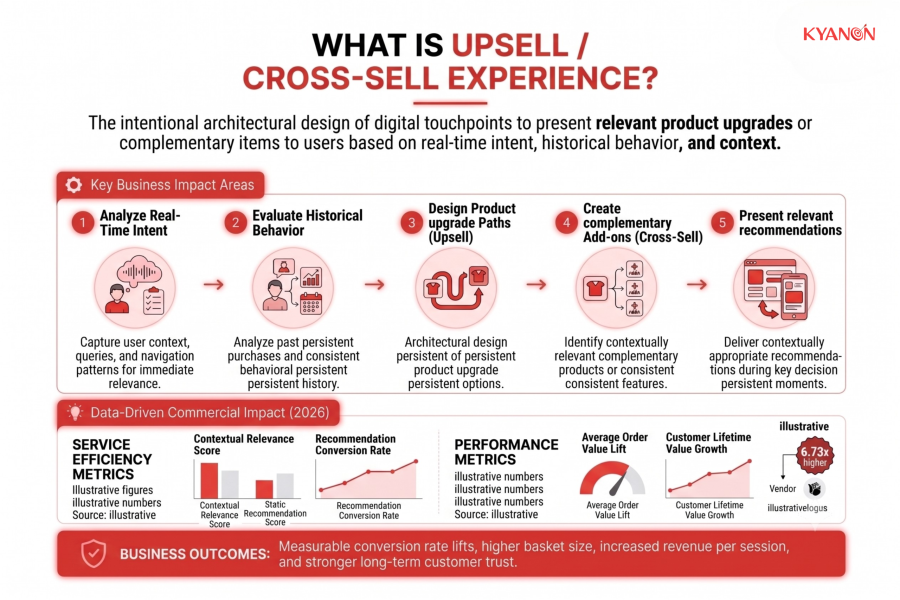
An upsell / cross-sell experience is the intentional architectural design of digital touchpoints to present relevant product upgrades or complementary items to users based on real-time intent, historical behavior, and context. By delivering contextually appropriate recommendations during key decision moments, it maximizes average order value and customer lifetime value without adding friction to the buyer journey.
How Upsell / Cross-Sell Experience Works
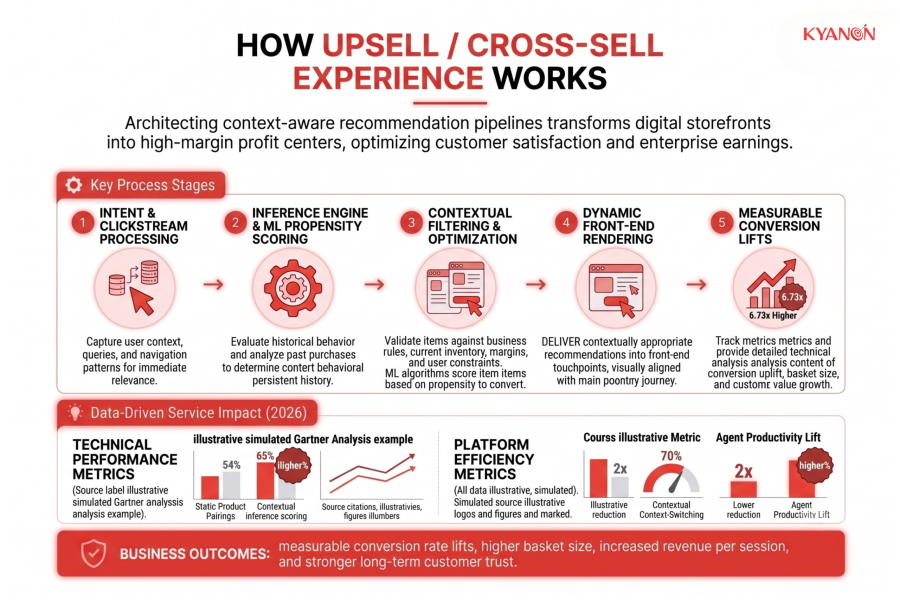
Modern upsell and cross-sell experiences rely on real-time data integration, machine learning recommendation models, and dynamic UI rendering to deliver non-intrusive product suggestions.
Intent & Clickstream Data Processing
As a customer navigates a web store or banking portal, an event ingestion layer captures real-time signals, including search queries, page dwell time, active cart contents, and historical transaction logs. This continuous stream feeds into an inference model that identifies explicit and implicit user needs.
Contextual Recommendation Filtering
The recommendation pipeline evaluates candidate products against specific business rules, current inventory levels, margins, and user constraints. Rather than relying on static product pairings, machine learning algorithms score items based on their propensity to convert within the customer’s active session state.
Dynamic Front-End Rendering
Once optimal items are selected, API layers deliver personalized recommendations into front-end touchpoints—such as interactive product pages, cart drawers, or post-purchase confirmation screens. The user experience maintains visual alignment with the primary transaction journey, ensuring recommendations feel supportive rather than distracting.

Comparative Analysis: Legacy Static Recommendations vs. Context-Aware Upsell / Cross-Sell Experience
Dimension | Legacy Static Recommendations | Context-Aware Upsell / Cross-Sell Experience |
| Recommendation Logic | Hardcoded “frequently bought together” rule sets | Real-time machine learning models driven by behavioral intent |
Data Integration | Isolated web analytics disconnected from core databases | Unified real-time streams across CRM, ERP, and customer data platforms |
| Timing & Triggering | Static page-level placements (e.g., fixed footer blocks) | Dynamic touchpoint rendering based on checkout state and dwell metrics |
Customer Personalization | Generic product displays identical for all site visitors | Tailored product pairings adjusted to historical affinity and budget signals |
| Margin & Revenue Impact | Relies heavily on steep discounting to drive conversion | Optimizes value-added product features while preserving baseline profit margins |
Why Upsell / Cross-Sell Experience Matters
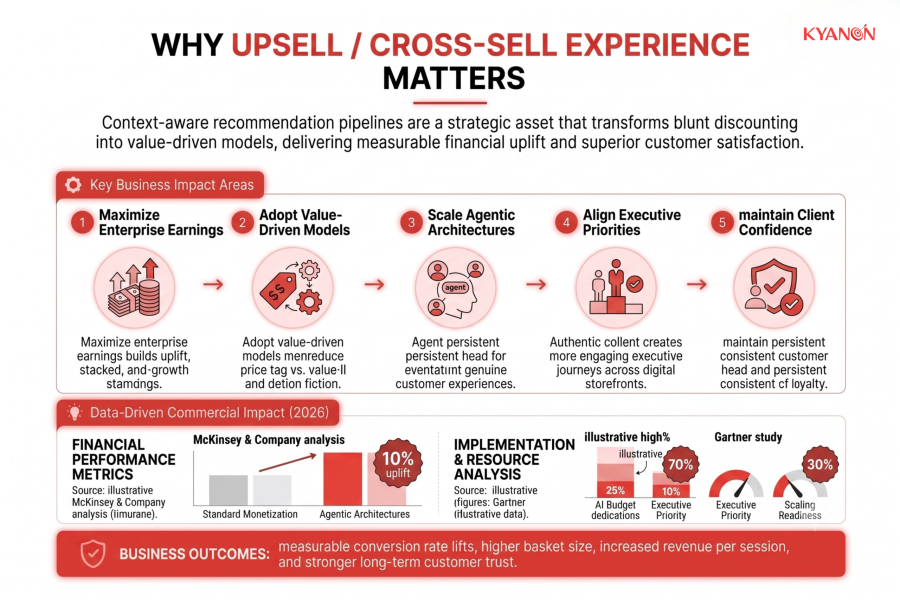
Architecting context-aware recommendation pipelines allows digital platforms to capture higher margins while improving buyer satisfaction. According to research from McKinsey & Company, implementing agentic architectures for context-specific monetization leads to a direct 10% uplift in total enterprise earnings. Furthermore, between 65% and 85% of commercial and pricing executives expect to scale generative or agentic AI recommendation layers within the next one to three years, reflecting an industry-wide move away from blunt discounting toward value-driven recommendation models.
Despite strong financial incentives, enterprise leaders face integration and resource barriers when deploying these frameworks at scale. A study by Gartner reveals that while enterprise marketing divisions dedicate an average of 15.3% of their total budgets to AI initiatives and 70% of leaders consider AI leadership a critical priority, only 30% possess mature, scalable capabilities. Additionally, 56% of enterprise tech and marketing organizations report lacking the baseline budget required to fully execute their digital vision. Overcoming these integration bottlenecks enables technology executives to bridge the gap between AI budget allocation and measurable revenue performance.
Common Misconceptions
They are the same thing
Upselling and cross-selling serve distinct operational functions. Upselling encourages buyers to purchase a higher-tier, higher-spec, or premium version of the product they are evaluating, whereas cross-selling suggests complementary items or accessories that augment the primary purchase.
They always annoy customers
Customers do not inherently dislike product recommendations; they dislike intrusive, irrelevant pitches that ignore their active intent, preferences, or budget limits. Contextually accurate suggestions reduce search effort and assist the buyer in completing their total solution.
Aggressive sales tactics are required
High-pressure countdown timers and disruptive pop-ups degrade brand trust and increase cart abandonment. Value-driven suggestions embedded naturally into user workflows outperform aggressive sales tactics in both conversion rates and long-term customer retention.
Only high-end products benefit
Mid-tier and budget purchases offer equal opportunity for dynamic cross-selling and upselling. Low-cost items benefit significantly from complementary accessory additions, extended warranties, or bundle upgrades that increase overall transaction profitability.
How Kyanon Digital Applies Upsell / Cross-Sell Experience
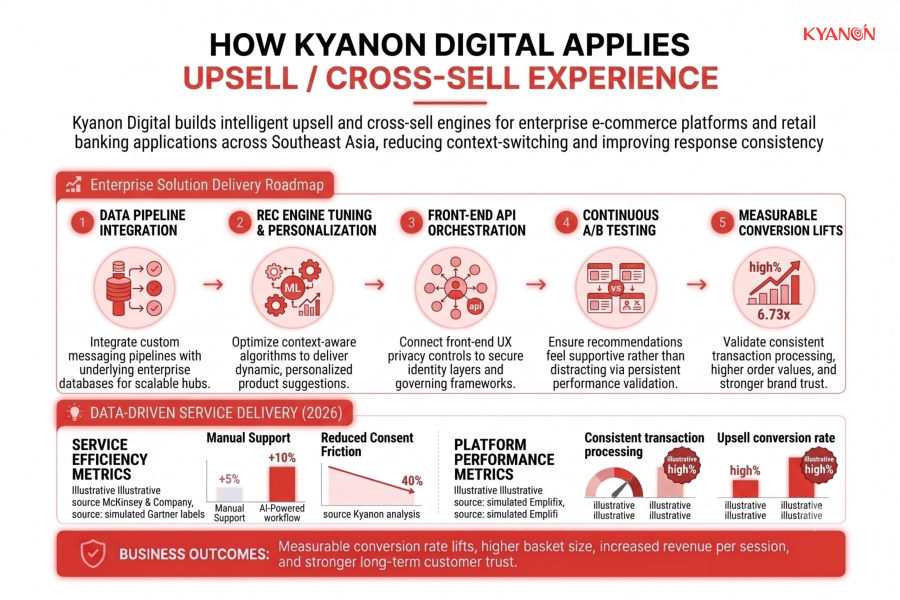
Kyanon Digital builds intelligent upsell and cross-sell engines for enterprise e-commerce platforms and retail banking applications across Southeast Asia. We integrate real-time machine learning algorithms with backend inventory and customer databases, enabling digital touchpoints to deliver personalized product suggestions that boost average order values while preserving brand trust.
Explore our services:

 Create project brief with AI