
What is Web Performance Optimization (Commerce)?
Web performance optimization (commerce) is the systematic process of increasing the loading speed, transactional responsiveness, and visual stability of an e-commerce website to improve customer retention and purchase conversion rates. This operational discipline focuses on optimizing core metrics such as Google’s Core Web Vitals to directly prevent digital cart abandonment.
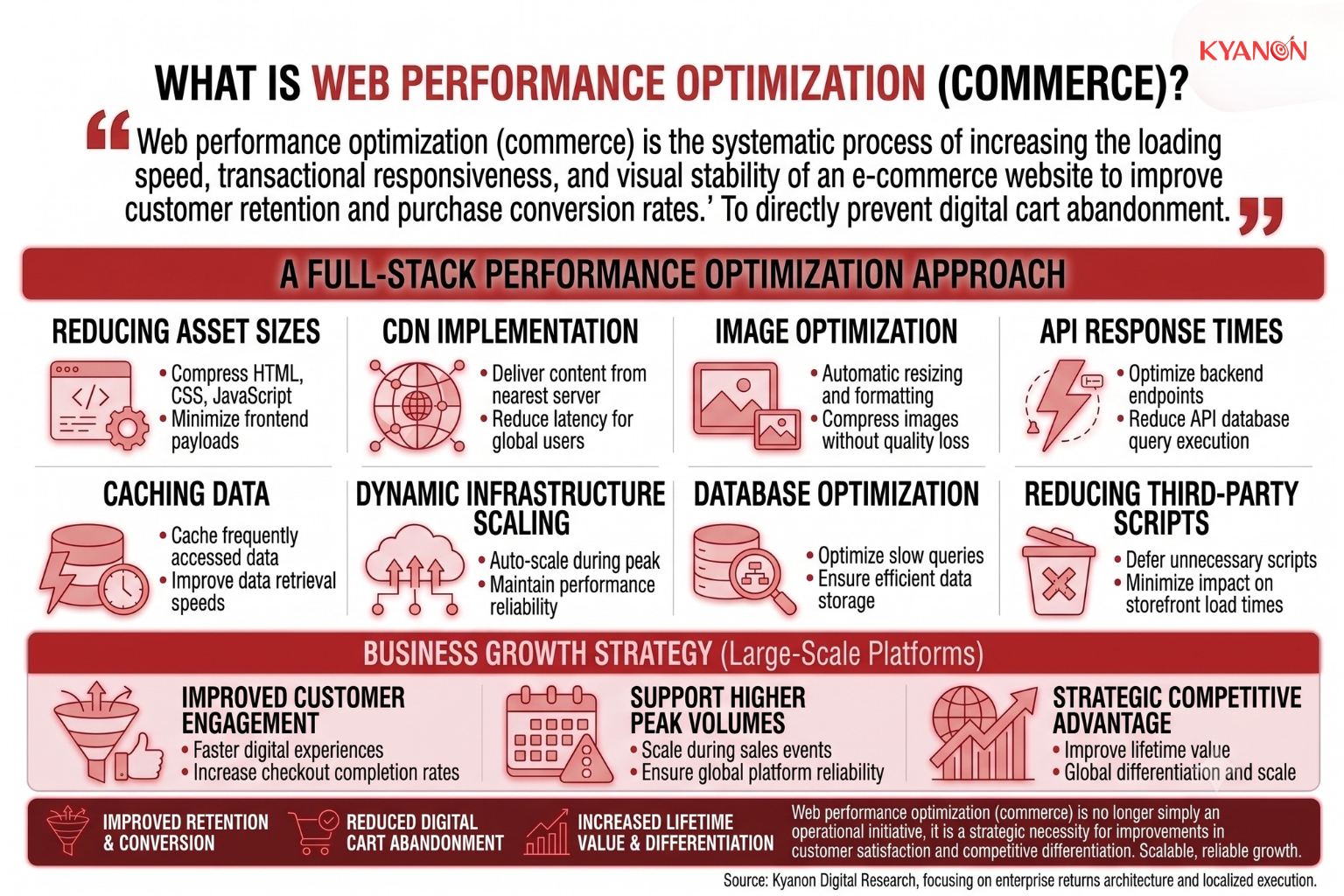
Enterprise e-commerce performance optimization requires a full-stack approach. This includes reducing frontend asset sizes, implementing content delivery networks (CDNs), optimizing image delivery, improving API response times, caching frequently accessed data, scaling infrastructure dynamically, optimizing database queries, and reducing unnecessary third-party scripts that slow down storefront performance.
For large-scale commerce platforms, performance optimization is not only a user experience initiative but also a business growth strategy. Faster digital experiences improve customer engagement, increase checkout completion rates, support higher traffic volumes during peak events, and allow retailers to scale globally without compromising reliability.
How Web Performance Optimization (Commerce) Works
E-commerce web performance optimization improves storefront speed, responsiveness, and stability by optimizing how content is delivered, processed, and rendered across the entire digital commerce stack. Instead of relying primarily on a shopper’s browser to handle heavy computation, modern optimization strategies shift processing closer to users through optimized codebases, edge computing, and globally distributed infrastructure.
When a shopper accesses an online storefront, the performance pipeline begins with rapid network resolution and content delivery. The system optimizes DNS resolution, TLS handshakes, HTML delivery, asset loading, and browser execution to minimize time-to-interactive milestones. This ensures that customers can view products, interact with interfaces, and complete transactions quickly, even during periods of high traffic.
By restructuring resource delivery and execution priorities, commerce platforms can achieve faster visual rendering, smoother interactions, and more reliable customer experiences during high-volume shopping periods.

Critical Rendering Path Management
The critical rendering path determines how quickly a browser can transform website resources into a usable shopping experience. Optimization focuses on delivering essential content first while delaying non-essential processing that can slow down page rendering.
Key techniques include:
- Asynchronous JavaScript execution using defer or async loading methods to prevent third-party scripts, analytics tools, and marketing tags from blocking page rendering.
- Critical CSS inlining that embeds essential above-the-fold styling directly into the initial HTML response, reducing additional stylesheet requests.
- Content visibility optimization using modern CSS capabilities such as content-visibility: auto to delay rendering of off-screen product grids until users need them.
- Code splitting and resource prioritization to load only the application components required for the current customer interaction.
These approaches reduce perceived loading time while improving Core Web Vitals performance, particularly Largest Contentful Paint (LCP) and Interaction to Next Paint (INP).
Edge Delivery & CDN Integration
Modern CDNs function as intelligent performance layers rather than simple static file storage systems. They bring content processing closer to customers by distributing assets, APIs, and dynamic page generation across global edge locations.
Key capabilities include:
- Edge-side rendering (SSR/ISR) that generates dynamic product page content closer to users through lightweight serverless functions.
- Smart API caching that stores frequently requested product catalogs, pricing information, and content payloads while applying controlled cache invalidation rules.
- Dynamic routing optimization that selects faster network paths for high-priority transactions such as cart updates, checkout requests, and payment processing.
By reducing the physical distance between users and commerce infrastructure, edge architecture improves storefront reliability and maintains performance during traffic spikes such as flash sales or seasonal campaigns.
Automated Media Optimization Pipeline
Product images, videos, and other rich media assets often represent a significant portion of e-commerce page weight. Automated media optimization reduces this burden while preserving visual quality.
Common capabilities include:
- Next-generation image formats that automatically convert large product images into WebP or AVIF formats, reducing file sizes by up to 50% compared with traditional formats.
- Responsive image delivery that serves appropriately sized assets based on the shopper’s device resolution and screen dimensions.
- Lazy loading that delays below-the-fold product images and videos until they enter the user’s viewport.
- Automated compression workflows that optimize thousands of catalog assets without requiring manual processing.
These optimizations allow retailers to maintain rich visual shopping experiences while improving page speed, reducing bandwidth consumption, and supporting faster browsing across devices and regions.

Synthetic Monitoring vs Real User Monitoring (RUM)
Enterprise performance strategies balance synthetic testing tools with real-world user data to capture the actual user experience across diverse networks.
Dimension | Synthetic Monitoring (Lighthouse) | Real User Monitoring (RUM) |
| Data Source | Simulated browser environments under fixed network throttles | Actual session telemetry collected from real web visitors |
Primary Metric | Lab-based scores like Lighthouse performance numbers | Field-based Core Web Vitals like INP, LCP, and CLS |
| Debugging Value | High; isolates technical bugs during the staging phase | High; captures performance drops on low-tier mobile devices |
Compliance Focus | Development team internal technical targets | Google Search ranking algorithm signal alignment |
| Operational Trigger | Pre-deployment software smoke tests | Post-deployment customer purchase drop alerts |
When to Consider Web Performance Optimization (Commerce)
E-commerce brands must systematically evaluate storefront performance whenever transaction conversion metrics display downward trends despite consistent traffic volume.
Consider Web Performance Optimization (Commerce) if:
- Your mobile visitor drop-off rate rises sharply on collection and category pages, indicating that slow rendering times are causing users to abandon the site.
- Your site currently fails to meet Google’s Core Web Vitals thresholds, resulting in a drop in organic search rankings and higher acquisition costs.
- Third-party software integrations, marketing pixels, and customer review widgets have introduced operational latency that stalls checkout flows.
It may not be the right priority if:
- Your current storefront consists of static brand landing pages with minimal traffic and zero transactional operations.
Why Web Performance Optimization (Commerce) Matters
Web performance has become a direct driver of digital commerce growth as customers increasingly expect fast, seamless, and reliable shopping experiences. Every delay in product discovery, page interaction, or checkout processing introduces friction that can reduce engagement, increase abandonment risk, and limit the effectiveness of digital acquisition efforts, especially during high-traffic promotional periods.

Gartner research indicates that digital commerce strategies focused on performance optimization and execution can drive up to 30% higher revenue growth, highlighting the business impact of treating storefront performance as a strategic capability rather than a technical improvement. High-performing, data-driven commerce platforms are also reported to be 23% more likely to acquire new buyers and 19% more likely to retain existing customers by delivering faster, more optimized digital experiences.
For enterprise retailers, optimizing web performance helps protect revenue opportunities across the entire customer journey. Faster product detail pages, responsive search experiences, and reliable checkout workflows reduce digital friction while improving customer engagement, conversion potential, and the return on digital marketing investments.
Common Misconceptions
E-commerce teams often operate under outdated myths regarding what makes a digital storefront truly fast and high-converting.
Perfect Lighthouse scores guarantee commercial conversion success
Google Lighthouse relies on synthetic, simulated lab environments rather than real-world shopping conditions. A heavily stripped-down website might achieve a 100/100 lab score but lack the dynamic, highly engaging product features required to convince actual shoppers to purchase.
Adding a few extra third-party widgets and tracking pixels won’t hurt speed
Third-party marketing scripts are the leading cause of visual instability and interaction delays (INP). Every added live chat, pop-up, or analytics tag forces the browser to resolve extra DNS lookups and execute blocking JavaScript.
Making our site faster will automatically fix flat or low sales volumes
Speed is necessary to retain traffic, but it does not close sales on its own. If customers find your value proposition weak, your checkout flow confusing, or your pricing uncompetitive, resolving speed bottlenecks will not solve your underlying conversion issues.
Compressing our product photography is the only optimization we need
While unoptimized images do hurt Largest Contentful Paint (LCP), bloated JavaScript frameworks and slow CSS execution are often the actual culprits behind slow sites. Image optimization must be paired with extensive code splitting and DOM minification to achieve real responsiveness.
Storefront speed optimization is a one-time development project
E-commerce sites are highly dynamic platforms that accumulate code bloat over time. Adding seasonal promotions, new inventory items, and updated third-party plugins will steadily erode page speed without continuous, automated performance monitoring.
How Kyanon Digital Applies Web Performance Optimization (Commerce)
Kyanon Digital delivers specialized performance engineering to optimize enterprise storefronts across Vietnam, Singapore, Thailand, ANZ, the US, and Nordic Europe. Our engineering teams audit and refactor site performance at the code level, removing render-blocking script patterns and managing asset payloads across complex headless environments.
By establishing structured performance budgets and optimizing API gateways, we help our clients maintain fast loading speeds and lower their total cost of ownership (TCO).

Explore our services:

 Create project brief with AI