
What is X-Channel Consistency?
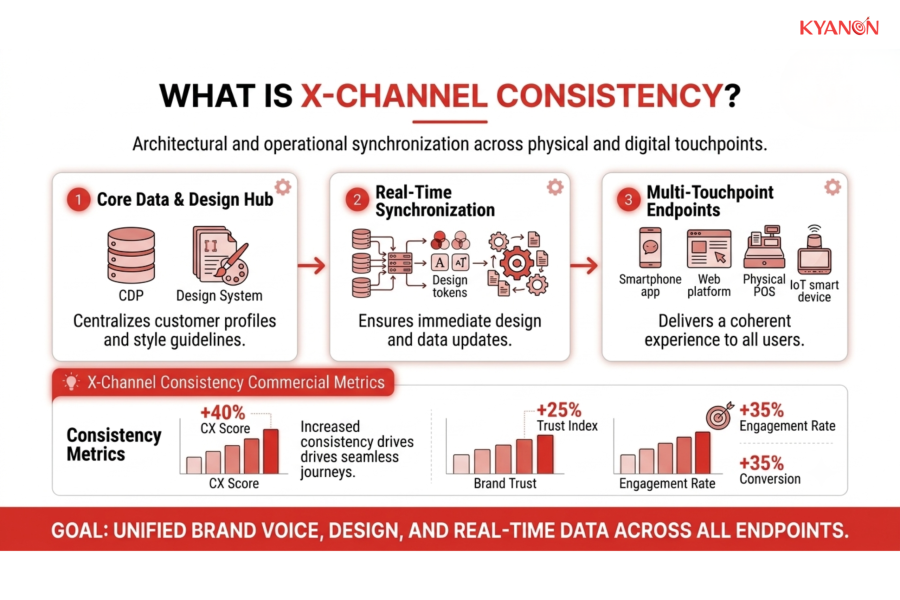
X-Channel consistency is the architectural and operational synchronization of brand voice, interaction design, and real-time customer data across all physical and digital touchpoints.
How X-Channel Consistency Works
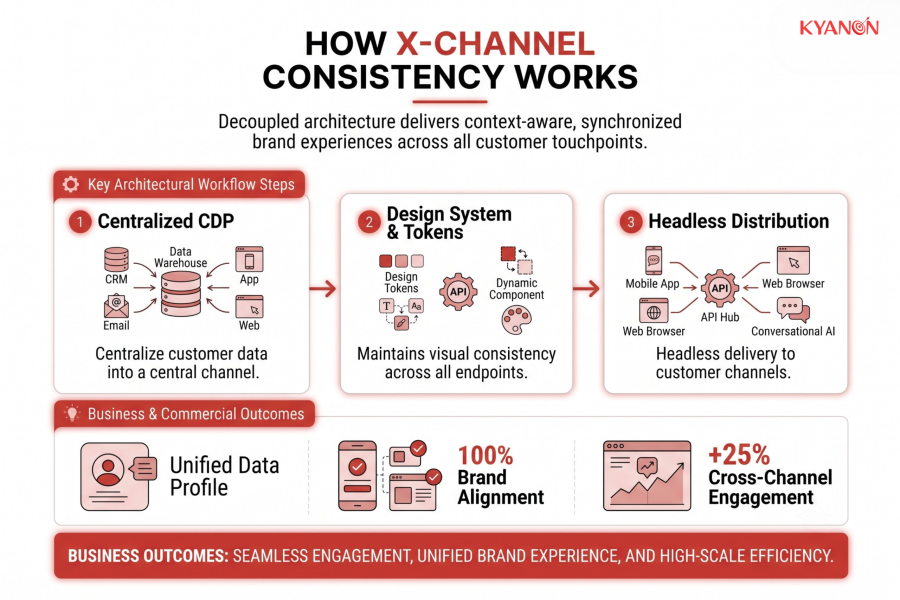
Modern cross-channel frameworks operate by decoupling the front-end presentation layer from the back-end data and logic layers. By centralizing design rules and customer interaction histories into single sources of truth, systems dynamically render appropriate, context-aware experiences on any device without losing the core brand identity or transaction continuity.
Centralized Customer Data Platform (CDP)
The foundational data layer aggregates every customer interaction, from in-store purchases to mobile app behavior, into a unified profile. This synchronization ensures that when a user transitions from one channel to another, the subsequent channel immediately recognizes their real-time state, preventing redundant messaging or conflicting offers.
Enterprise Design Systems & Tokens
Rather than building distinct visual assets for every platform, engineering teams utilize centralized design tokens (code-based variables for colors, typography, and spacing). These tokens flow via APIs into multi-platform repositories, ensuring that a button on an iOS app acts and looks structurally identical to its counterpart on a web dashboard, streamlining updates.
Headless Content Distribution
By relying on a headless Content Management System (CMS), organizations structure messaging and promotional copy into modular payloads. This API-driven architecture allows content teams to update a single repository and instantly push identical, format-optimized messaging across email, SMS, responsive web, and conversational AI agents.

Comparative Analysis: X-Channel Consistency vs. Siloed Multi-Channel Delivery
Dimension | X-Channel Consistency | Siloed Multi-Channel Delivery |
| Data Architecture | Unified CDP synchronizing real-time states | Fragmented databases per channel/department |
User Context | Persists seamlessly during channel transitions | Lost upon switching devices or platforms |
| Asset Management | Centralized design tokens and headless CMS | Duplicated codebases and manual asset uploads |
Operational Efficiency | Build once, deploy API payloads dynamically | High redundant engineering and design overhead |
| Brand Identity | Contextually adapted but fundamentally uniform | Disjointed messaging, pricing, and visual presentation |
Why X-Channel Consistency Matters
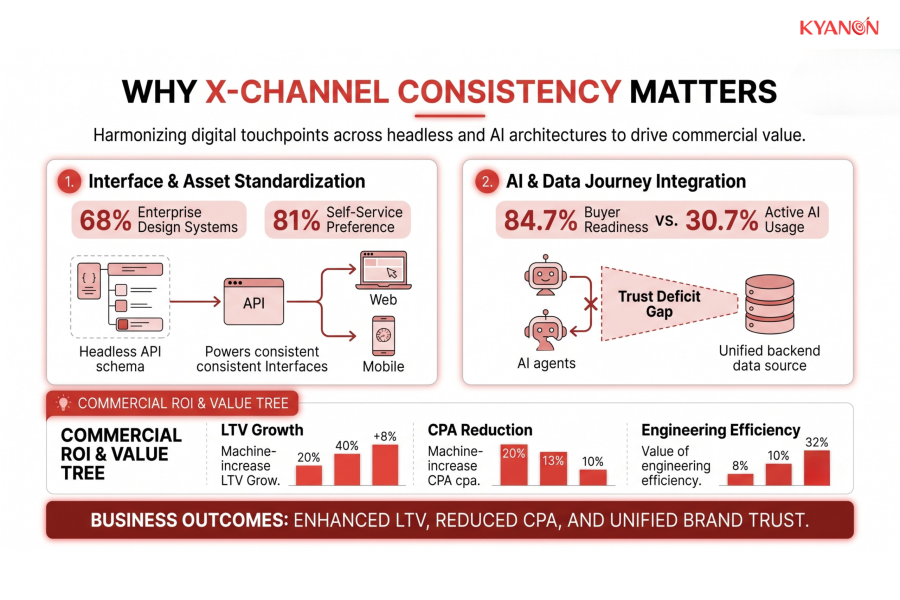
As generative AI becomes standard, deploying customer-facing AI agents onto fractured backends causes severe brand risk. Enterprises must design end-to-end user data journeys around integrated decisions rather than siloed functional steps. While 84.7% of buyers are ready to integrate automated assistants into their buying processes, only 30.7% currently use AI chat interfaces to actively research or purchase items due to an active trust deficit, according to IDC. Organizations failing to harmonize these channel workflows experience a stark drop-off in buyer trust as consumers migrate to platforms that provide unified experiences.
Common Misconceptions
Equating Consistency with Identity
This approach ignores native user behavior. A text-heavy update works on a desktop blog but fails on SMS or mobile push notifications. X-Channel consistency means maintaining a unified brand voice, core value proposition, and data state, while adapting the format, length, and interaction design to fit the native strengths of each specific channel.
Assuming Every Customer Journey Must Touch Every Channel
Forcing unnecessary channel transitions introduces friction. If a customer wants to complete their entire transaction via a mobile app, forcing them to open an email to verify a link or check a desktop site to view a receipt breaks their preferred workflow. True consistency means making sure if they switch channels, the transition is seamless, not forcing them to switch.
Siloing Data and Attribution by Channel
Customers do not see your company as separate departments; they see one brand. If your data layers are siloed, a customer might buy a product in-store, only to receive an aggressive retargeting email online offering a 20% discount on the item they just purchased. X-Channel consistency requires a centralized customer data platform (CDP) to synchronize interaction histories in real time.
Overlooking the Contextual State of the User
Channel choice implies context. A user on a mobile device is often looking for fast, localized, utility-driven interactions (e.g., store hours, order status, express checkout). A user on a desktop web app is often in a research or deep-evaluation state. Consistency means honoring the brand promise while dynamically adjusting to the user’s immediate physical and digital context.
Prioritizing Front-End Design Over Back-End Execution
A pixel-perfect visual match means nothing if a customer updates their communication preferences on your mobile app but continues to get spammed via SMS because the marketing automation tools don’t sync. Operational consistency, such as unified inventory, synchronized support tickets, and real-time preference management, is far more critical to CX than visual uniformity.
How Kyanon Digital Applies X-Channel Consistency
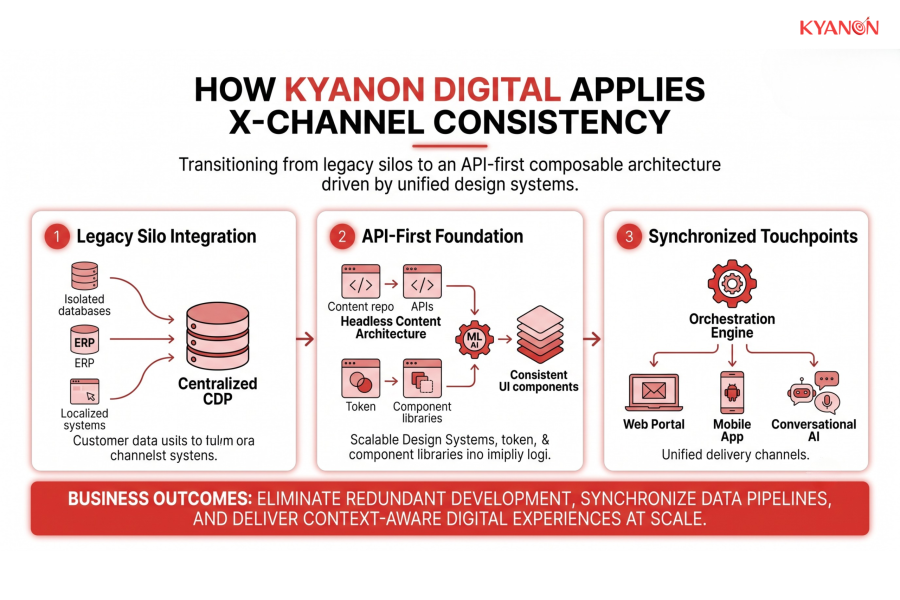
Kyanon Digital designs X-channel consistency frameworks for enterprise clients by engineering unified data pipelines and scalable design systems. We implement headless content architectures and centralized CDPs that allow organizations to deploy context-aware, perfectly synchronized customer experiences across web, mobile, and conversational interfaces without redundant development cycles.
Explore our services:

 Create project brief with AI