
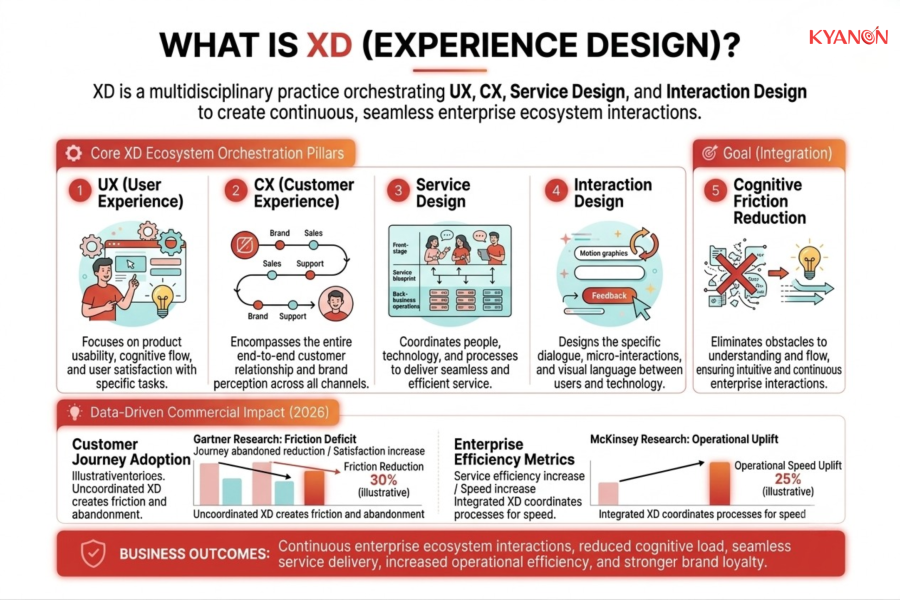
What is XD (Experience Design)?
XD (Experience Design) is an overarching, multidisciplinary practice that orchestrates User Experience (UX), Customer Experience (CX), Service Design, and Interaction Design to eliminate cognitive friction and ensure continuous, seamless interactions across all physical and digital enterprise ecosystems.
How XD (Experience Design) works
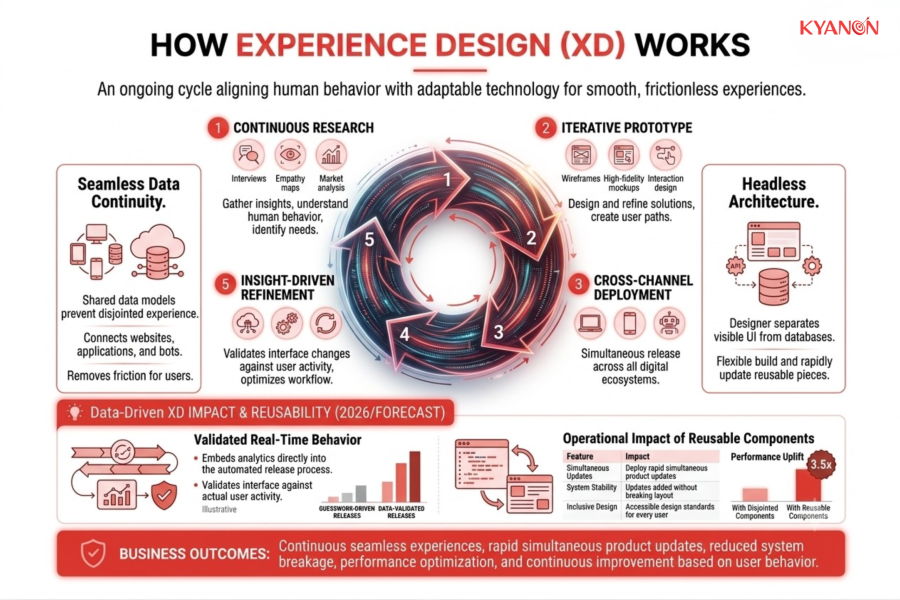
Experience Design is not a one-time project phase. It operates as an ongoing cycle that aligns human behavior with adaptable technology to create smooth, frictionless user experiences across all platforms.
Connected User Experiences
Modern systems rely on shared data models that remember exactly what a user is doing. This prevents disjointed experiences when people switch devices or platforms.
- Maintains a continuous flow of information.
- Connects websites, mobile applications, and automated bots seamlessly.
- Removes friction and frustration as users navigate different channels.
Building with Scalable Components
Designers often separate the visible user interface from the background databases, an approach known as headless architecture. This flexibility allows technology teams to build and update reusable pieces of a product rapidly.
Benefits of Reusable Design Components
Feature | Impact on the Product |
| Simultaneous Updates | Teams can deploy changes across multiple product lines at the exact same time. |
System Stability | New interface updates are added without breaking the existing layout or structural consistency. |
| Inclusive Design | Ensures all reusable interface parts meet accessibility standards for every user. |
Tracking Real-Time Behavior
Instead of guessing what users want, modern design teams track real-time data about how people actually interact with the system.
- Embeds analytics directly into the automated process teams use to release software updates.
- Validates all interface changes against actual user activity.
- Identifies and fixes measurable bottlenecks to optimize the overarching workflow.

Comparative Analysis: XD vs. Visual Design
While Visual Design focuses on surface-level aesthetics, XD focuses on deep architectural workflows and overall business viability.
Dimension | XD (Experience Design) | Visual / UI Design |
| Primary Scope | End-to-end physical & digital ecosystems | Digital screens and interface surfaces |
Lifecycle Model | Continuous, iterative optimization | Linear, finite project phase |
| Core Deliverable | Journey maps, service blueprints, scalable systems | High-fidelity mockups, style guides, prototypes |
Metric of Success | LTV, conversion, reduced support costs, zero friction | Aesthetic appeal, brand compliance, clickability |
| Strategic Focus | Business viability aligned with user intent | Visual communication and layout hierarchy |
Why XD (Experience Design) Matters
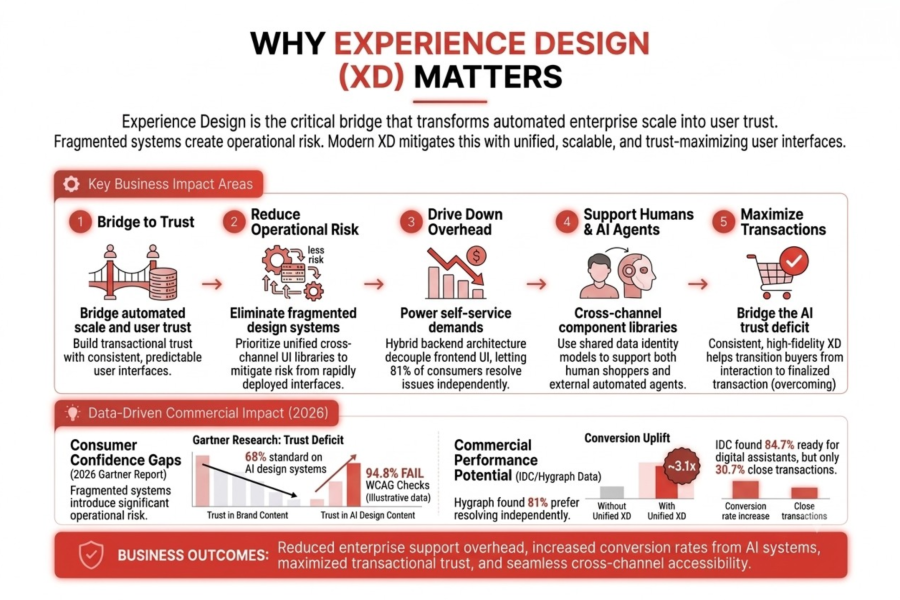
Experience Design serves as the critical bridge between automated scale and user trust in modern enterprise architectures. As organizations rapidly deploy conversational AI and omnichannel interfaces, relying on fragmented design systems introduces significant operational risk. However, a major bottleneck remains in accessibility, with 94.8% of top enterprise digital properties failing fundamental WCAG accessibility checks. This shift also creates a mandate to decouple frontend UI from backend data to directly address consumer self-service demands. Furthermore, while market research indicates strong user appetite with IDC finding 84.7% of modern buyers ready to integrate digital assistants into their active buying habits, a major trust deficit remains, as only 30.7% currently utilize AI interfaces to finalize concrete transactions. By prioritizing shared data identity models and unified cross-channel UI component libraries, technology leaders can seamlessly support both human shoppers and external automated agents while driving down enterprise support overhead and maximizing transactional trust.
Common Misconceptions
Equating XD with Visual Design or UI
Visual design (colors, typography, branding) is merely the surface layer. XD is an umbrella discipline that integrates User Experience (UX), Customer Experience (CX), Service Design, Information Architecture, and Interaction Design to focus fundamentally on how a system works and the emotional residue left after an interaction.
Treating XD as a Linear Phase in a Project
XD is a continuous, iterative lifecycle requiring ongoing user testing, post-launch behavioral analytics tracking, and continuous refinement. An experience is never truly finished because market conditions, user expectations, and technical capabilities are constantly evolving.
Believing I Am the User (The False Consensus Effect)
You are almost never the target user. Designing based on internal intuition rather than rigorous user research and empirical data leads to bloated feature sets, confusing workflows, and missed market opportunities.
Isolating XD from Business Strategy
High-performance XD bridges the gap between user needs and business viability. If an experience delights the customer but costs too much to operationally support, breaks business compliance rules, or fails to drive core metrics like customer lifetime value (LTV) or conversion, it is fundamentally a bad design.
Assuming XD is Only About Digital Screens
XD is channel-agnostic and applies to phygital ecosystems, voice interfaces, physical store layouts, and internal employee tooling. If a customer has a perfect app experience but encounters an incredibly frustrating return process at a brick-and-mortar store, the overarching corporate experience design has failed.
How Kyanon Digital Applies XD (Experience Design)
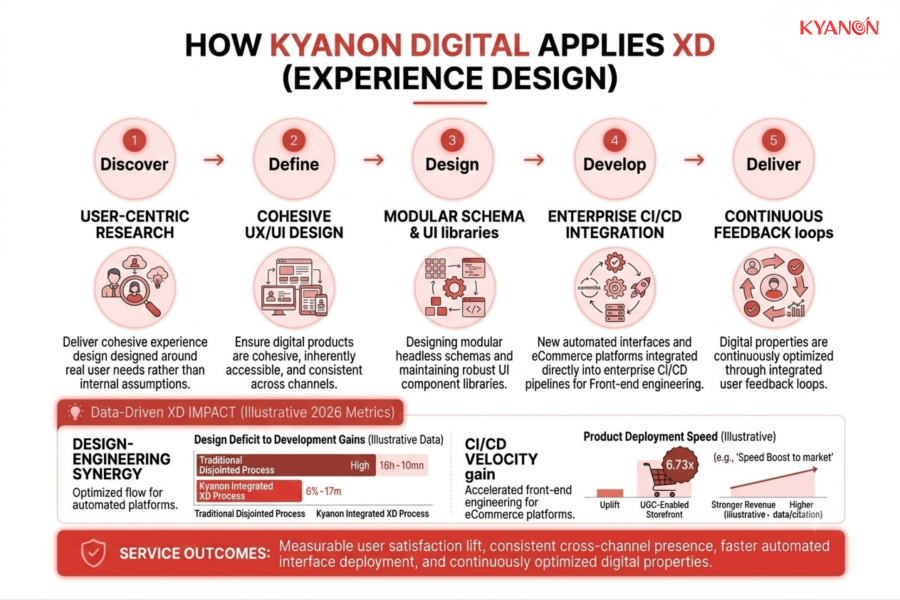
Kyanon Digital’s UX Design practice delivers cohesive experience design for enterprise clients, ensuring digital products are designed around real user needs rather than internal assumptions. By designing modular headless schemas and maintaining robust UI component libraries, we ensure that new automated interfaces, complex eCommerce platforms, and custom software deployments are inherently accessible, consistent across channels, and continuously optimized through integrated user feedback loops.
Explore our services:

 Create project brief with AI