

Singapore has established itself as one of Asia’s leading financial technology hubs. However, as digital banking, wealthtech, and payment platforms expand, their technology decisions become increasingly complex. Fintech businesses must handle growing transaction volumes and protect sensitive data while remaining resilient under strict regulatory scrutiny. Scalability and compliance can no longer be separate priorities. A platform that scales rapidly but lacks proper controls creates immense operational and regulatory risk.
This is where strategic fintech it consulting Singapore becomes essential to bridge the gap between business growth and regulatory expectations. Read on to discover how specialized technology partners can transform your financial infrastructure and optimize your operations.
Key takeaways
- Aligning scale and compliance: Balancing rapid transaction growth with MAS regulatory requirements demands a proactive, specialized approach to infrastructure rather than reactive patching.
- Modernizing core infrastructure: Transitioning from legacy monolithic systems to cloud-native, high-availability architectures minimizes downtime and supports seamless integration.
- Strategic AI integration: Deploying predictive models for fraud and credit risk requires careful governance, explainability, and secure data pipelines to meet industry standards.
- Navigating cybersecurity risks: Robust operational resilience and incident management are non-negotiable for protecting sensitive financial data and maintaining customer trust.
- Partnering for success: Engaging specialized external consultants accelerates product launches, lowers operational costs, and significantly reduces technology risk.
Further reading:
- Dual Core Banking Architecture Assessment for a Mid-tier Local Bank in Vietnam
- Hyper Personalization in Banking With AI
Singapore’s fintech technology landscape
Singapore’s position as a financial hub has created a highly competitive environment for fintech innovation, driving demand for fintech IT consulting in Singapore. Financial institutions and technology companies are investing in digital banking, payment infrastructure, cloud platforms, artificial intelligence, automation, and data-driven services. Fintech consulting companies increasingly support these organizations with technology modernization, enterprise integration, cloud migration, AI adoption, cybersecurity, and scalable digital platforms, while fintech AI consulting helps organizations apply AI to improve decision-making, customer experiences, risk management, and operational efficiency.
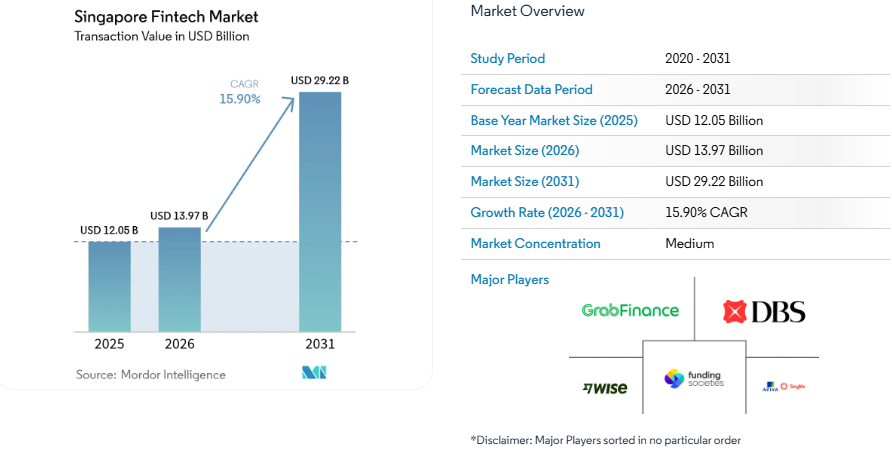
According to Mordor Intelligence, Singapore fintech market size in 2026 is estimated at USD 13.97 billion, growing from 2025 value of USD 12.05 billion with 2031 projections showing USD 29.22 billion, growing at 15.9% CAGR over 2026-2031. Strong policy support, deep digital infrastructure, and sustained inflows of private capital keep the Singapore fintech market on a steep expansion path, even as competitive intensity and regulatory scrutiny increase.
At the same time, fintech companies operate in an environment where technology risk can directly affect customers, financial stability, and regulatory obligations. The Monetary Authority of Singapore (MAS) has established technology-risk requirements covering relevant financial institutions, including banks and certain payment-service entities.
This creates a fundamental technology challenge: How can a fintech scale quickly without compromising security, resilience, governance, or compliance?
Traditional IT approaches are often insufficient. Growing fintechs need technology architectures designed for high transaction volumes, real-time data, continuous integration, third-party connectivity, and changing regulatory expectations. Fintech IT consulting in Singapore helps bridge this gap by connecting business strategy, technology engineering, risk management, and regulatory considerations. For organizations exploring fintech consulting companies, the right partner can also provide specialized fintech AI consulting to integrate AI into financial services while maintaining appropriate security, governance, and operational controls.

What Is Fintech IT Consulting?
Fintech IT consulting is the provision of strategic technology advisory, architecture, implementation, and optimization services specifically adapted to financial technology businesses and financial institutions. Unlike general IT consulting, fintech IT consulting considers the additional requirements created by financial services, including:
- Regulatory and compliance requirements
- Technology and operational risk
- Cybersecurity
- Financial data protection
- Transaction reliability
- High availability
- Third-party integrations
- Auditability and governance
- AI and model risk
- Business continuity
A fintech consulting engagement can therefore extend from high-level technology strategy to hands-on implementation.
IT strategy vs. fintech-specific consulting
Aspect | General IT Strategy | Fintech-Specific IT Consulting |
| Primary focus | Align technology with overall business goals and operational efficiency | Align technology with financial-services requirements, including regulation, risk, and scalability |
Scope | Broad, applicable across industries and internal IT systems | Specialized for fintech, banking, payments, lending, and regulated financial ecosystems |
| Regulatory considerations | Typically limited to general compliance requirements | Integrates regulatory considerations such as MAS technology risk, cybersecurity, and data governance |
Risk management | Focuses primarily on operational and IT efficiency risks | Covers technology risk, financial risk, cybersecurity, fraud, and model risk |
| Architecture approach | General enterprise architecture design | High-availability, low-latency, secure, and transaction-intensive architectures |
Data handling | Business intelligence and enterprise data management | Financial-grade data governance, real-time processing, auditability, and compliance-ready data flows |
| Security focus | Standard cybersecurity practices | Advanced security for financial data, transactions, identity, and fraud prevention |
Integration complexity | Moderate integration across enterprise applications and tools | Complex ecosystems involving banks, payment gateways, APIs, regulators, and third-party providers |
| AI adoption | Primarily focused on productivity and analytics use cases | Risk-sensitive AI for fraud detection, AML, credit scoring, explainability, and governed deployment |
Outcome objective | Improve IT efficiency and business alignment | Enable scalable, secure, resilient, and compliant financial technology growth |
A conventional IT strategy may answer questions such as:
- Should we migrate to the cloud?
- Which application architecture should we use?
- How should we modernize our legacy systems?
- How can we improve development velocity?
Fintech IT consulting adds another layer:
- How does the architecture support technology-risk requirements?
- How should sensitive financial data be protected?
- What controls should exist around third-party services?
- How should critical services recover from disruption?
- How can AI be introduced without compromising governance?
- How can new systems remain auditable and compliant?
Fintech consultants therefore operate at the intersection of technology, financial services, risk, and business transformation.
When do fintech companies need external IT consultants?
Fintechs shouldn’t use external IT consultants just to add temporary headcount, the true value lies in bringing specialized expertise to de-risk high-stakes technology decisions.
This support becomes critical during three key transitions:
- Aggressive Growth: Scaling transaction volumes, launching new digital financial products, or expanding geographically across Southeast Asia.
- Complex Transformations: Modernizing legacy architecture, migrating to the cloud, building API ecosystems, or integrating AI and complex payment networks.
- Risk & Resource Management: Overcoming severe engineering talent shortages or preparing for rigorous regulatory and security assessments.
By categorizing the triggers, the message shifts from a simple checklist to a strategic framework.
Why Singapore Fintechs need specialized IT consulting
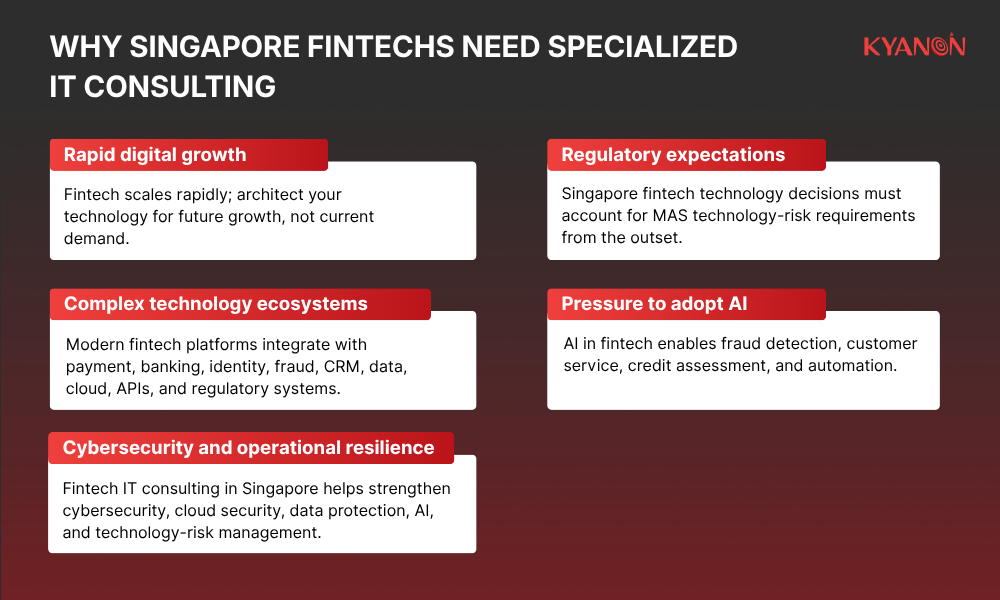
Rapid digital growth
Fintech products can scale significantly faster than traditional financial infrastructure. A successful digital payment service, lending platform, or financial application may need to support rapidly increasing users, transactions, partners, and data volumes. Technology architecture must therefore be designed around future growth rather than current demand.
Complex technology ecosystems
Modern fintech platforms rely on interconnected systems, including payments, banking, identity, fraud detection, CRM, data platforms, cloud services, APIs, and regulatory systems.
Poor integration can lead to data inconsistencies, performance bottlenecks, security gaps, and operational risk.
Cybersecurity and operational resilience
Financial technology platforms are attractive targets for cyberattacks because they process financial transactions and sensitive customer information. Security therefore needs to be incorporated into architecture, development, infrastructure, identity management, monitoring, and incident response rather than treated as a final-stage activity.
Fintech IT consulting in Singapore can help organizations embed security and resilience across the technology lifecycle, aligning engineering practices with business and regulatory requirements. For companies evaluating fintech consulting companies, cybersecurity expertise should be a core consideration, alongside capabilities in fintech AI consulting, cloud security, data protection, and technology-risk management.
Regulatory expectations
Singapore’s regulatory environment means technology leaders must consider compliance when making architectural and vendor decisions. For example, MAS technology-risk requirements apply to various financial institutions, including banks, insurers, and specified payment-service entities.
For fintech leaders, this means compliance needs to be considered during technology design, not after implementation.
Pressure to adopt AI
AI is transforming fintech across fraud detection, customer service, credit assessment, and automation. But adoption also brings challenges around data quality, privacy, model accuracy, explainability, security, governance, and auditability. Fintechs therefore need technology partners that can combine AI engineering, data governance, and risk-aware architecture.
Fintech IT Consulting Services
A comprehensive fintech IT consulting engagement can cover the entire technology lifecycle.
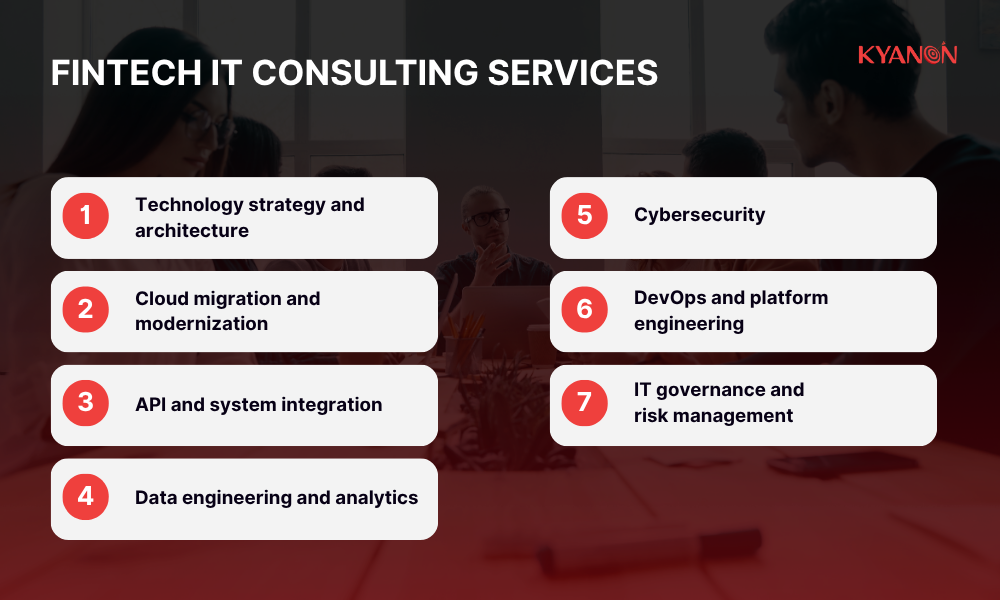
Technology strategy and architecture
Consultants assess the current technology landscape and define a scalable target architecture aligned with business goals. Key activities include:
- Technology and architecture assessment
- Application portfolio analysis
- Modernization strategy and roadmap
- Platform selection
- Architecture governance
- Scalability planning
The goal is an architecture that supports growth, adapts to change, and reduces technology risk.
Cloud migration and modernization
Cloud infrastructure can provide fintech companies with greater elasticity, automation, observability, and deployment flexibility. Consulting services may include:
- Cloud readiness assessment
- Application migration
- Cloud-native modernization
- Containerization
- Microservices transformation
- Infrastructure automation
- Cloud security
- Cost optimization
Cloud migration should not simply reproduce legacy infrastructure in a new environment. The greater opportunity is to redesign workloads around scalability, resilience, security, and operational efficiency.
API and system integration
Integration connects fintech platforms with banks, payment providers, partners, and third-party services through APIs, event-driven architecture, open banking, and enterprise integration. A well-designed integration layer reduces system dependencies, improves scalability, and simplifies maintenance.
Data engineering and analytics
Fintechs generate large volumes of transactional, behavioral, operational, and customer data. Data engineering helps build reliable pipelines, warehouses, lakes, integration layers, analytics, and governance frameworks. A strong data foundation enables better decision-making, data quality, and reliable AI implementation.
Cybersecurity
Security consulting helps fintechs strengthen identity, encryption, application security, monitoring, data protection, and incident response across the technology environment. The goal is to embed security controls throughout the technology lifecycle, rather than treating security as a separate layer.
DevOps and platform engineering
Fintech teams need to release software faster without compromising reliability. DevOps and platform engineering enable automated CI/CD, testing, deployment, infrastructure management, observability, and reliability practices. The result is faster delivery, greater operational consistency, and stronger engineering control.
IT governance and risk management
Technology governance defines how technology decisions, risks, changes, and controls are managed, documented, and monitored across the organization. For regulated fintechs, governance should be embedded into daily technology operations, covering areas such as architecture, vendors, access, incidents, business continuity, and auditability.
Scaling fintech technology in Singapore
Scaling a fintech platform involves more than adding servers. The architecture must accommodate growth while maintaining availability, performance, security, and recoverability.
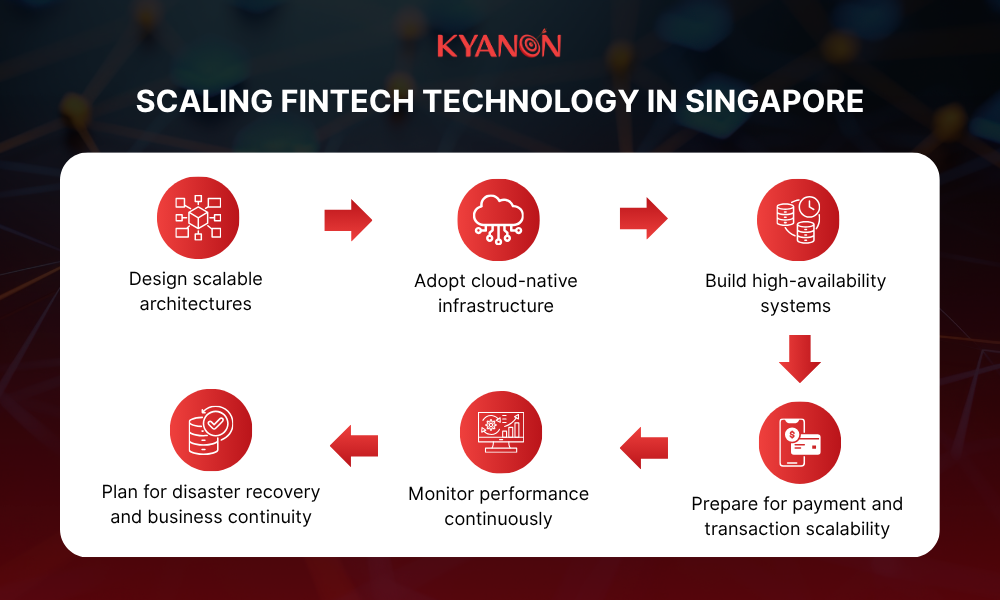
Design scalable architectures
Modern fintech architectures often use modular services, APIs, event-driven processing, distributed databases, caching, and asynchronous workflows to support different scaling requirements. The appropriate architecture depends on transaction characteristics, regulatory requirements, data sensitivity, latency requirements, and existing technology investments.
Adopt cloud-native infrastructure
Cloud-native approaches can provide:
- Elastic computing
- Automated provisioning
- Containerization
- Infrastructure as code
- Managed databases
- Automated scaling
- Integrated observability
However, cloud adoption should be accompanied by appropriate security, access, monitoring, resilience, and vendor-risk controls.
Build high-availability systems
Critical financial services require resilient infrastructure with no single point of failure. High-availability architecture uses redundancy, multi-zone deployment, failover, database replication, load balancing, and automated health checks. The goal is to maintain service availability and minimize disruption.
Prepare for payment and transaction scalability
As transaction volumes grow, fintech platforms must remain fast, accurate, and reliable under peak loads. This requires careful handling of throughput, retries, idempotency, queues, reconciliation, fraud checks, and real-time monitoring. Without the right architecture, a performance bottleneck can quickly become a failed transaction, financial loss, or poor customer experience.
Monitor performance continuously
A fintech platform can appear healthy while problems are already building beneath the surface. Continuous observability across infrastructure, applications, APIs, databases, transactions, security events, and user experience helps teams spot anomalies and bottlenecks early, before they disrupt critical services.
Plan for disaster recovery and business continuity
Resilience goes beyond having backups. Fintechs need clear RPOs, RTOs, critical services, system dependencies, failover procedures, and recovery testing to ensure essential operations can continue during disruption. For regulated firms in Singapore, MAS business continuity expectations also emphasize critical business services and their dependencies when assessing operational resilience.
MAS compliance and technology risk
For fintech companies operating in Singapore, technology architecture must be considered alongside MAS expectations. The precise regulatory obligations vary depending on the organization’s business model, licence, activities, and regulatory status. MAS technology-risk requirements apply to a range of financial institutions, including banks, insurers, financial advisers, capital-markets entities, and specified payment-system and payment-service entities.
Fintech IT consulting in Singapore helps organizations align technology strategy and architecture with applicable technology-risk considerations. However, IT consulting does not replace legal or regulatory advice. Instead, fintech consulting companies help translate applicable requirements into practical architecture, processes, controls, and technology implementations, while fintech AI consulting can support the responsible adoption of AI within appropriate governance and risk-management frameworks.
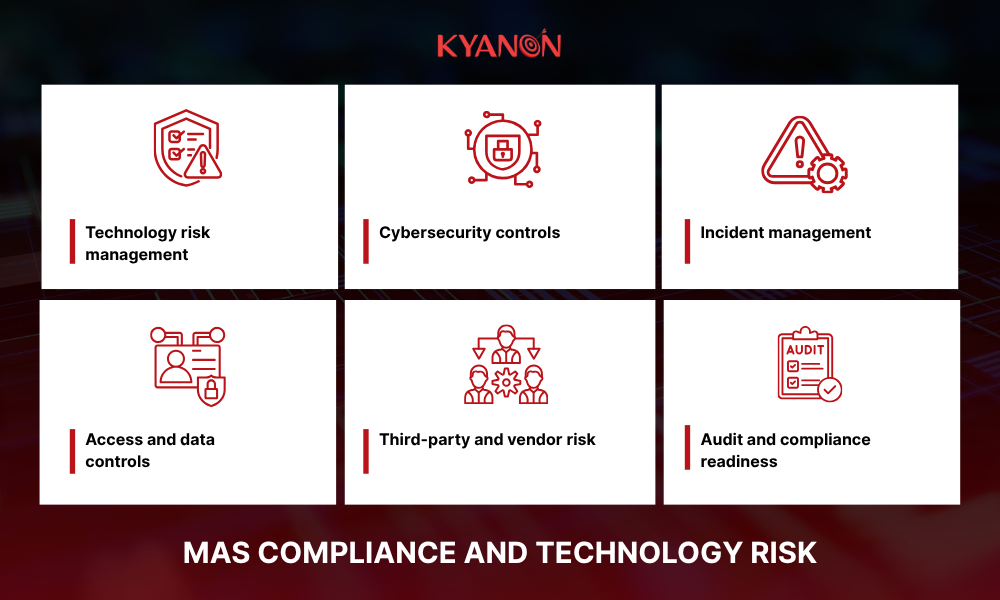
Technology risk management
Technology risk management starts with understanding what could fail, what depends on it, and how the business would recover. This includes critical systems, technology dependencies, vulnerabilities, failure scenarios, recovery requirements, risk ownership, and ongoing monitoring.
Cybersecurity controls
Security controls should reflect the fintech’s risk profile and applicable requirements, covering areas such as authentication, privileged access, vulnerability management, network security, data protection, monitoring, and incident response. For relevant entities, MAS has also established legally binding cyber-hygiene requirements, highlighting the importance of foundational cybersecurity controls.
Incident management
When incidents occur, response must be structured and coordinated, from detection and containment through escalation, recovery, root-cause analysis, and preventive action. This helps fintechs restore services quickly while reducing the likelihood of recurrence.
Access and data controls
Protecting financial data requires control over who can access it, how it is protected, where it is stored, and how it moves. Key considerations include authentication, privileged accounts, data classification, encryption, retention, transmission, and access monitoring.
Third-party and vendor risk
Fintech ecosystems rely heavily on cloud providers, SaaS platforms, payment processors, APIs, and technology partners. Third-party dependencies therefore need appropriate assessment, contractual controls, monitoring, contingency planning, and exit considerations. MAS guidance also emphasizes that financial institutions retain responsibility for outsourced functions and should maintain appropriate governance over outsourcing arrangements.
Audit and compliance readiness
Audit readiness should be built into the technology environment, not added when an audit begins. Access logs, change records, security events, risk assessments, testing results, vendor reviews, recovery tests, and architecture documentation provide evidence that controls are working effectively. Designing for auditability from the start reduces compliance effort and makes regulatory reviews more efficient.
AI consulting for Fintechs
AI is creating opportunities across financial services, but fintech organizations need to prioritize use cases based on business value, data readiness, risk, and regulatory considerations.
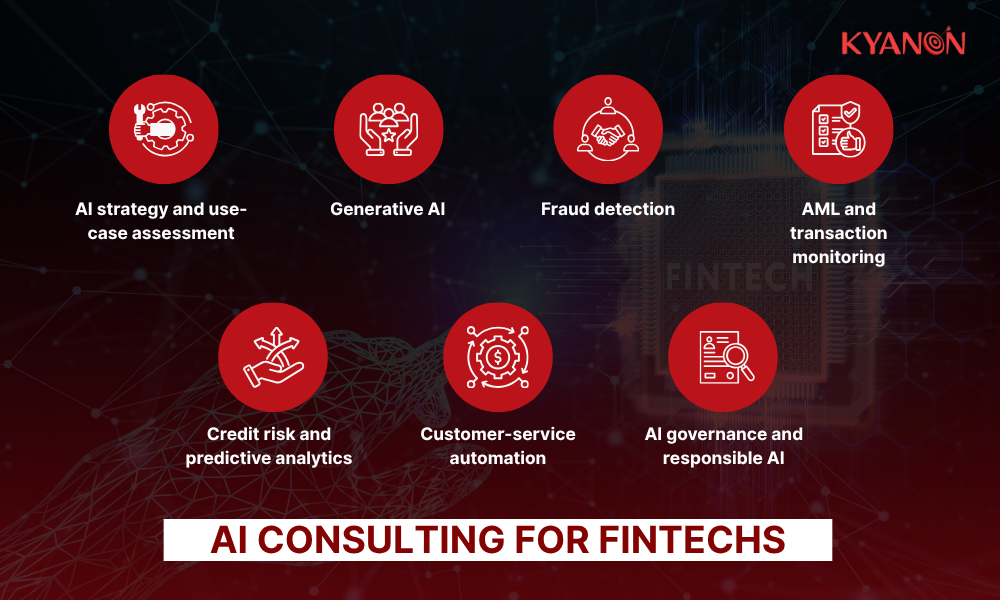
AI strategy and use-case assessment
AI adoption should start with business value, data readiness, technical feasibility, risk, and expected ROI, not the technology itself. This helps fintechs prioritize use cases that are both practical and commercially meaningful.
Generative AI
Generative AI can streamline customer service, knowledge search, document processing, compliance workflows, developer productivity, and personalized experiences. Production use requires safeguards for confidential data, access, model behavior, and human oversight.
Fraud detection
Machine learning can identify unusual transaction patterns and potentially detect fraud more dynamically than static rules alone.
AML and transaction monitoring
AI can strengthen AML operations through transaction analysis, anomaly detection, customer risk profiling, alert prioritization, and investigation support. Human review remains essential for high-impact decisions.
Credit risk and predictive analytics
AI and machine learning can support:
- Credit scoring
- Default prediction
- Customer segmentation
- Risk forecasting
- Portfolio analytics
These use cases require particular attention to data quality, model validation, fairness, explainability, and governance.
Customer-service automation
AI assistants can help automate routine customer inquiries while escalating complex or sensitive cases to human agents.
AI governance and responsible AI
Responsible AI requires governance across data provenance, model ownership, validation, security, privacy, explainability, human oversight, monitoring, and incident management. The real opportunity is not simply to “add AI,” but to build AI capabilities that deliver measurable value while operating safely within the fintech’s technology and risk framework.
Building a compliant fintech AI architecture
AI systems should be treated as part of the broader technology architecture rather than isolated experiments.
Data governance
Reliable AI starts with well-governed data. Fintechs need clear ownership and standards for data quality, lineage, classification, access, retention, and privacy.
Model risk management
AI models should be governed throughout their lifecycle, from development and validation to deployment, monitoring, retraining, and retirement. Performance should be continuously measured against defined risk thresholds and business objectives.
Explainability and human oversight
For high-impact financial decisions, organizations should be able to understand how AI outputs influence decisions. Human oversight can provide an additional control layer when automated recommendations require review.
Security and privacy
AI systems must protect training data, customer information, prompts, model outputs, credentials, APIs, and model endpoints. Security controls should cover both traditional infrastructure and AI-specific components.
Monitoring and model performance
Once in production, AI needs ongoing checks for accuracy, drift, bias, latency, cost, abnormal behavior, and security events. Continuous monitoring helps detect performance or risk issues before they affect customers or operations.
Audit trails
For sensitive financial use cases, organizations should be able to trace the data, model, input, output, resulting decision, and any human review. This creates the transparency needed for effective governance and auditability.
Common fintech IT challenges in Singapore
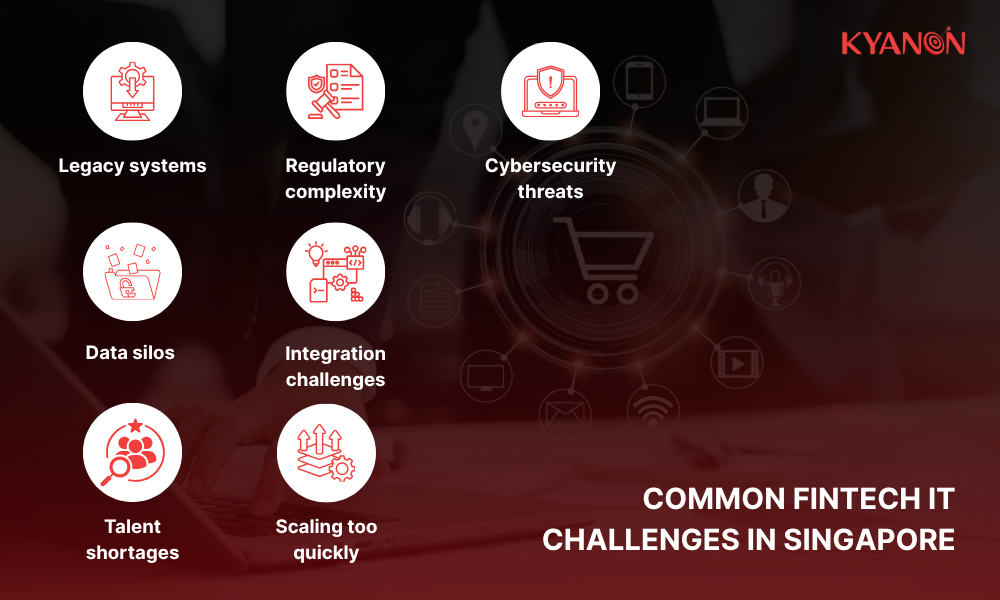
Even well-funded fintechs can encounter significant technology constraints as they scale.
- Legacy systems: Older applications can create: High maintenance costs, Integration limitations, Security vulnerabilities, Slow release cycles, Poor scalability. Modernization does not always mean replacing everything. A phased modernization strategy can progressively decouple critical capabilities.
- Regulatory complexity: Technology teams must understand how regulatory requirements affect architecture, data, outsourcing, cybersecurity, and operational processes.
- Cybersecurity threats: Growing digital transaction volumes increase the potential impact of security incidents.
- Data silos: Customer, transaction, operational, and risk data may exist across disconnected platforms, limiting analytics and AI capabilities.
- Integration challenges: Multiple vendors and legacy systems can create complex dependencies that make new product development slower.
- Talent shortages: Specialized skills in cloud, cybersecurity, data engineering, AI, DevOps, and financial technology are increasingly important. External engineering and consulting support can provide additional expertise without requiring organizations to build every capability internally.
- Scaling too quickly: Rapid product-market success can expose architectural weaknesses. A platform that worked for thousands of transactions may not perform reliably under millions of transactions. Scaling should therefore be an architectural strategy, not an emergency response.
How to choose a fintech IT Consulting Company
Choosing a technology consulting partner should go beyond evaluating hourly rates or technical certifications.
Evaluation criteria | What to look for in a fintech IT Consulting Partner | Why it matters |
| Financial-services experience | Proven experience across fintech, banking, payments, insurance, wealth management, and financial data | Industry expertise helps consultants understand the technology, operational, security, and business implications of financial-services systems |
Singapore & MAS regulatory knowledge | Understanding of Singapore’s regulatory environment, including relevant MAS technology-risk, cybersecurity, and governance expectations, with clear boundaries on when legal or compliance specialists are required | Helps ensure technology decisions support regulatory and risk requirements from the design stage rather than treating compliance as an afterthought |
| Cloud & cybersecurity capabilities | Expertise in cloud architecture, cloud migration, cybersecurity, DevSecOps, identity management, infrastructure automation, and observability | Enables fintechs to modernize and scale their platforms while maintaining security, resilience, and operational control |
AI expertise | Capabilities spanning data engineering, machine learning, generative AI, MLOps, AI integration, and AI governance | Helps organizations move from AI experimentation to secure, scalable, and production-ready financial AI solutions |
| Integration experience | Experience with APIs, payment systems, enterprise platforms, third-party services, banking systems, and legacy modernization | Fintech ecosystems depend on reliable integrations; strong integration expertise reduces technical complexity, data silos, and operational risk |
Delivery methodology | A structured approach covering discovery, architecture, Agile delivery, quality assurance, security testing, deployment, and post-launch support | Provides greater delivery predictability, reduces implementation risk, and ensures technology solutions remain maintainable after launch |
| Security & compliance track record | Demonstrated processes for security, risk management, documentation, testing, governance, and compliance readiness | Shows that security and compliance are embedded throughout delivery rather than addressed only at the end of a project |
Scalability & resilience expertise | Experience designing high-availability, low-latency, fault-tolerant, and transaction-intensive platforms | Helps fintechs handle growing transaction volumes and customer demand without compromising availability or performance |
| Business & technology alignment | Ability to connect technology roadmaps with business objectives, growth plans, customer experience, and ROI | Ensures consulting investment contributes to measurable business outcomes rather than technology modernization for its own sake |
Fintech IT consulting implementation roadmap
A structured implementation approach can reduce technology and delivery risk.
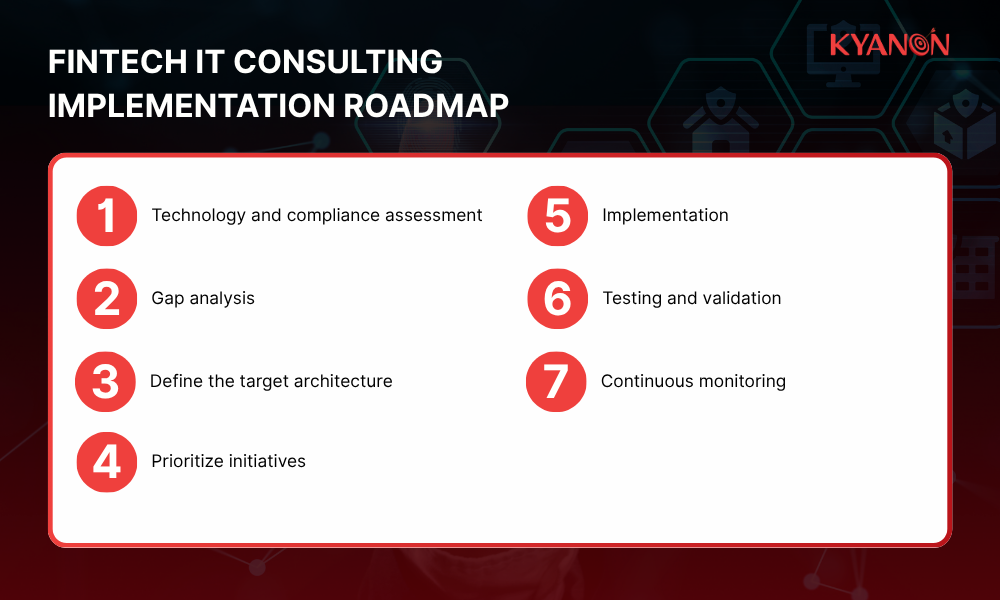
Step 1: Technology and compliance assessment
Start by building a clear view of the current technology landscape. Assess architecture, applications, infrastructure, data, integrations, security controls, development practices, and technology risks to identify gaps, dependencies, and compliance considerations.
Step 2: Gap analysis
Identify gaps between the current environment and the desired business, technology, security, scalability, and compliance state.
Step 3: Define the target architecture
Design a future-ready architecture that brings together applications, APIs, cloud, data, security, AI, integrations, infrastructure, and monitoring. The architecture should align technology capabilities with business goals, scalability needs, and regulatory requirements.
Step 4: Prioritize initiatives
Modernization works best when initiatives are sequenced rather than tackled all at once. Prioritize them by business value, risk reduction, technical dependencies, and implementation effort.
Step 5: Implementation
Turn the roadmap into iterative delivery, which may involve application modernization, cloud migration, API development, data platforms, AI solutions, security improvements, or DevOps transformation.
Step 6: Testing and validation
Before going live, validate functionality, performance, security, integrations, resilience, disaster recovery, and AI/model performance where relevant.
Step 7: Continuous monitoring
Modernization does not end at deployment. Ongoing monitoring of performance, security, availability, technology risk, cloud costs, data quality, AI performance, and compliance controls keeps the environment reliable and fit for purpose.
Benefits of Fintech IT Consulting
A well-executed consulting engagement can generate benefits across both technology and business operations.
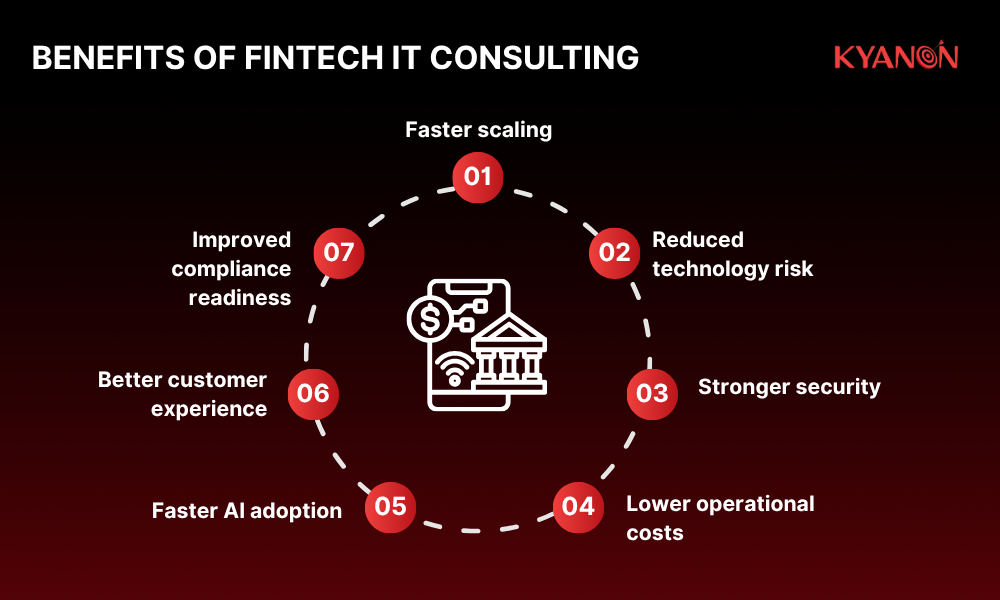
- Faster scaling: Modern architectures can support increased users, transactions, and workloads without proportionally increasing operational complexity.
- Reduced technology risk: Architecture assessments and modernization can identify vulnerabilities and single points of failure before they become critical incidents.
- Stronger security: Security controls can be embedded across applications, infrastructure, data, and development processes.
- Improved compliance readiness: Technology controls, documentation, monitoring, and audit trails can make it easier to demonstrate that relevant requirements are being addressed.
- Lower operational costs: Cloud optimization, automation, platform engineering, and application modernization can reduce manual effort and unnecessary infrastructure costs.
- Faster AI adoption: A modern data and cloud foundation makes it easier to move AI use cases from experimentation toward production.
- Better customer experience: Faster applications, reliable transactions, personalized services, and responsive digital channels directly influence fintech customer experience.
Ultimately, the objective is not technology transformation for its own sake. It is to create a technology environment that allows the business to grow faster with less operational and technology risk.
Fintech IT Consulting: Cost considerations
Fintech IT consulting costs vary considerably depending on the complexity of the organization, technology environment, regulatory requirements, project scope, and delivery model.
Category | Key Details & Examples |
| General Cost Drivers | Costs vary based on organizational complexity, technology environment, regulatory requirements, project scope, and delivery model. |
Engagement Models |
|
Factors Affecting Cost | Project scope, number of systems, legacy complexity, integration & security requirements, cloud architecture, AI complexity, data volume, team size, duration, and support needs. |
ROI Considerations | Reduced infrastructure costs, faster product & AI launches, lower incident frequency, improved system availability, reduced manual operations, increased productivity, and lower technology risk. |
| Strategic Takeaway | The cheapest engagement is not always the most cost-effective. The best metric is the value created relative to technology and business risk. |
The cheapest consulting engagement is not necessarily the most cost-effective. The more useful metric is the value created relative to technology and business risk.
Future of Fintech IT consulting in Singapore
The role of fintech IT consulting will continue to evolve as financial technology becomes increasingly software-driven.
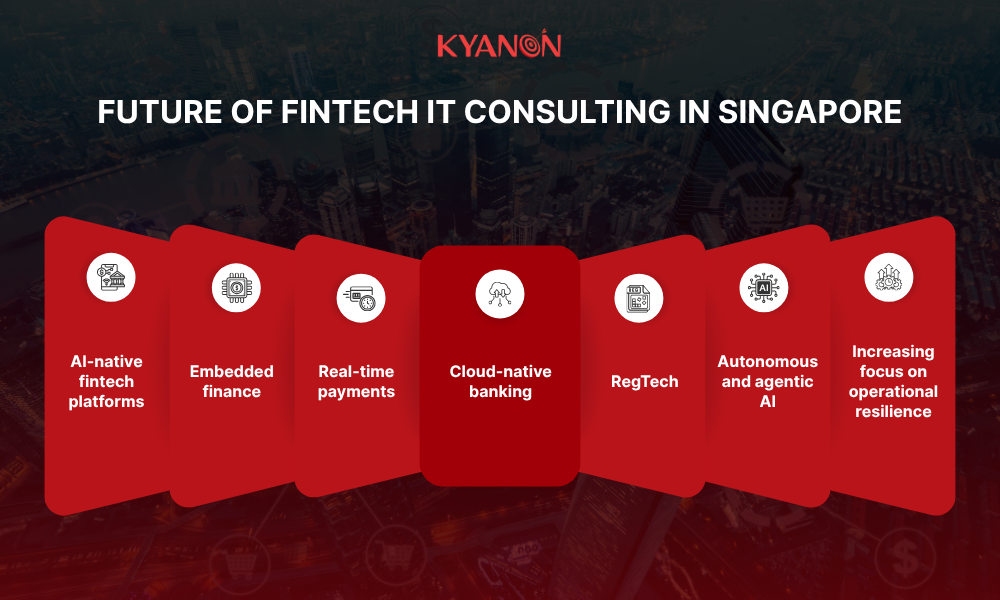
- AI-native fintech platforms: AI will increasingly be integrated into products, operations, risk management, and customer engagement rather than deployed as isolated applications.
- Embedded finance: Financial services will increasingly be incorporated into non-financial customer journeys, creating new requirements for APIs, identity, payments, security, and real-time data.
- Real-time payments: As payment experiences become faster, supporting infrastructure must deliver high availability, low latency, transaction integrity, and robust fraud controls.
- Cloud-native banking: Financial institutions and fintechs will continue modernizing infrastructure around cloud-native architectures, automation, APIs, and distributed systems.
- RegTech: Technology will increasingly support compliance itself through automated monitoring, data analysis, reporting, risk detection, and regulatory workflows.
- Autonomous and agentic AI: Agentic AI could automate increasingly complex workflows across customer service, operations, compliance, analytics, and software engineering.
- Increasing focus on operational resilience: As financial services become increasingly dependent on interconnected technology ecosystems, resilience will remain a core technology priority.
However, autonomous systems also require stronger access controls, human oversight, auditability, monitoring, model governance, security, and accountability. The future fintech stack must balance innovation with control.
Conclusion: Scale and compliance should be designed together
For Singapore fintech companies, technology scalability and regulatory compliance should not be treated as competing objectives. A scalable platform without appropriate security, governance, and resilience can increase risk. A highly controlled but inflexible platform can make innovation unnecessarily slow.
For fintech leaders evaluating a technology partner, the key question is not simply: “Can this consulting company build our technology?”. It is: “Can this partner help us build technology that scales with our business, integrates with our ecosystem, protects our customers, and remains ready for the regulatory and operational demands of financial services?”
At Kyanon Digital, technology transformation can be approached from both a strategic and engineering perspective, helping organizations turn modernization priorities into scalable digital solutions. Contact Kyanon Digital for fintech IT consulting services.


 Create project brief with AI