


Singapore health tech firms unify fragmented data by adopting national interoperability standards, leveraging centralized government-backed platforms, and deploying enterprise-grade data infrastructure to bridge public and private silos.
Key takeaways
- Reveals that selective modernization controls integration costs better than complete system overhauls, which in Kyanon Digital’s experience succeeds only when organizations establish measurable business milestones first.
- Explains how adopting national interoperability standards reduces avoidable custom development, an approach practical execution proves effective provided healthcare leaders evaluate the total cost of ownership upfront.
- Warns against scaling clinical system integrations prematurely, as field implementations show adoption fails unless thorough usability testing with clinicians is firmly in place first.
- Clarifies that reducing manual record reconciliation directly streamlines daily healthcare operations, an outcome the Kyanon Digital team notes is achievable as long as backend infrastructure updates do not disrupt patient care.
Further reading:
- How To Implement AI in Singapore Healthcare?
- AI Agents for Singapore Healthcare: Build or Buy?
- Scaling Customer Service with an AI Chatbot for Healthcare
What is driving Singapore healthcare data integration?
The Singapore digital health and HealthTech market is valued at approximately USD 1.55 billion to USD 3.96 billion through mid-2026, anchoring an overall national healthcare market estimated at USD 28–33 billion (~5.2% of GDP). (Singapore Digital Health Market)
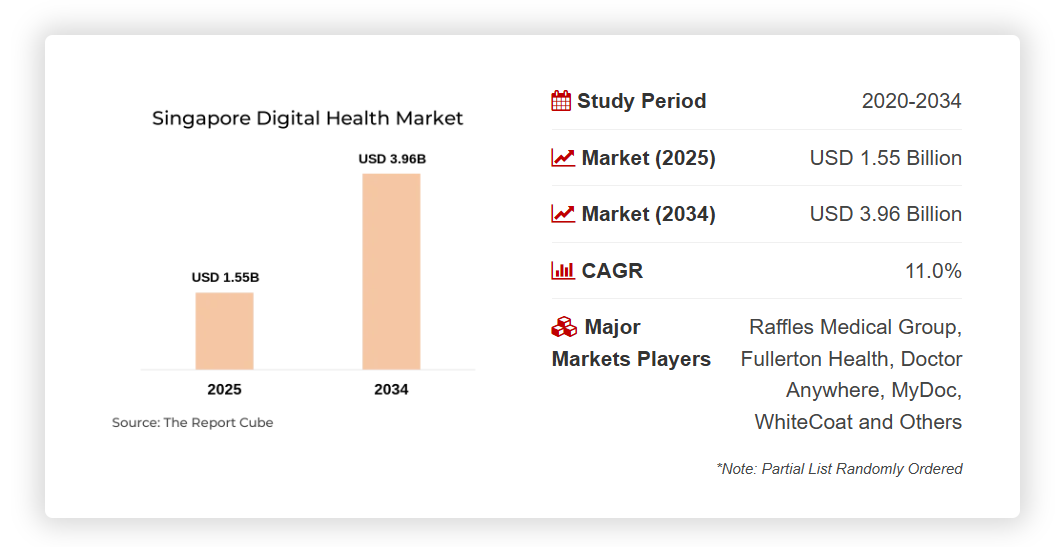
Healthcare providers in Singapore must prepare for stronger data-sharing requirements while managing rising care demands, disconnected systems, and limited operational resources. For health tech firms, the challenge is to achieve interoperability without driving up integration costs or disrupting existing services.
- Regulatory readiness: Prepare systems to meet applicable Health Information Act and NEHR requirements.
- Operational efficiency: Reduce fragmented patient records and manual data handling across care settings.
- Scalable growth: Connect new healthcare services and partners without rebuilding the entire technology stack.
Healthcare data integration is a business priority driven by regulatory demands, rising care needs, and operational inefficiencies. Kyanon Digital helps healthcare organizations connect systems, reduce manual work, and build scalable digital foundations without disrupting existing operations.

How can health tech firms connect systems without escalating costs?
- Build on national standards: Singapore introduced SS 719:2025 for healthcare data terminology and SS 720:2025 for remote monitoring integration, helping systems exchange data more consistently and reducing avoidable custom integration work.
- Modernize selectively: Singapore’s NGEMR programme plans to phase out more than 100 legacy IT systems, demonstrating the value of reducing system fragmentation rather than maintaining overlapping platforms.
Health tech firms can control integration costs by reusing existing infrastructure, prioritizing high-value workflows, and adopting interoperable standards. Eligible Singapore healthcare providers may also receive up to 40% funding for qualifying system enhancements, subject to sector-specific caps.
Kyanon Digital helps healthcare organizations build cost-effective integration roadmaps that improve connectivity while minimizing disruption and long-term maintenance costs.
How can healthcare businesses control data modernization costs?
Healthcare businesses can control modernization costs by aligning investment with measurable business outcomes, upgrading systems incrementally, and accounting for long-term operating expenses
- Prioritize business value: Start with high-impact workflows such as claims processing, billing, and manual data reconciliation before expanding modernization efforts.
- Modernize in phases: Singapore’s NGEMR programme plans to phase out more than 100 legacy IT systems, illustrating how consolidating overlapping infrastructure can support long-term cost efficiency.
- Manage total cost of ownership (TCO): Budget for integration, migration, cybersecurity, maintenance, and future scalability, not just initial development.
- Leverage available funding: Singapore has allocated up to S$45 million for the NEHR Connect Grant. Eligible healthcare providers may receive up to 40% of qualifying system enhancement costs, subject to sector-specific caps and eligibility requirements.
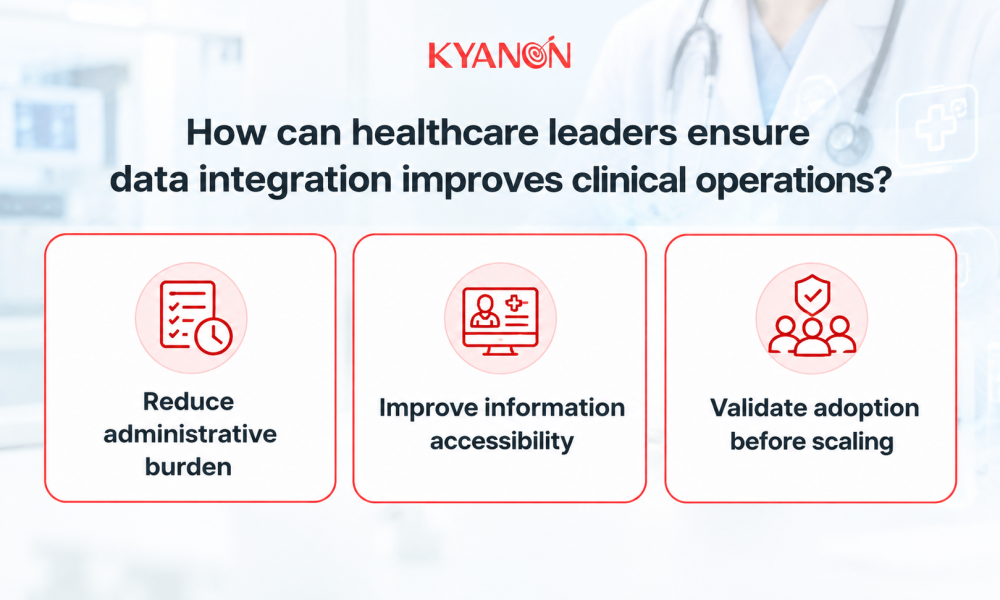
How can healthcare leaders ensure data integration improves clinical operations?
Healthcare leaders should assess integration success through measurable outcomes, including time spent on administrative tasks, access to relevant patient information, and clinician adoption.
- Reduce administrative burden: Automate data retrieval and reconciliation. A peer-reviewed study found that integrated document workflows reduced information-reconciliation time by 38.1%–65.1%, depending on the task.
- Improve information accessibility: Singapore’s National Electronic Health Record (NEHR) enables authorized clinicians to access key patient information across healthcare settings, supporting safer, more coordinated care.
- Validate adoption before scaling: In Singapore’s One Care Plan initiative, 100% of surveyed users found the tool useful, while 60% reported being able to leverage cross-setting data. Involve clinicians in usability testing and measure workflow impact before wider deployment.
Case study: Scaling Customer Service with an AI Chatbot for Healthcare
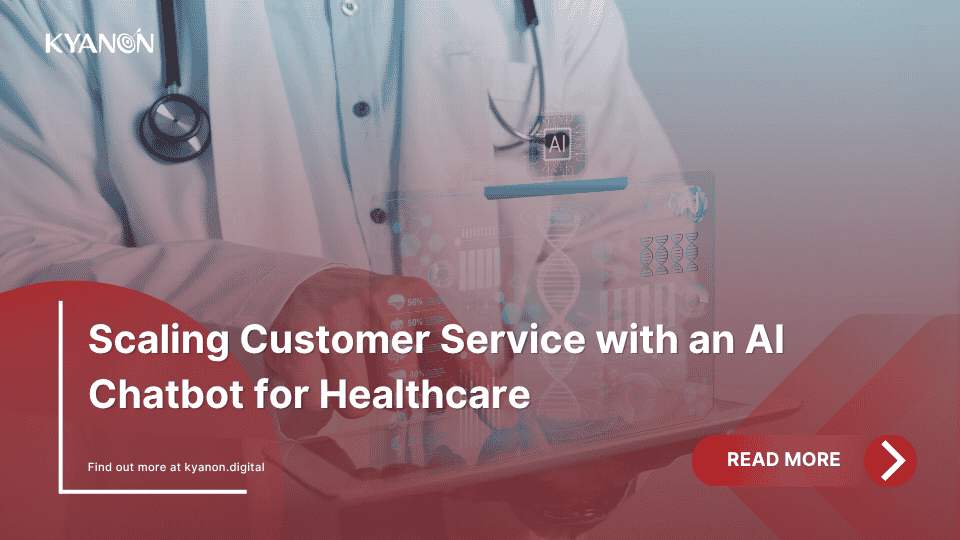
Client: A private healthcare provider in Singapore
Objective: Scale customer service, improve response times, and reduce repetitive staff workload without introducing clinical AI risks.
Challenge
Growing volumes of routine enquiries about appointments, services, locations, and administrative procedures were straining customer-service teams. Fragmented information and manual request routing also made responses slower and less consistent.
Kyanon Digital’s solution
Kyanon Digital implemented a non-clinical AI chatbot that:
- Used retrieval-augmented generation (RAG) to answer questions using approved healthcare service information.
- Integrated with existing customer-service workflows through APIs and automation.
- Routed complex or sensitive enquiries to human staff while preserving conversation context.
- Applied monitoring, access controls, and response guardrails to support responsible AI use.
Conclusion
For Singapore health tech firms, successful data integration depends on more than technical interoperability. Leaders must balance regulatory readiness, modernization costs, clinical workflow efficiency, and long-term scalability.
Start by identifying the systems creating the greatest operational bottlenecks, prioritizing integration opportunities by business value, and defining a phased implementation roadmap.
Planning your healthcare data integration strategy? Kyanon Digital can help assess your existing architecture, identify integration priorities, and plan a modernization roadmap aligned with your business objectives. Contact Kyanon Digital to discuss your healthcare integration roadmap.
References
- Health Information Act: What You Need to Know and Do – Ministry of Health / Health Information Act resources, Singapore.
- Implementation Support – Health Information Act implementation timelines and NEHR Connect Grant guidance.
- Population and Vital Statistics – Ministry of Health, Singapore.





 Create project brief with AI