

The goal of composability is to simplify the user experience by creating flexible application workflows that eliminate the need for users to manually navigate between multiple applications, resulting in a seamless and unified operating environment.
Composable applications remove the need to deploy and manage separate environments for different workloads. Organizations can build and reconfigure systems without migrating application components, thanks to the flexible nature of this approach. Businesses can provision computing, storage, and networking resources on demand based on the varying workload requirements of their applications. To achieve this, organizations must embrace the concept of a composable enterprise.
Let’s explore the benefits of composable applications for businesses.
What Is a Composable Application?
Composable applications are an emerging application development trend that promises to significantly enhance business flexibility by allowing organizations to freely utilize resources to meet constantly changing business requirements. This approach helps reduce costs and accelerate development processes.
Digital enterprises are increasingly adopting plug-and-play architectures that enable them to assemble, disassemble, replace, and reassemble resources and components as needed. This flexibility gives organizations greater control over their systems and applications. Composable applications are fundamentally about resilience, innovation, and adaptability, essential qualities for businesses that rely on modular architectures.
What Is a Composable Enterprise?
According to Gartner, a composable enterprise is an organization that can innovate and adapt to changing business needs through the assembly and combination of packaged business capabilities.
- Packaged business capabilities may originate from third-party providers or be developed internally. They enable more unique and customized application experiences for end users.
- Implementing a composable enterprise requires significantly deeper collaboration among stakeholders, blurring the traditional boundaries between business and IT teams.
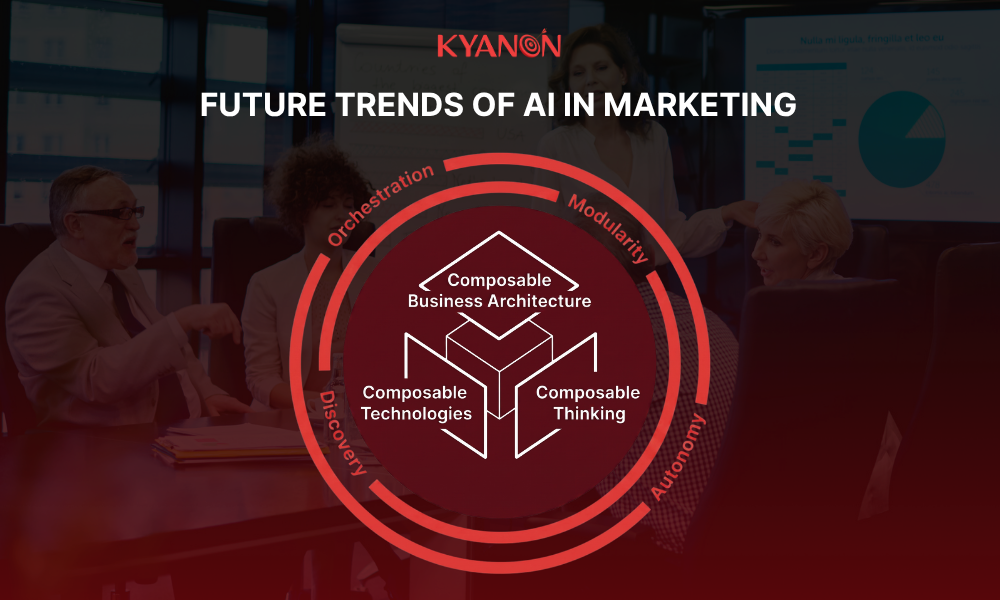
Composable applications refer to solutions that enable organizations to create applications that can be continuously redesigned and redeployed according to evolving business requirements. These applications are built from business-focused modular components, making it easier for organizations to reuse existing code, increase organizational value, and accelerate the time-to-market for new applications and products.
With the growth and expansion of 5G technology, composable applications now have the infrastructure needed to deliver improved data transmission, seamless experiences, and enhanced synchronization.

Benefits of Composable Applications for Businesses
Composable applications are among the latest technology trends expected to scale business operations and drive digital innovation over the coming years. They provide a practical solution for organizations seeking to rapidly expand innovation by creating applications that can be continuously adapted and redeployed in response to changing business needs.
Organizations are increasingly incorporating modular components into their technology infrastructure. The resulting benefits range from reduced development effort and increased productivity to more effective utilization of IT resources.
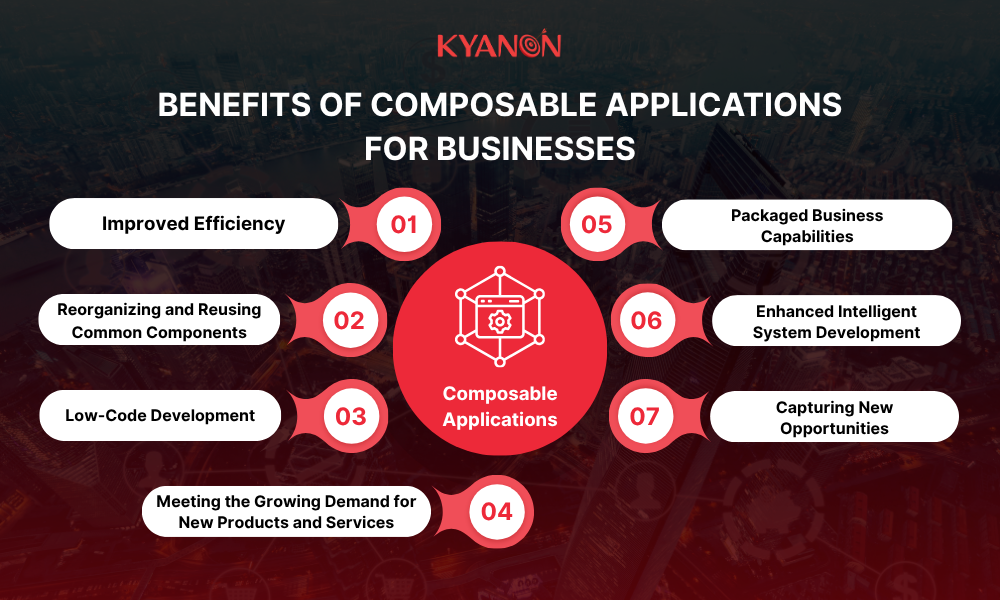
Improved Efficiency
Composable applications allow organizations to update individual application components independently rather than modifying an entire application. This approach increases the efficiency of each application component, ultimately improving the performance of the overall system.
Reorganizing and Reusing Common Components
As businesses adapt to rapidly changing customer demands, the need to develop new application functionality can be simplified by reusing and rearranging existing components while adding only the new capabilities required.
As technology continues to evolve, organizations must understand the advantages of composable applications. Business leaders who recognize and leverage these benefits will be better positioned to meet customer expectations, drive growth, and strengthen their competitive position within their industries.
Low-Code Development
Low-code is one of the most significant benefits organizations can achieve through composable applications. These applications are often built using low-code technologies because they can effectively address complex business requirements while reducing development effort.
As a result, businesses can connect previously isolated software systems more efficiently. Many aspects of development, including legacy systems, databases, and integrations, can be managed more effectively through low-code platforms.
Low-code is expected to become one of the most important technologies for organizations to invest in over the coming years.
Meeting the Growing Demand for New Products and Services
According to Gartner, by the end of 2024, 80% of products and services will be built by non-professional developers. In addition, more than $30 billion in revenue will come from business activities and services that do not yet exist today.
People are rapidly building new businesses to address growing demands from consumers and organizations that traditional businesses have been unable to satisfy. As a result, competition between traditional technology providers and non-technology creators will continue to increase.
These non-traditional developers include citizen developers, AI-powered software development systems, data scientists, and others who are creating applications using low-code technologies.
Composable applications enable these creators to better serve both businesses and individual users. By leveraging existing application building blocks, they can develop innovative new solutions more efficiently.
Packaged Business Capabilities
Packaged Business Capabilities (PBCs) refer to software solutions built around specific business functions. These modular applications include data models, APIs, event channels, and other components that can be assembled and disassembled according to business requirements.
Organizations are accelerating digital transformation initiatives to improve operational efficiency and productivity. In these environments, PBCs enhance business process flexibility and enable smoother, more streamlined workflows.
PBCs free organizations from the limitations of traditional application suites, allowing them to adopt best-of-breed modular technologies that remove constraints and simplify application development.
Enhanced Intelligent System Development
Composable applications enable organizations to build innovative intelligent applications that can automate workflows and adapt to changing market conditions and business requirements.
In addition, composable technologies allow organizations to create dynamic applications that improve data discovery, utilization, and analysis, helping businesses generate greater value from their information assets.
Capturing New Opportunities
Composable applications make it possible to develop new applications from existing codebases or previously built applications. This approach improves productivity and enables businesses to serve diverse customer needs more quickly and effectively.
Furthermore, composable applications provide developers and organizations with greater flexibility, agility, and resilience. As a result, businesses can continuously build, assemble, and reassemble solutions to respond rapidly to emerging market opportunities.
Kyanon Digital: A Technology Partner for Composable Application Development
Kyanon Digital is a Vietnam-based leading Digital & Technology Company empowering businesses to achieve Growth and Impact through Completed Technology Solutions. We are a trusted partner to Make Digital Impact. It’s not only about Technology, it’s about the impact of business processes, ensuring happy customer experience and optimizing operations.
Founded in 2012, Kyanon Digital is a dynamic and forward-thinking agile digital transformation partner. With over 14 years of experience, more than 500 experts across Vietnam and Singapore, and offices in Vietnam, Singapore, Thailand, Australia and Malaysia.
Recognized 6 years in a row (2020–2025) by VINASA for excellence in digital transformation, e-commerce & logistics solutions, Kyanon Digital is also recognized regionally for innovation and impactful digital solutions at Asian Technology Excellence Award 2023.
Contact Kyanon Digital to discover how composable architecture can support your organization’s next stage of digital growth.






 Create project brief with AI