

Singapore enterprises should assess AI delivery capacity by determining whether existing infrastructure, internal expertise, and governance controls can support production AI at a sustainable cost. The assessment should guide a critical investment decision: scale existing initiatives, address capability gaps internally, or engage an AI implementation partner based on verified delivery readiness.
A successful AI pilot does not necessarily mean an enterprise is ready for full-scale deployment. Legacy system dependencies, fragmented data, unpredictable infrastructure costs, and evolving regulatory requirements can turn promising AI initiatives into expensive operational challenges.
The key consideration is no longer simply whether AI can work, but whether existing capabilities can deliver measurable business value at scale and whether scaling, strengthening internal capabilities, or engaging external expertise offers the most sustainable path forward.
In this guide, Kyanon Digital examines how Singapore enterprises can evaluate AI delivery capacity, identify critical readiness gaps, and make informed decisions about scaling AI initiatives, strengthening internal capabilities, or engaging a specialized implementation partner.
Key takeaways
- Validate production readiness: A successful AI pilot is not enough. Evaluate whether enterprise data, infrastructure, and engineering teams can sustain real-world workloads.
- Prioritize measurable business value: Compare expected operational improvements against total implementation and operating costs before expanding AI investment.
- Balance flexibility with delivery speed: Assess cloud dependencies, vendor lock-in, and switching costs without overengineering infrastructure unnecessarily.
- Treat governance as a deployment requirement: Address applicable PDPA obligations, AI security risks, and human oversight before introducing AI into business-critical workflows.
- Close critical capability gaps first: Kyanon Digital recommends validating an end-to-end production workflow before scaling, then deciding whether internal improvements or specialist integration support are needed.
Further reading:
- How Do You Bridge Data and AI Consulting with Execution?
- LLM Integration Services for Enterprise Systems
- What Is the True Cost of AI in Manufacturing in Singapore?
Why do enterprise AI pilots fail to scale in Singapore?
Enterprise AI pilots often fail to scale because production environments expose infrastructure limitations, integration complexity, unpredictable costs, and governance gaps. While AI models may perform well in controlled tests, sustainable deployment requires reliable enterprise data, operational ownership, and measurable business value. These gaps can determine whether further AI investment is justified.
According to Gartner (2026), at least 50% of generative AI projects globally were abandoned after proof of concept by the end of 2025, largely due to data quality, cost, risk controls, and unclear business value. In Singapore, the Ministry of Manpower’s 2026 research found that larger firms identified integration complexity (56.1%) and data security concerns (55.4%) as major barriers to AI adoption.
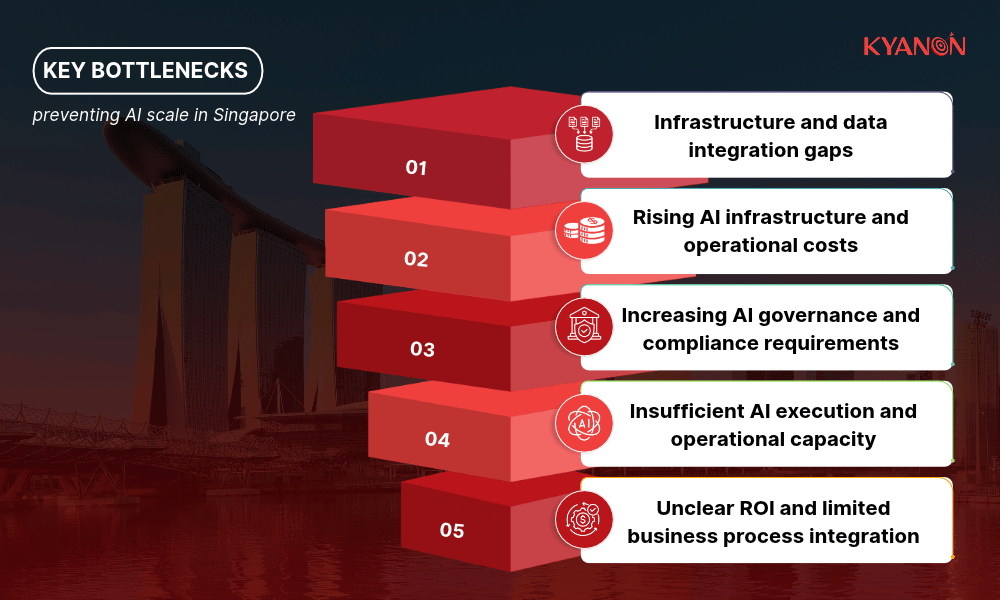
Key bottlenecks preventing enterprise AI from scaling
- Fragmented data and legacy infrastructure: Inconsistent data and complex ERP/CRM integrations may require targeted modernization before AI can scale.
- Unpredictable infrastructure costs: Rising inference, cloud, and maintenance expenses make total cost of ownership (TCO) critical to investment decisions.
- Security and AI governance risks: Sensitive data exposure and unauthorized AI actions require stronger governance before production deployment.
- Limited execution capacity: Gaps in AI engineering, MLOps, and operational ownership may justify internal capability development or external expertise.
- Unclear ROI and business value: Without measurable operational improvements, enterprises risk expanding AI initiatives that cannot justify their costs.

Are you risking vendor lock-in with your current AI architecture?
AI vendor lock-in becomes a risk when critical workflows depend heavily on proprietary models, APIs, or cloud infrastructure. For Singapore enterprises, the concern is not using a single provider, but whether future migration, pricing changes, or service disruptions could create unacceptable costs and operational risks.
Key AI vendor lock-in risks to assess
| Warning sign | Business risk |
What to ask your AI vendor |
|
Model and workflow dependency |
Proprietary APIs, RAG pipelines, and agent frameworks increase redevelopment costs. | Can critical workflows support alternative AI models? |
| Cloud and pricing dependency | Provider outages, pricing changes, and migration complexity threaten operational continuity. |
What are the switching costs and fallback options? |
|
Limited data and IP portability |
Restricted access to business logic, data, or configurations complicates migration and governance. |
Who owns these assets, and can they be transferred? |
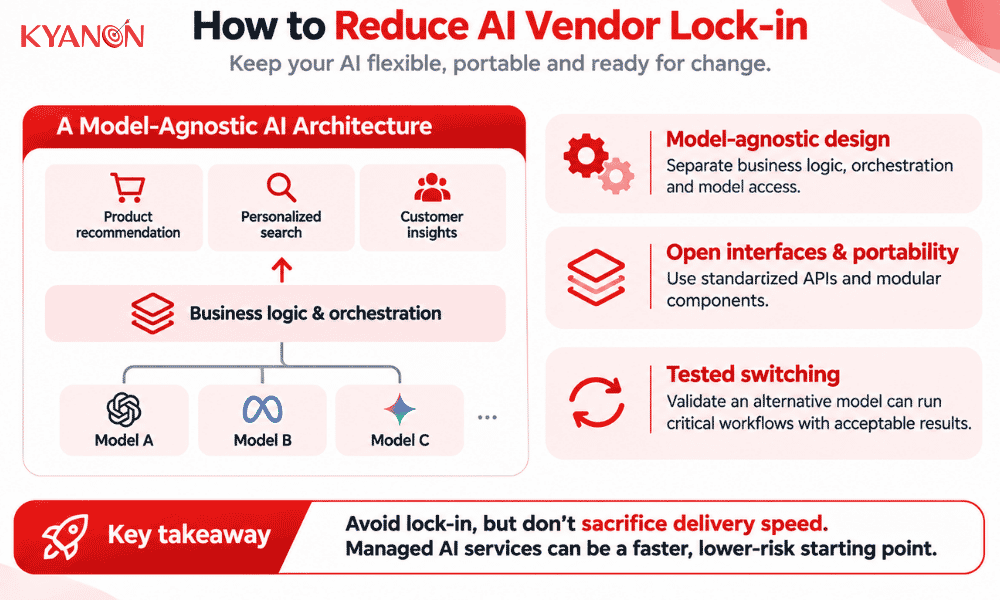
How should enterprises reduce AI vendor lock-in?
Before selecting an AI implementation partner, prioritize three architectural safeguards:
- Model-agnostic design: Separate business logic, orchestration, and model access to reduce provider-specific dependencies.
- Open interfaces and portability: Use standardized APIs and modular components where future migration justifies the investment.
- Tested switching capabilities: Require evidence that an alternative model can support critical workflows with acceptable performance, security, and migration effort.
However, avoiding vendor lock-in should not come at the expense of delivery speed. Managed AI services may be the better starting point when they accelerate deployment without creating unacceptable switching risks.
The key decision: Choose a single-provider architecture when its cost and operational benefits outweigh manageable dependencies. Prioritize greater portability when business-critical AI workflows require long-term flexibility and resilience.
How should enterprises evaluate their AI delivery capacity?
Enterprise AI delivery capacity should be evaluated across business value, data readiness, technical execution, workforce capabilities, and governance. The assessment should test these capabilities against a real business workflow to determine whether the organization can scale AI internally, needs targeted improvements, or requires external implementation expertise.
5 critical areas to assess before scaling enterprise AI
Enterprises should evaluate both internal capabilities and external AI implementation partners across five dimensions before committing to large-scale deployment.
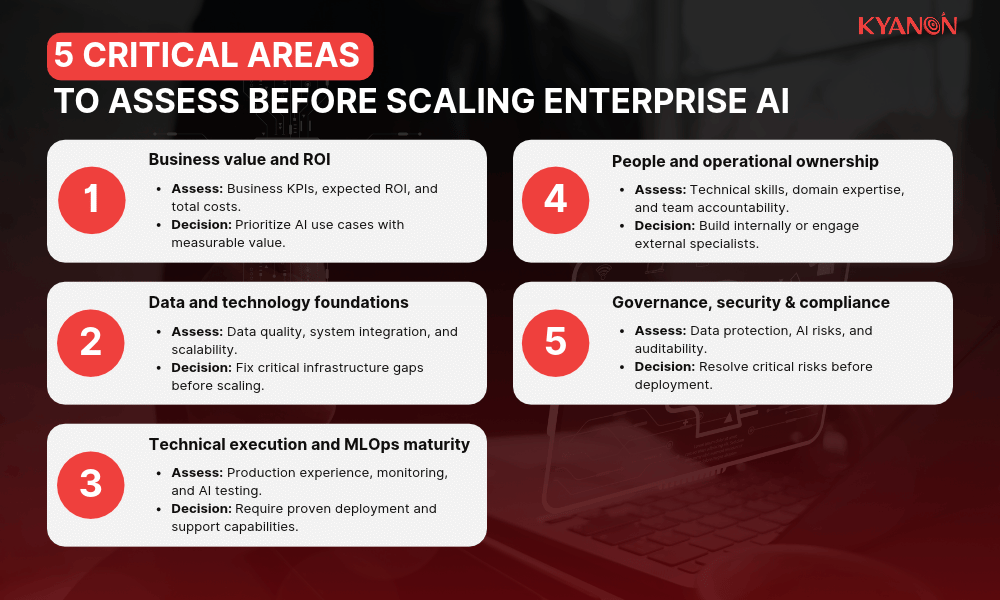
Business value and ROI
- Baseline performance: Identify existing operational KPIs, such as processing time, error rates, labor costs, and transaction volume.
- Financial viability: Compare expected business improvements against development, infrastructure, licensing, and maintenance costs.
- Decision point: Prioritize use cases with measurable business value and clear ownership rather than investing in AI without a validated business case.
Data and technology foundations
- Data readiness: Check data quality, accessibility, ownership, and compatibility with AI models and RAG pipelines.
- Infrastructure scalability: Evaluate compute capacity, inference latency, cloud costs, and integration with existing ERP and CRM systems.
- Decision point: Address critical data and infrastructure gaps before expanding AI workloads.
Technical execution and MLOps maturity
- Production deployment: Verify experience moving AI solutions from proof of concept into live enterprise workflows.
- Continuous evaluation: Assess model monitoring, RAG performance, version control, regression testing, and rollback procedures.
- Agentic workflow testing: For AI agents, evaluate tool usage, execution traces, permission boundaries, and human approval checkpoints.
- Decision Point: Require production evidence and ongoing maintenance capabilities, not just model demonstrations.
People and operational ownership
- Technical expertise: Identify gaps across AI engineering, data engineering, cloud, DevOps, and MLOps.
- Domain knowledge: Ensure business teams can validate AI outputs and manage exceptions in critical workflows.
- Operating model: Establish clear ownership for deployment, monitoring, incident response, and continuous improvement.
- Decision point: Determine whether to develop internal expertise, engage external specialists, or adopt a hybrid delivery model.
Governance, security, and compliance
- Data protection: Review data access, retention, privacy controls, and third-party processing arrangements.
- AI risk management: Test hallucinations, bias, unauthorized access, and potential information leakage.
- Auditability: Verify logging, traceability, human oversight, and accountability for AI-generated decisions and actions.
- Decision point: Resolve material security and governance gaps before deploying AI in business-critical operations.
For Singapore enterprises, AI Singapore’s AI Readiness Index (AIRI) provides a broader organizational benchmark, while IMDA’s Model AI Governance Framework for Agentic AI offers additional guidance for organizations adopting autonomous AI workflows.
How should enterprises turn assessment findings into investment decisions?
The objective is to identify which capabilities are ready, which require improvement, and which need external support.
- Scale internally: When business value is demonstrated and internal teams can manage production delivery and ongoing operations.
- Strengthen existing capabilities: When specific data, infrastructure, or engineering gaps can be resolved without replacing the entire technology stack.
- Engage an AI implementation partner: When complex integrations, specialist engineering, or insufficient delivery capacity prevent internal teams from moving into production.
- Defer investment: When business value remains unclear or critical security and governance risks are unresolved.
A practical perspective from Kyanon Digital: In its guide to bridging data and AI consulting with execution, Kyanon Digital emphasizes starting with a measurable business decision, prioritizing the first production data path, and establishing accountability beyond deployment.
For example, when evaluating an AI invoice-processing solution, enterprises should test more than document extraction accuracy. They should verify ERP integration, exception handling, approval workflows, processing costs, and the reduction in manual review effort.
The key decision: Invest in the capabilities that make a priority business workflow production-ready. Expand AI deployment only when operational performance, business impact, and ongoing ownership can be demonstrated.
How do you assess the operational risks of undocumented shadow AI?
Shadow AI creates governance gaps when employees use unapproved AI services with enterprise information. An assessment should identify active tools, business purposes, data classifications, access permissions, and approved alternatives. Prioritize sensitive workflows before introducing restrictions or replacing existing tools.
For enterprises needing governed internal AI access, Kyanon Digital’s WisdomMind AI platform offers enterprise knowledge retrieval, RAG, access controls, and AI orchestration capabilities.
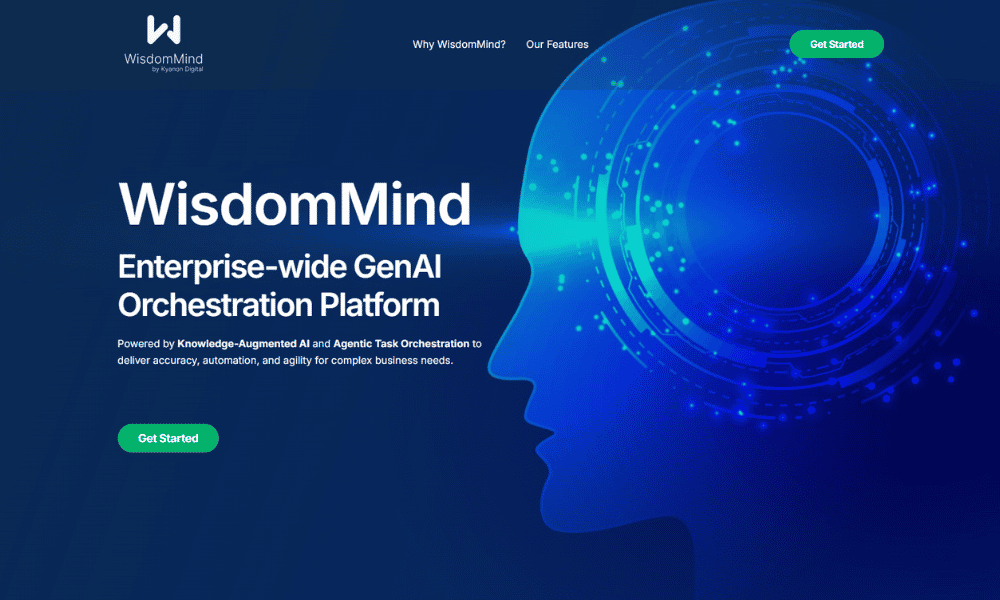
However, deployment architecture, data residency, provider access, retention, and contractual safeguards must still be verified for each implementation.
How Kyanon Digital scaled AI-powered supply chain automation for a Singapore retailer
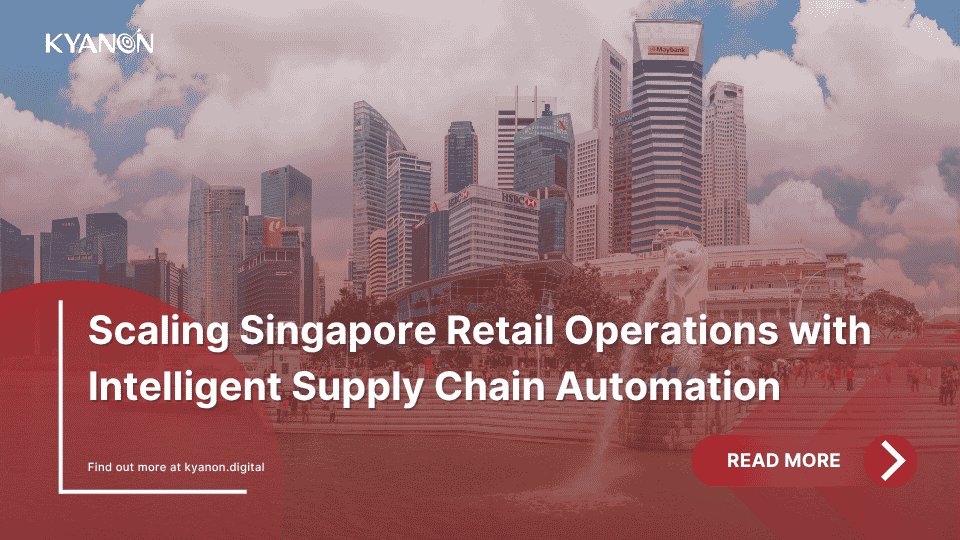
Kyanon Digital’s Singapore retail supply chain automation project illustrates how enterprise integration and workflow readiness contribute to operational AI delivery.
Challenges
- Thousands of supplier documents required manual processing.
- Disconnected SAP, inventory, and financial workflows created reconciliation bottlenecks.
- Inconsistent inventory information affected omnichannel operations.
Solution from Kyanon Digital
- Implemented AI-powered supplier document extraction.
- Integrated automated reconciliation with existing SAP systems.
- Established event-driven inventory synchronization and exception handling.
Results and impact

- 90% reduction in manual data entry time.
- Supplier invoice processing reduced from days to under 30 minutes.
- Over 80% reduction in omnichannel inventory discrepancy incidents.
The project demonstrates the value of connecting AI capabilities to existing enterprise systems and controlled workflows. These outcomes are project-specific and do not establish equivalent results for other implementations.
Explore the full case study Scaling Singapore Retail Operations with Intelligent Supply Chain Automation.
Conclusion
Assessing AI delivery capacity helps enterprises determine whether to scale existing initiatives, strengthen internal capabilities, or engage external expertise. Before expanding AI investment, prioritize production readiness, measurable business value, and manageable operational risks. Address critical capability gaps before committing to large-scale deployment.
Considering your next AI investment? Discuss your AI delivery readiness with Kyanon Digital to identify critical capability gaps and determine whether to scale internally or engage specialist support.
References
- Why 50% of GenAI Projects Fail — And How to Beat the Odds — Gartner, 2026.
- Inaugural Release of Report on Adoption of Artificial Intelligence Among Firms — Ministry of Manpower, Singapore, 2026.
- Guidance by Topic — Personal Data Protection Commission (PDPC), Singapore, 2026.
- AI Readiness Index (AIRI) — AI Singapore; current framework v3.1 maintained by AIRI Foundation.
- Updated Model AI Governance Framework for Agentic AI — Infocomm Media Development Authority (IMDA), 2026.
- How Do You Bridge Data and AI Consulting with Execution? — Kyanon Digital, 2026.
- WisdomMind for Transforming Enterprise Knowledge into Strategic AI Assets — Kyanon Digital, 2026.
- Scaling Singapore Retail Operations with Intelligent Supply Chain Automation — Kyanon Digital.
- Guidelines on Artificial Intelligence Risk Management for Financial Institutions — Monetary Authority of Singapore (MAS), 2026.





 Create project brief with AI